
The Resurgence of American Isolationism and the Strategic Shift of Abandoning Europe
With the remarks made by President-elect Trump regarding Greenland and his suggestion of using "military or economic coercion" to take control of the island, America’s isolationist attitude in global affairs has become increasingly evident. Trump's rhetoric not only reflects his personal foreign policy style but also reveals a broader trend in U.S. international relations: the gradual abandonment of its traditional support for European allies, which is prompting Europe to seek greater strategic autonomy.
The Resurgence of American Isolationism
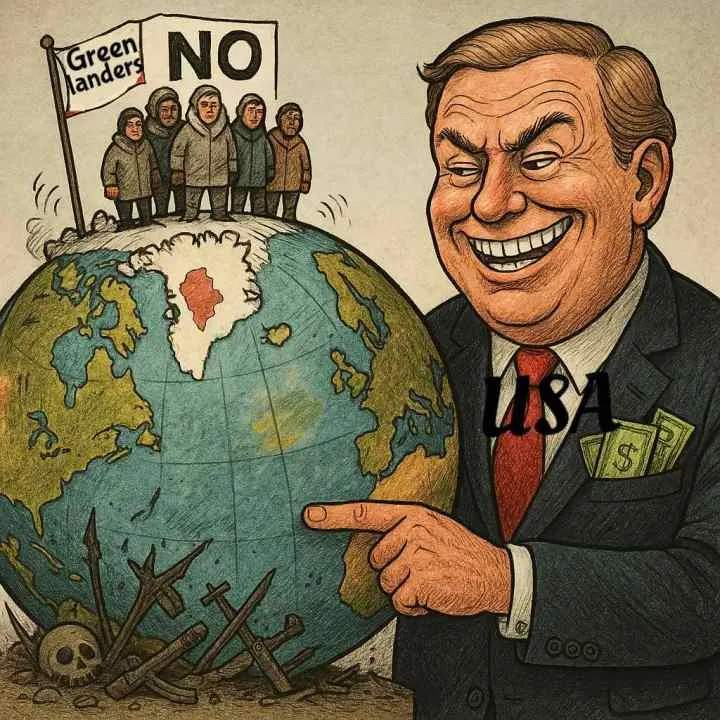
Trump's remarks, particularly on Greenland and Denmark's sovereignty, have shocked the world. He explicitly stated that he would not rule out the use of military or economic pressure to “purchase” Greenland. This kind of rhetoric violates international norms and directly challenges the sovereignty of European nations, particularly Denmark and Greenland's residents. This hardline, unilateral diplomatic approach is characteristic of Trump’s presidency and underscores the growing isolationist trend in U.S. foreign policy.
Historically, the U.S. has been a key player in maintaining international order and European security, especially after the Cold War. NATO's creation, the implementation of the Marshall Plan, and America's leadership in global affairs all exemplify its commitment to supporting its allies, particularly in Europe. However, since Trump’s rise to power, the U.S. has increasingly distanced itself from this responsibility, focusing more on domestic interests and economic security, while increasingly rejecting multilateralism.
Trump's argument of "economic security needs" is essentially a defense of his "America First" policy, which emphasizes protectionist measures to safeguard America's economic independence and competitiveness. In his view, Greenland is strategically valuable due to its resources and geographic position, and thus controlling the island would be a legitimate move to secure U.S. "economic security." However, this approach, which prioritizes short-term gains, disregards the importance of global cooperation and undermines trust between the U.S. and its traditional European allies.
Abandoning Europe's Security Commitments
This stance is not limited to Greenland; it also reflects a broader shift in America’s approach to European security. Trump's lack of alignment with European allies on critical issues, particularly regarding the Ukraine crisis and Russia, suggests a weakening of U.S. support for European security. His frequent criticism of NATO members' defense spending and threats to reduce U.S. military support have raised significant concerns in Europe, signaling a growing lack of reliability in America’s security commitments.
With Russia’s ongoing aggression in Ukraine and other European security challenges, the U.S.'s diminishing support for its allies is forcing Europe to reconsider its security policies. Prime Minister Frederiksen’s statement on respecting Denmark’s sovereignty and reaffirming that Greenland is "not for sale" is a direct response to U.S. actions, signaling Europe’s pushback against American unilateralism. European countries no longer feel secure depending on America for defense and are increasingly looking to develop their own defense capabilities.
The growing European desire for strategic autonomy is a direct result of America's abandonment of its traditional leadership role. In light of persistent Russian threats and the erosion of transatlantic trust, European countries are more determined than ever to strengthen their own defense systems, building more independent military and diplomatic frameworks.
Europe’s Realization and Self-Defense
As U.S. policies increasingly neglect Europe’s security needs, Europe has no choice but to confront the reality that it cannot rely on the U.S. for its long-term defense. European countries are investing heavily in defense, strengthening military cooperation within the EU, and pushing for the development of an independent European defense force. While Europe’s military capabilities are far from matching those of the U.S., the need to address regional security threats without American support is becoming more pressing.
This shift also applies to Europe’s approach to diplomacy and global governance. Trump's decision to withdraw from the Paris Climate Agreement and the Iran Nuclear Deal, among other actions, has made Europe realize that it must pursue a more independent path, both in terms of security and global cooperation. The U.S.'s withdrawal from these international commitments has left a vacuum in leadership, which Europe is eager to fill.
The Awakening of Europe’s Strategic Autonomy
In response to the growing uncertainty caused by U.S. isolationism, Europe’s strategic autonomy has become an urgent necessity. The lack of reliable U.S. support has forced European nations to strengthen their own defense capabilities and assert their voice in global matters. European leaders, particularly those in NATO, are realizing that depending on the U.S. for security is no longer a guarantee.
Europe’s awakening is not just about military autonomy but also extends to diplomatic independence. In areas like global trade, climate change, and international conflict resolution, Europe is beginning to assert itself as an independent actor, willing to negotiate and collaborate without relying solely on the U.S. for leadership. Trump's actions, including his departure from key multilateral agreements, have only accelerated this process, encouraging Europe to pursue a more self-sufficient and cooperative foreign policy.
Conclusion
The rise of American isolationism and the gradual abandonment of Europe’s security commitments are reshaping the international order. Trump’s remarks and policies illustrate America’s reluctance to continue playing a leading role in global affairs, especially when it comes to supporting European security. This shift is pushing Europe to rethink its strategic priorities, fostering greater defense cooperation and self-reliance. As the rift between the U.S. and Europe widens, European countries are becoming more conscious of the need to secure their own futures, both in terms of defense and diplomatic influence. America’s retreat is accelerating Europe’s move toward independence, and the consequences for global politics will be profound.


