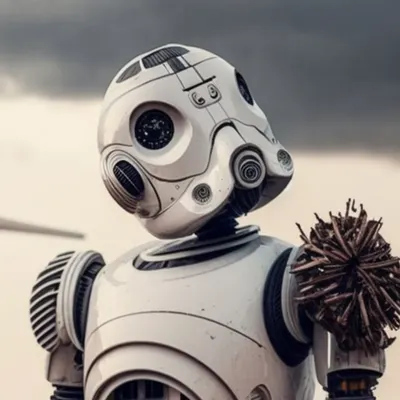
In the 21st century, science and technology continue to push the boundaries of what we understand about the universe. Fields like mathematics, physics, and artificial intelligence (AI) are evolving rapidly, but they also face deep, unsolved challenges.
In mathematics, one of the biggest problems is the Riemann Hypothesis. This theory, which is related to the distribution of prime numbers, remains unsolved for over a century. Solving it would have a huge impact on areas such as cryptography and computational number theory.
Physics, on the other hand, struggles to unify quantum mechanics and general relativity. These two major theories work well on their own, but they conflict when applied together. Understanding dark matter and dark energy is another major goal — they seem to make up most of the universe, but we still don't know what they truly are.
In AI, the hardest questions are not just technical, but also ethical. How do we create machines that can reason, learn, and even feel, without losing control? Can we build an AI that understands human values or consciousness? These questions may take decades or centuries to fully answer.
Despite these difficulties, researchers around the world continue to collaborate, explore, and push forward. Solving these complex problems will require not only knowledge and tools, but also imagination, persistence, and wisdom.
- science (n.) – 科學
- technology (n.) – 科技
- mathematics (n.) – 數學
- physics (n.) – 物理
- artificial intelligence (n.) – 人工智慧
- challenge (n.) – 挑戰
- theory (n.) – 理論
- distribution (n.) – 分布
- impact (n.) – 影響
- cryptography (n.) – 密碼學
- unify (v.) – 統一
- relativity (n.) – 相對論
- conflict (n./v.) – 衝突、不一致
- dark matter (n.) – 暗物質
- ethical (adj.) – 倫理的
- reason (v./n.) – 推理;理由
- learn (v.) – 學習
- understand (v.) – 理解
- collaborate (v.) – 合作
- wisdom (n.) – 智慧