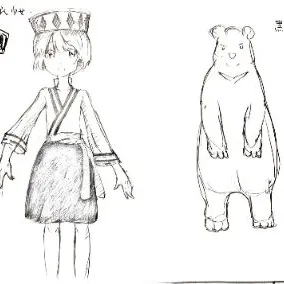
2025 Zootopia 2
The rabbit is eager to prove that the team can succeed, so she pushes hard and drives everyone forward, believing that strong performance will benefit them both. The fox, on the other hand, keeps his distance and acts only when there’s something to gain—not out of selfishness, but as a way to avoid unnecessary risks and shield them from harm. Neither approach is wrong; in fact, both are rooted in a desire to be good for each other. Yet when they speak honestly, their differences surface, and they begin to misunderstand—and even look down on—one another.
At work, when you encounter people you don’t admire, it becomes genuinely difficult to collaborate with them. If I tell you something today and you use it for your own purposes in a way that goes against mine, then tomorrow I may choose not to tell you anything and instead force you to act blindly. Any result produced under these conditions has no real owner—no one wants to take responsibility for it. Work created under such circumstances ultimately becomes worthless, like garbage that you would want to erase from your head.
What exactly is team spirit? Does the thing we build together actually have meaning at all? If work is supposed to be about “solving problems together,” it becomes corrosive when your partner starts treating you as the problem.
When the issues you carefully identify—the ones you’re trying to fix—are turned into evidence against you. Or under the guise of helping, they extract every detail. Then, once an opening appears, they undercut your efforts, claim the credit, discredit your contributions, and step over you on their way up.
Such teammates are basically there to stab you in the back, sent by Satan himself. If I were the judge, they'd already be going back to hell by now.
— Spoiler warning —
In this story, the snakes are betrayed again and again in exactly this way. And yet, there seems to be no real way around it. When you try to seek help, secure resources from above, or solve problems that affect everyone, you inevitably run into other people’s interests. More precisely, you encounter those who have no intention of sharing the benefits that could have been created together. They are short-sighted—indifferent to the long term and unconcerned with any real sense of principle. Even in a win-win situation, they may still try every possible way to push you out so they can take as many benefits as possible for themselves.
They are the ultimate embodiment of “everyone is for themself.” What's worse, they love to act like good people—muddying the waters, spreading rumors, stirring conflict—until everyone is forced to see clearly. Then they suddenly “forget everything,” as if possessed by another personality, flipping their stance, denying everything, and even turning the blame back on you. They exploit every gap and leave you with no way to recover.
But the snake (played by Ke Huy Quan) still gets back up smiling. He remains calm—not rushed, not resentful. Even though he is very close to his goal of clearing his family’s name, he does not carry rage or emotional extremes driven by revenge or despair.
This reminds me, by contrast, of a certain dwarf prince who was blinded by treasure even after the dragon had been slain. He made reckless, foolish decisions that ultimately led to his own downfall and the loss of some of his companions. If you’re unsure what I’m referring to, you can look at The Hobbit trilogy.
Back in this story, the snake even comforts the overly ambitious rabbit, saying: “This responsibility is never mine alone.” He understands his limits. He isn’t slacking off or lacking courage. Rather, he knows when something cannot be forced, and he’s willing to step back and accept disappointment, because things go beyond his control.
This mindset reminds me of another character that Quan played in Everything Everywhere All at Once and the Disney TV series Loki, where he often appears as a spiritual guide through the protagonist’s crises of identity and purpose.
Whenever the protagonist becomes too obsessed with completing something and reaches a breaking point of frustration and despair, he doesn’t blindly insist on anything. Instead, he cooperates, expressing a kind of mature helplessness—helplessly letting go, stepping aside, waiting in what looks like foolish patience.
Perhaps this comes from his personal life experience. Of course, not everyone is lucky enough to return to Hollywood after so many years as he did. But his existence shows that sometimes, temporarily “going with the flow” or lying dormant can actually build resilience.
So this story inspires me.
In career and life, no matter what kind of unspeakable or unfair situations you encounter, don’t fall into the spiral of “how could I have been so stupid back then” or “how could they be so shameless.” Just keep living your life steadily. Step by step, move away from it gradually. Live your own life well.
Eventually, those toxic people will naturally fade from your mind. And even if one day they suddenly appear in front of you, enthusiastically greeting you and pretending to be close, twisting past events, you would probably just think: Are they insane? Why should I even care whether that happened as they described or not?
After leaving those toxic places, my not-too-big, not-too-small heart will still be filled with new friends, new strangers, and new passersby. My not-too-smart, not-too-stupid mind will still find new challenges in new environments. My not-lazy, not-hardworking hands will still build a new home of my own, surviving in new circles and new teams.
"I don’t need to prove anything to people who will never appreciate me. Nor will I cling to a 'glorious identity' at the cost of betraying my integrity or my teammates, or secretly doing any extreme or disgraceful things behind the scenes.
I don’t need to endlessly prove myself. If justice can only be restored through unbearable loss, I would rather lose a little first and wait patiently for the right opportunity.” And that's what I believe the little rabbit learns at the end of the story.
Besides, the fox isn't entirely right either. No one should submit to evil forces or turn a blind eye to truth and the vulnerables just to save themselves from troubles.