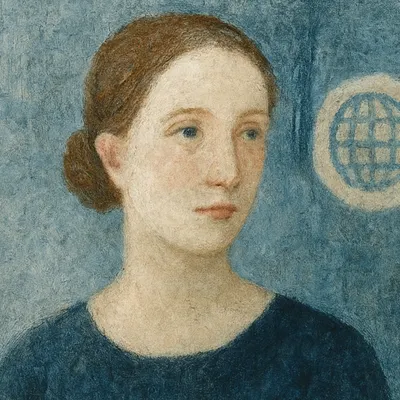
Every evening, Jane would dip a fine brush into melted amber and trace the faint outlines of lost gestures. Some called it nostalgia, but she called it translation—the transformation of fleeting emotion into luminous residue.
2025.10.29
珍被稱為「光痕的守護者」。她住在一間被玻璃片與摺疊透明層包圍的小工作室裡。每一層都藏著一段過去的低語──一抹微笑的回聲、一滴眼淚前的眨眼、晨光掠過早已消逝的臉龐。她的工作並非修復,而是記憶。當城市忘記溫柔的模樣,當鏡中倒影變得太銳利而無法相愛時,人們便會來找她。每個傍晚,珍會用細筆沾上融化的琥珀,描繪那些消逝的姿態。有人稱那是懷舊,但她稱之為「翻譯」──將轉瞬的情感化為閃光的殘留。在燈光低鳴之下,時間內折,記憶化為光。
有一次,她在兩層影像之間看見自己的臉──一半屬於陌生人,一半屬於年輕的自己。她沒有將它取下,而是輕聲說:「原來這就是我延續的方式。」隨著光線滲入琥珀的霧色,她的輪廓漸漸消散。那一刻,珍明白,保存並非讓過去長存,而是讓它透過自己呼吸──柔軟地、永恆地,如光穿過玻璃。
Jane was known as The Keeper of Light Traces. She lived in a small studio surrounded by shelves of glass plates and folded transparencies. Each layer held a whisper of someone’s past—an echo of a smile, a blink before tears, the glint of morning light brushing against a cheek now gone. Her work was not to restore, but to remember. The city would come to her when they forgot what tenderness looked like, when their reflections had turned too sharp to love.
Every evening, Jane would dip a fine brush into melted amber and trace the faint outlines of lost gestures. Some called it nostalgia, but she called it translation—the transformation of fleeting emotion into luminous residue. Under the lamp’s soft hum, time folded inward, and memory became light.
Once, she found her own face embedded between two layers—one belonging to a stranger, another to her younger self. She didn’t remove it. Instead, she whispered, “So this is how I continue,” and watched as her features slowly diffused into the amber haze. In that moment, Jane understood that preservation was not about keeping the past alive, but allowing it to breathe through her—softly, perpetually, like light through glass.