
Introduction
Family-friendly space design requires a precise balance between operational safety, ergonomic movement, and sensory comfort. These environments must serve children, adults, and mixed-age groups without overwhelming users or generating conflicts. Successful design relies on predictable spatial organization supported by clear sightlines, intuitive circulation paths, and structurally resilient materials. When approached methodically, family-oriented environments evolve into reliable, low-maintenance public assets that encourage long-term community engagement.
Establishing Spatial Frameworks Through Hierarchical Zoning
A strong spatial hierarchy forms the foundation of any family-friendly setting. Designers typically begin by segmenting the environment into low-, medium-, and high-intensity activity clusters that align with natural user behavior. Within this framework, dynamic features—such as a compact drop tower for sale—are placed strategically to anchor high-energy zones without overwhelming the surrounding areas. Buffer strips, perimeter seating, and landscape elements soften the visual impact while maintaining clear boundaries. This spatial structuring ensures that children encounter activities gradually, transitioning safely from calm spaces into more stimulating zones.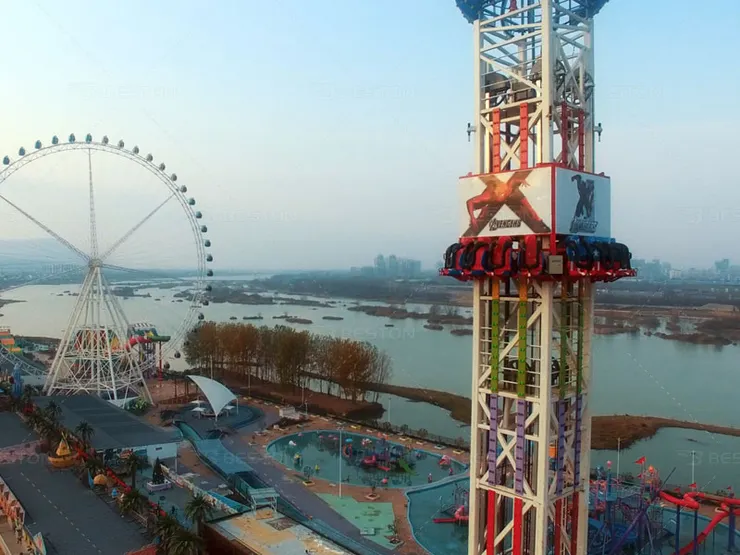
drop tower for sale
Integrating Dynamic Elements to Enhance Environmental Rhythm
As family-oriented spaces evolve, the inclusion of dynamic attractions is becoming increasingly common. These elements introduce visual motion, acoustic variety, and kinetic energy that enrich user engagement. A feature like a pendulum swing ride becomes both an entertainment component and a spatial cue. Its sweeping movement draws spectators, which naturally shapes foot traffic patterns and encourages social clustering. Designers must analyze vibration spread, queue anchoring, and shade orientation to ensure that such features enhance rather than disrupt the overall environment. When integrated correctly, dynamic attractions act as choreographed landmarks that guide users intuitively through the space.

pendulum swing ride
Designing Multi-Age Activity Zones for Balanced Interaction
A family-friendly environment succeeds only when its age groups can interact safely without interference. Toddler areas prioritize soft textures, low heights, and predictable behavior patterns. Primary-age zones introduce climbing structures, modest challenges, and exploratory elements that encourage cognitive engagement. Teen areas emphasize autonomy and controlled independence, offering mild thrill components and open social spaces. Designers create visual transitions using lighting contrasts, surface shifts, and directional landscaping, ensuring each zone feels distinct but cohesive. This layering of activity types minimizes conflict and supports smoother crowd distribution throughout the day.
Circulation Engineering and Passive Supervision Strategies
Circulation is the operational backbone of any family-centric environment. Pathways must accommodate strollers, mobility devices, and swift child movement without creating intersectional hazards. The geometry of walkways—curvature, width, and sightline alignment—guides natural user flow. Transparent dividers and low profile fencing preserve visibility, enabling caregivers to monitor from a distance without restricting child autonomy. Subtle cues such as floor patterning, directional lighting, and differentiated textures ensure that wayfinding feels intuitive. Effective circulation planning reduces congestion and creates spaces where users instinctively understand how to move.
Sensory Modulation as a Foundation of Comfort
Family-friendly spaces require thoughtful sensory calibration to prevent overstimulation. Acoustic control is achieved through vegetation clusters, soft-surface materials, and overhead structures that diffuse sound. Lighting design avoids harsh contrasts and glare, using warm color temperatures to maintain visual comfort. Designers apply color zoning carefully to differentiate functions without creating visual clutter. Microclimate regulation—achieved through shade fabric, tall canopies, and filtered airflow—stabilizes temperature and extends usability during varying weather conditions. These sensory decisions form a subtle yet crucial foundation for user comfort and emotional stability.
Material Performance, Safety Engineering, and Durability
Material selection directly influences both safety and operational longevity. Non-slip rubber surfacing, UV-resistant composites, and impact-mitigating polymers protect children from falls while resisting long-term degradation. Rounded edges, sealed joints, and temperature-neutral coatings increase tactile friendliness. Safety engineering expands beyond material choice to include predictable fall zones, compliant railing geometry, and spatial redundancy in high-use areas. Maintenance efficiency is improved through modular components that can be replaced without dismantling entire structures, reducing downtime and operational cost.
Enhancing Adult Comfort and Observation Efficiency
Adults require comfort, shade, and observational clarity to remain engaged in family spaces for extended periods. Seating clusters are oriented toward activity zones at calculated viewing angles, minimizing the need for repositioning. Ergonomic benches, integrated charging ports, and weather-resistant surfaces improve user satisfaction. Thoughtfully positioned observation nodes allow caregivers to monitor multiple zones simultaneously. These design strategies extend dwell time and strengthen the social fabric of the environment.
Flexibility, Seasonal Adaptation, and Long-Term Scalability
Effective family-friendly spaces adapt across seasons, demographic shifts, and operational changes. Modular play elements can be reconfigured or upgraded without structural disruption. Temporary micro-zones—such as reading pockets, water-mist pads, or festival stages—add variety throughout the year. Shade structures can be relocated or expanded based on climatic requirements. Long-term scalability ensures that the environment remains relevant even as user behavior evolves, reducing the need for costly redevelopment.
Conclusion
Designing a family-friendly environment demands technical insight, long-term planning, and an understanding of human behavior. Through structured zoning, dynamic element integration, sensory balance, durable materials, and thoughtful circulation engineering, these spaces become adaptive ecosystems that support safe play, social interaction, and community well-being. When executed with precision, family-friendly spaces achieve a rare equilibrium: stimulating for children, manageable for operators, and comfortable for adults.


