
In recent years, the United Kingdom has seen a significant rise in the establishment of pyrolysis plants, and this growing trend has garnered widespread attention. Pyrolysis, a process that involves the thermal decomposition of waste in the absence of oxygen, has become a crucial part of the country’s waste management and environmental sustainability strategies. In this blog, we’ll explore why the UK has increasingly embraced pyrolysis plants, particularly focusing on the key drivers behind this shift, including government policies, environmental regulations, and the country’s commitment to sustainable development.
What is Pyrolysis?
Before diving into the key drivers, it’s essential to briefly understand what pyrolysis entails. Pyrolysis is a waste-to-energy technology that turns organic materials—such as plastics, rubber, and biomass—into useful products like bio-oil, carbon black, and syngas. This process not only helps reduce waste but also creates valuable byproducts that can be used as alternative fuels or raw materials for various industries.1. Government Policies and the Circular Economy
The UK government has played a pivotal role in promoting the adoption of pyrolysis technology, driven largely by its strong commitment to the principles of a circular economy. In a circular economy, the goal is to minimize waste, extend product life cycles, and promote the reuse and recycling of materials. Pyrolysis aligns perfectly with this vision by enabling the recycling of non-recyclable waste and converting it into useful energy sources or raw materials.
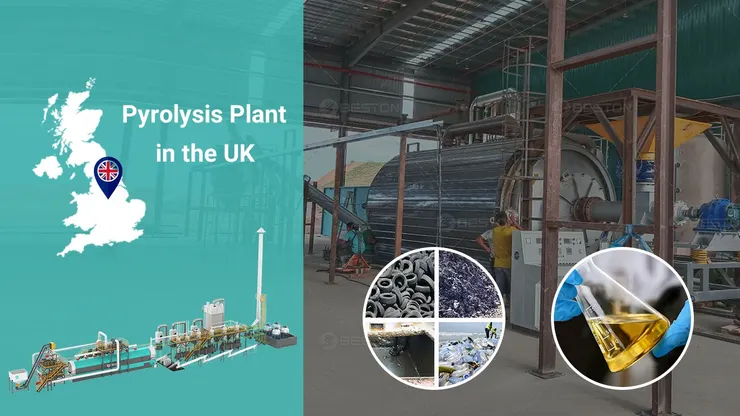
The government has also implemented policies to encourage waste reduction and diversion from landfills. For example, the UK's Resources and Waste Strategy, introduced in 2018, includes measures to boost recycling rates, reduce plastic waste, and support the development of advanced recycling technologies, such as pyrolysis. By providing incentives for businesses to adopt sustainable waste management practices, the government has created a favorable environment for the expansion of pyrolysis plant in the UK.
2. Environmental Regulations and Green Targets
As part of its ongoing commitment to environmental protection, the UK government has set ambitious climate targets aimed at reducing greenhouse gas emissions. The UK’s pledge to achieve net-zero carbon emissions by 2050 has become a driving force behind the country’s environmental policies. In this context, pyrolysis is seen as an effective solution to reduce the environmental impact of waste disposal, particularly when compared to traditional methods like landfilling or incineration.
Pyrolysis technology helps mitigate climate change by diverting waste from landfills—where it would otherwise release methane, a potent greenhouse gas—into a process that produces energy while reducing carbon emissions. Moreover, the byproducts of pyrolysis, such as bio-oil, can be used as sustainable alternatives to fossil fuels, further supporting the UK's transition to cleaner energy sources.
Environmental regulations, such as the EU Waste Framework Directive and the UK's Environmental Protection Act, have also set clear guidelines for waste management, pushing industries to adopt greener alternatives like pyrolysis. The UK’s commitment to plastic waste reduction, particularly following the Plastic Packaging Tax introduced in 2022, has further incentivized businesses to explore innovative ways of recycling and waste-to-energy solutions.
3. Waste Management Challenges in the UK
Another key factor driving the rise of pyrolysis plants is the growing challenge of waste management in the UK. With the increasing volume of municipal and industrial waste generated every year, particularly plastic and non-recyclable materials, traditional waste disposal methods are becoming increasingly unsustainable. Landfills are nearing capacity, and incineration often faces public opposition due to concerns about air pollution and harmful emissions.
Pyrolysis provides a viable alternative by converting waste that would otherwise end up in landfills or incinerators into valuable resources. This helps reduce the pressure on the country’s waste management infrastructure while offering a solution that aligns with sustainable development goals. By using pyrolysis technology, the UK can reduce landfill usage, lower incineration rates, and turn waste into valuable raw materials, such as carbon black, which can be used in manufacturing, or bio-oil, which can be refined into fuel.
4. Investment in Sustainable Technologies and Infrastructure
The growing interest in pyrolysis plants is also driven by increasing investments in sustainable technologies. Both public and private sectors are recognizing the potential of pyrolysis to solve multiple environmental challenges, and the UK has seen a rise in funding for waste-to-energy projects. Notably, the government has provided grants and incentives to encourage innovation in green technologies, including pyrolysis. This includes financial support for companies developing advanced waste treatment technologies and initiatives that reduce the environmental footprint of industrial processes.
The UK’s commitment to green infrastructure is also a key factor. As part of the Green Industrial Revolution, the UK government is focusing on creating a greener, more resilient economy by investing in clean technologies and sustainable practices. Pyrolysis fits neatly into this agenda, providing a method of energy production that reduces reliance on fossil fuels while addressing the growing waste management challenges.
5. Public Awareness and Support for Sustainability
The public’s increasing concern about environmental issues has played an essential role in the rise of pyrolysis plants. In recent years, there has been a growing demand for sustainable practices from both consumers and businesses. The UK population is becoming more environmentally conscious, and this has led to a greater willingness to support green technologies such as pyrolysis. Public pressure on the government to take action against climate change and waste pollution has spurred the development of policies and investments in green infrastructure.
Conclusion
The rise of pyrolysis plants in the UK can be attributed to a combination of government policies, environmental regulations, and a commitment to sustainable development. With increasing waste management challenges, a shift toward a circular economy, and ambitious climate goals, pyrolysis has emerged as an effective solution for managing waste and producing clean energy. As the UK continues its push for greener technologies, pyrolysis will likely play an ever-expanding role in its waste-to-energy strategies, contributing to a more sustainable, waste-free future.


