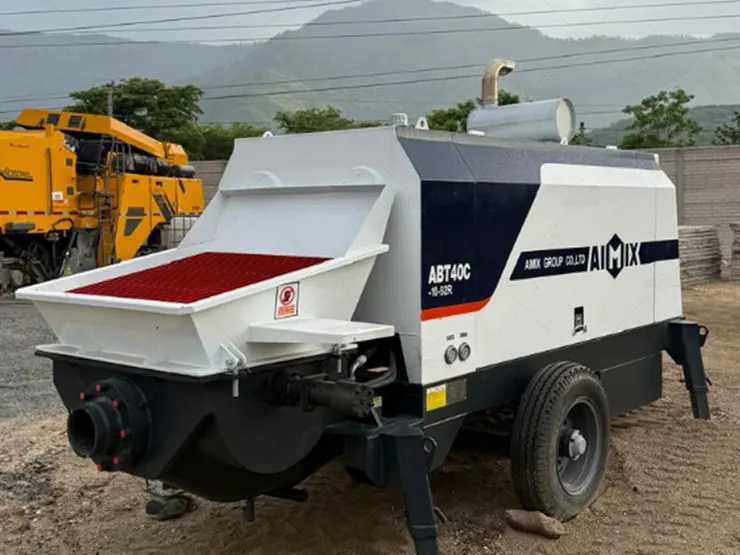
South Africa’s construction industry is booming, with infrastructure projects, commercial buildings, and residential constructions spreading across urban and rural areas. Static concrete pump for sale South Africa has become an indispensable core equipment in these projects, favored for its stable performance, high pumping efficiency, and strong adaptability to various construction scenarios. Different from mobile concrete equipment, static concrete pumps are fixed at construction sites for long-term operation, bearing continuous working pressure, especially under South Africa’s diverse climate conditions—from high-temperature and dry regions in the north to humid coastal areas in the south. Regular and scientific maintenance is crucial for static concrete pump for sale South Africa, as neglecting maintenance can lead to frequent equipment failures, reduced service life, increased maintenance costs, and even construction delays. This article details the systematic maintenance steps, key points, and precautions for static concrete pump for sale South Africa, combines local climate and construction characteristics, integrates the specified key phrase naturally, and provides a comprehensive and operable maintenance guide for construction teams and equipment operators in South Africa.
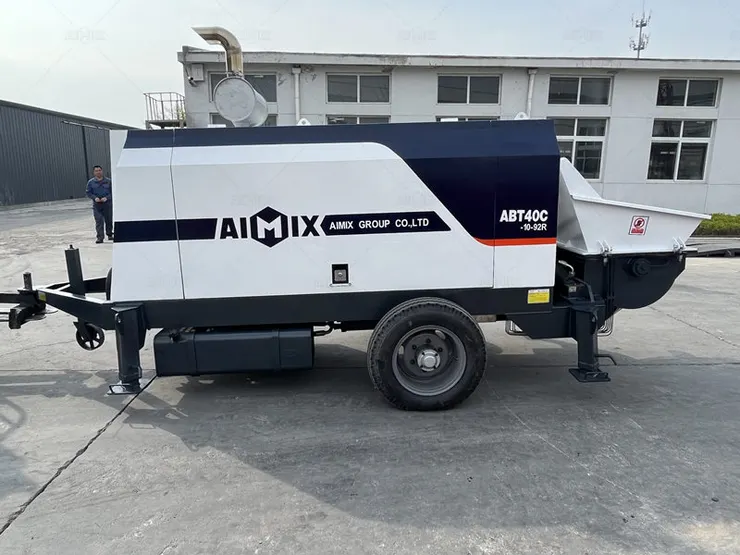
Pre-Operation Maintenance: Lay a Foundation for Safe and Stable Operation
Pre-operation maintenance is the first line of defense to ensure the normal operation of static concrete pump for sale South Africa, which needs to be carried out comprehensively before each startup to eliminate potential faults in advance. Firstly, conduct a visual inspection of the entire equipment. Check the appearance of the static concrete pump for signs of damage, corrosion, or oil leakage—pay special attention to hydraulic pipelines, joints, and the pump body, as South Africa’s dry and dusty environment or coastal humidity can easily cause pipeline aging and corrosion. Clean the surface of the equipment, remove dust, gravel, and concrete residues, especially the hopper, mixing device, and pipeline interfaces, to avoid blockages during operation. At the same time, check whether all fasteners (bolts, nuts, pins) are tight, and tighten any loose parts in time to prevent vibration-induced loosening during operation, which may cause component damage.
Secondly, inspect the fluid levels of key components, which is critical for the stable operation of the static concrete pump. Check the hydraulic oil level: ensure the oil level is within the specified range of the oil tank, and observe the color and clarity of the hydraulic oil—if the oil turns dark, emulsified, or contains impurities, it should be replaced immediately. In South Africa’s high-temperature regions, it is recommended to use high-temperature resistant hydraulic oil to prevent oil viscosity reduction and leakage caused by high operating temperatures, and the hydraulic oil should be kept within the optimal working temperature range of 35℃-75℃. Check the engine coolant: use regular antifreeze that is within the validity period, ensure the liquid level is sufficient, and if supplementary is needed, the amount of water added should not exceed 10% of the total coolant volume to avoid affecting the antifreeze effect. In addition, check the lubricating oil level of the reducer, mixing device, and other moving parts, and add lubricating oil in time if it is insufficient. For the concrete piston coolant and washing chamber, fill the washing chamber with clean tap water before operation, and an appropriate amount of lithium-based grease or waste hydraulic oil can be added to improve lubrication effect.
Finally, inspect the electrical system and key components. Check the power supply line of the static concrete pump for sale South Africa: ensure the line is intact, free of aging, wear, or loose connections, and the grounding is reliable with a grounding resistance of less than 4 ohms to avoid electrical faults such as short circuits or leakage, which may affect equipment operation and operator safety. Check the control panel, buttons, and sensors to ensure they are sensitive and accurate, and the indicator lights work normally. Test the mixing device, hydraulic pump, and concrete cylinder: start the equipment for no-load operation, observe whether the mixing device rotates smoothly, whether the hydraulic pump works normally without abnormal noise, and whether the concrete cylinder moves flexibly. If any abnormal vibration, noise, or stagnation is found, stop the equipment immediately, check the cause, and solve it before formal operation. For the hydraulic system, observe the high-pressure filter indicator—if it shows red, the filter element should be replaced immediately to avoid impurities entering the system and causing damage.
In-Operation Maintenance: Timely Monitor and Handle Abnormalities
In-operation maintenance is crucial to prevent sudden failures of static concrete pump for sale South Africa during working, which requires operators to monitor the equipment’s working status in real time and take timely measures when abnormalities are found. Firstly, monitor the working parameters of the equipment closely. During the concrete pumping process, pay attention to the pressure of the hydraulic system: ensure the pressure is within the specified range, and if the pressure is too high or too low, stop the equipment to check—high pressure may be caused by pipeline blockage or improper adjustment of the overflow valve, while low pressure may be due to oil leakage or insufficient hydraulic oil. For closed-loop pumping systems, pay attention to the setting pressure of the overflow valve in the heat exchange circuit—too low a setting will increase the commutation impact of the pumping hydraulic cylinder, while too high a setting will cause excessive overflow loss and overheating of the system. Monitor the temperature of the equipment: the temperature of the hydraulic oil should not exceed 75℃, and the temperature of the engine should be kept within the normal range. If the temperature is too high, stop the equipment to cool down, check the radiator for blockage by foreign objects, and clean it in time to ensure good heat dissipation effect.
Secondly, handle minor abnormalities in a timely manner during operation. If oil leakage is found at the hydraulic pipeline joints or components, tighten the joints or replace the sealing rings immediately to avoid excessive oil loss and affect the normal operation of the hydraulic system. If the concrete pumping speed slows down or the pumping force is insufficient, check whether the hopper is blocked by large aggregates, whether the concrete cylinder is worn, or whether the hydraulic pump is faulty—clean the hopper in time if blocked, and inspect and repair the concrete cylinder or hydraulic pump if necessary. During the pumping process, regularly check the water temperature of the washing chamber, and replace the water in time if it is too high; if the water in the washing chamber is turbid, replace the concrete seal immediately to avoid damage to the piston. Pay attention to the lubrication of the equipment: regularly add lubricating grease to the moving parts such as the mixing shaft, concrete cylinder piston, and distribution valve during operation. In South Africa’s high-temperature environment, it is recommended to use “00” grade lithium-based grease, and ensure that the filling container is clean to prevent water, dust, and other impurities from entering the lubrication system.
Finally, maintain the cleanliness of the equipment during operation. Regularly clean the hopper and mixing device to avoid concrete residue accumulation, which may affect the mixing effect and block the feeding port. Clean the surface of the hydraulic oil tank and radiator to ensure good heat dissipation. For the pipeline system, check whether there is concrete leakage at the joints, and clean the leaked concrete in time to prevent it from solidifying and affecting the pipeline connection. In addition, avoid overloading the static concrete pump for sale South Africa—strictly follow the equipment’s rated pumping capacity and pressure, and do not pump concrete with excessive viscosity or large aggregates that exceed the equipment’s bearing capacity, so as to avoid excessive wear of the concrete cylinder, piston, and pipeline.
Post-Operation Maintenance: Extend Equipment Service Life
Post-operation maintenance is an important step to extend the service life of static concrete pump for sale South Africa, which needs to be carried out thoroughly after each day’s operation to avoid concrete solidification, component corrosion, and other problems. Firstly, clean the equipment comprehensively. Empty the remaining concrete in the hopper, concrete cylinder, and pipeline: use clean water to flush the hopper, mixing device, and concrete cylinder repeatedly until there is no concrete residue; for the pipeline, use a cleaning ball or high-pressure water to flush it to ensure it is unobstructed, and then drain the water in the pipeline to avoid freezing and cracking in cold areas or corrosion in humid areas. After flushing, clean the surface of the equipment again, remove dust, mud, and concrete residues, and dry the surface with a clean cloth to prevent corrosion, especially for equipment used in South Africa’s coastal humid areas. After cleaning the washing chamber, unscrew the water drain rubber plug to drain all water, pull out the piston for cleaning and inspection, and replace the seal if there is wear.
Secondly, inspect and maintain key components after operation. Check the wear of the concrete cylinder, piston, and distribution valve: if the piston is worn or the seal is damaged, replace it in time to avoid concrete leakage and affect pumping efficiency; if the distribution valve has wear or deformation, repair or replace it to ensure smooth concrete conveying. Check the hydraulic system: release the pressure of the hydraulic system, check the hydraulic oil level again, and add oil if necessary; check the hydraulic pipeline and joints for damage or oil leakage, and repair or replace them in time. For the electrical system, turn off the power supply, check the power line, control panel, and sensors for damage or loose connections, and clean the dust on the electrical components to avoid short circuits. Check the brake system and supporting device of the static concrete pump to ensure they are intact and firm, so as to prevent equipment displacement or safety accidents during shutdown. For the gate valve, if the upper and lower valve seats have deep indentations, they can be repaired with welding rods and then polished with a grinder for reuse; if the gate is sharpened or thinned, it can be corrected with a grinder to fit the valve seat, and a copper sheet can be added between the partition and the upper shell to adjust the gap and extend the service life.
Finally, do a good job in equipment storage and protection after operation. If the static concrete pump for sale South Africa is not used for a long time, park it in a dry, ventilated, and sheltered place to avoid direct sunlight, rain, or dust. Cover the equipment with a waterproof and dustproof cloth to protect it from the harsh natural environment. Drain the hydraulic oil, engine oil, and coolant if necessary, and seal the oil tank and pipeline interfaces to prevent impurities from entering. Remove the battery, charge it fully, and store it in a dry place to avoid battery damage. Regularly start the equipment for no-load operation (once a week) to ensure the flexibility of moving parts and prevent component rusting, especially during South Africa’s long dry season.
Regular Routine Maintenance: Establish a Systematic Maintenance System
In addition to pre-operation, in-operation, and post-operation maintenance, static concrete pump for sale South Africa also needs regular routine maintenance according to the equipment’s working hours and usage conditions, establishing a systematic maintenance system to ensure long-term stable operation. Firstly, formulate a detailed maintenance plan. According to the manufacturer’s instructions and the actual usage of the equipment, formulate a daily, weekly, monthly, and annual maintenance plan, clarify the maintenance items, maintenance frequency, and responsible personnel, and record the maintenance situation in detail, so as to track the equipment’s working status and maintenance history. For example, daily maintenance focuses on cleaning and simple inspection; weekly maintenance focuses on lubrication and key component inspection; monthly maintenance focuses on hydraulic system, electrical system, and wear parts inspection; annual maintenance focuses on comprehensive disassembly, inspection, and replacement of worn components.
Secondly, carry out regular maintenance items in accordance with the plan. Replace the hydraulic oil, engine oil, and lubricating oil regularly: generally, replace the hydraulic oil every 2000 working hours, replace the engine oil every 500 working hours, and replace the lubricating oil of moving parts every 300 working hours, and use the oil brand specified by the manufacturer to ensure the lubrication and cooling effect. Replace the filter elements regularly: replace the hydraulic oil filter, engine oil filter, and air filter every 500-1000 working hours to avoid impurities entering the system and causing component wear. Inspect and adjust the hydraulic system regularly: check the pressure of the hydraulic pump, overflow valve, and other components, adjust the pressure to the specified range, and check the hydraulic pipeline for aging and wear, and replace it in time if necessary. For the internal control sequence valve, reasonably determine its setting pressure to ensure that the working pressure of the working cylinder is higher than the opening pressure of the sequence valve, so as to avoid system heating caused by pressure loss at the valve port.
Thirdly, inspect and replace wear parts regularly. The concrete cylinder, piston, distribution valve, pipeline, and other components of static concrete pump for sale South Africa are vulnerable to wear during long-term operation, and need to be inspected regularly. Replace the piston and seal every 1000-1500 working hours; inspect the concrete cylinder every 2000 working hours, and replace it if the wear exceeds the specified range; replace the pipeline every 3000-5000 working hours, or replace it in advance if there is severe wear or corrosion. In addition, regularly inspect the steel wire ropes, supporting devices, and other components, and replace them if there is wear, corrosion, or deformation to ensure equipment safety. For the gate valve cylinder, if the seal on the piston is damaged due to high oil temperature, replace the seal in time to avoid weak valve seat caused by oil leakage.
Key Maintenance Precautions for Static Concrete Pump for Sale South Africa
When maintaining static concrete pump for sale South Africa, it is necessary to pay attention to some key precautions to ensure the safety of maintenance personnel and the effectiveness of maintenance. Firstly, strictly follow the manufacturer’s maintenance instructions. Different models of static concrete pumps have different maintenance specifications and requirements, and the maintenance method must be consistent with the manufacturer’s instructions to avoid improper maintenance causing equipment damage. Do not arbitrarily modify the equipment’s components or adjust the working parameters, such as the pressure of the hydraulic system and the setting of the overflow valve, to prevent safety hazards and equipment failure.
Secondly, pay attention to the safety of maintenance operations. Before carrying out maintenance, cut off the power supply of the equipment, turn off the oil circuit and water circuit, and hang a “maintenance in progress” sign to avoid accidental startup of the equipment causing injury to maintenance personnel. When disassembling hydraulic components, release the pressure of the hydraulic system first to avoid hydraulic oil spraying and causing injury. Use professional tools for maintenance, and do not use inferior tools to avoid damaging the equipment’s components. When working at heights, use safety protection equipment such as safety belts to ensure personal safety. When checking the main motor, first press the “main motor start” button and then immediately press the “main motor stop” button to observe whether the rotation direction is consistent with the sign; if inconsistent, adjust the three-phase power phase, and the reverse rotation time shall not exceed 2 seconds to avoid damaging the main oil pump.
Thirdly, select high-quality maintenance materials and accessories. When replacing hydraulic oil, lubricating oil, filter elements, seals, and other components, select high-quality products that meet the equipment’s requirements, especially for static concrete pump for sale South Africa, which needs to adapt to local climate conditions—select high-temperature resistant and corrosion-resistant materials for high-temperature and coastal areas to ensure the service life of the equipment. Do not use inferior materials and accessories to avoid short-term failure and increased maintenance costs. For example, using unqualified hydraulic oil may cause wear of the hydraulic pump and pipeline, and using inferior seals may lead to oil leakage and affect equipment operation.
Finally, train maintenance personnel and operators. Ensure that maintenance personnel and operators master the correct operation methods and maintenance skills of static concrete pump for sale South Africa, understand the structure and working principle of the equipment, and can timely find and handle equipment faults. Regularly organize training and learning to update maintenance knowledge and skills, and improve the professional quality of personnel. In addition, establish a fault handling mechanism: when the equipment breaks down, maintenance personnel should quickly arrive at the scene, check the cause, and take effective measures to solve it, minimizing the impact on construction progress. For common faults such as the concrete conveying cylinder not working or being weak, maintenance personnel should master the self-inspection steps, such as checking the hydraulic oil level, solenoid valve operation, and main pump system pressure, to quickly locate and solve the problem.
In conclusion, maintaining static concrete pump for sale South Africa requires a combination of pre-operation, in-operation, post-operation maintenance, and regular routine maintenance, as well as strict compliance with maintenance precautions. Scientific and regular maintenance can effectively reduce equipment failures, extend service life, improve working efficiency, and reduce maintenance costs, ensuring that the equipment plays a greater role in South Africa’s construction projects. By following the maintenance steps and key points described in this article, construction teams and equipment operators can effectively maintain static concrete pump for sale South Africa, ensure its long-term stable operation, and provide strong support for the smooth progress of various construction projects in South Africa.