
Updating a yard is expensive and easy to get wrong—not because homeowners lack taste, but because it is hard to see the future. Sod, stone, irrigation, and mature plants add up fast. A single vague plan can mean rework, wasted materials, or a space that looks fine in a magazine but does not fit your life. AI landscape design has emerged as a practical first step. You upload a photo of your outdoor space, describe the direction you want, and receive a rendered concept in minutes. It does not replace a site visit, drainage analysis, or local permitting—but it compresses the messy early phase when you are still asking, “Modern or natural? Low lawn or no lawn? What actually grows here?”
What these tools do
Most yard-focused AI tools combine image understanding with generative rendering. Your starting point is usually a real photo—front yard, backyard, side strip, patio, or pool surround—plus short guidance on style, materials, or features you care about. The output is a visual proposal you can share with family, a contractor, or a designer as a reference image. “Free” in this world typically means free to try, not unlimited high-resolution work forever. Reputable products often include a small number of starter generations so you can judge quality and workflow before spending money. That honesty matters more than flashy promises.
AI Yard Design Studio in brief
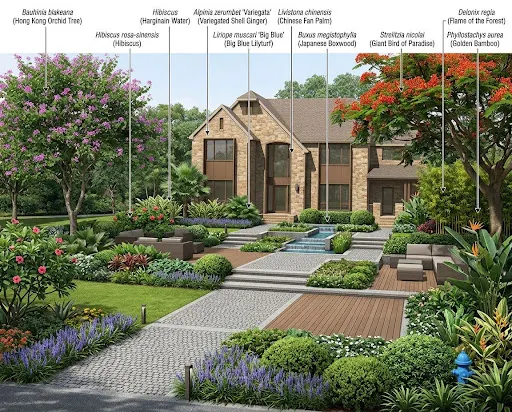
AI Yard Design Studio is built around turning an ordinary yard photo into a climate-aware concept with plant labeling—so your next conversation can use names and regional fit, not only “those green mounds on the left.” If you want to test that workflow on your own photo, you can use this free AI landscape design tool to generate a first-round vision before you lock in a budget. The product splits two use cases deliberately. AI Yard Design targets residential outdoor spaces: front and back yards, side yards, gardens, and pool areas where homeowners spend daily life. AI Landscape Design targets larger-scale sites—for example community spaces and park-scale planning—when the canvas is bigger than a single home lot. Standout capabilities, summarized:
- Location-aware climate logic, so suggestions align with your region instead of defaulting to a one-size-fits-all fantasy climate.
- Plant name labels on the render, tied visually to the design, which helps when you talk to a nursery or a landscaper.
- Style plus practical constraints—including sustainability, accessibility, and maintenance level—so renders move toward spaces you can realistically keep.
- High-resolution output from your upload, aimed at quick iteration and sharing, not just a tiny preview.
None of this removes the need for field measurements or professional review. Think of it as a cheap round of imagination that lowers regret later.
Bottom line
The best free entry to AI landscape design is not about finding a magic button. It is about generating credible alternatives for your real yard, fast enough that you choose a direction with confidence—before the heavy spending begins. If climate fit, labeling, and both home-scale and larger outdoor projects matter to you, pick a specialized yard platform and run one serious iteration on your own photo. The clarity is worth more than another weekend of indecision.


