
Biochar-based carbon removal projects are increasingly evaluated through a geographic lens. Location determines feedstock security, cost structure, permanence credibility, and scalability. In this context, Southeast Asia presents a set of structural advantages that differentiate it from temperate regions and position it as a strategically favorable zone for large-scale biochar carbon removal deployment.
Biomass Abundance Feedstock Density
Concentrated Agricultural Residues
Southeast Asia generates vast volumes of lignocellulosic residues from rice, palm oil, coconut, sugarcane, and forestry operations. Unlike dispersed residue systems in developed economies, biomass in this region is geographically concentrated around processing hubs such as rice mills and palm oil plantations.
This spatial density reduces logistics cost per ton and minimizes feedstock volatility for biochar production equipment. Stable input streams are essential for carbon removal projects, where long-term credit issuance depends on predictable throughput.
High Lignin Feedstock Profiles
Many regional residues, particularly palm kernel shell, coconut shell, and woody byproducts, exhibit high lignin content. This directly improves biochar yield and enhances carbon stability. From a carbon accounting perspective, higher fixed carbon retention increases removal efficiency per unit of biomass processed.
Climatic and Thermodynamic Advantages
Favorable Drying Conditions
Tropical climates enable passive or low-energy biomass drying. While humidity is often cited as a challenge, consistent ambient temperatures reduce the need for energy-intensive drying systems common in colder regions.
Lower preprocessing energy demand improves net carbon removal and enhances lifecycle performance metrics. This advantage compounds over scale.
Year-Round Operation Potential
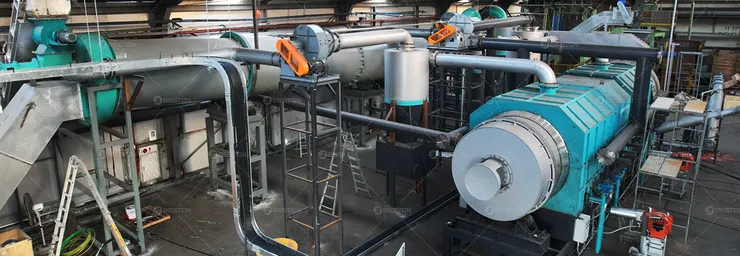
Seasonal interruptions are minimal. Unlike regions constrained by winter conditions or biomass harvest cycles, Southeast Asia supports near-continuous operation. A biomass pyrolysis plant operating at stable capacity achieves superior capital utilization and smoother credit issuance schedules.
Cost Structure and Project Economics
Competitive Capital and Operating Costs
Construction, fabrication, and labor costs remain structurally lower than in OECD markets. This reduces upfront capital expenditure and lowers the cost per ton of installed capacity.
Operating expenditure also benefits from localized supply chains and lower maintenance labor costs. These factors collectively compress the breakeven threshold for biochar carbon removal projects.
Feedstock Cost Asymmetry
In many jurisdictions, agricultural residues are treated as low-value byproducts or waste. In some cases, negative-cost feedstock structures exist due to disposal pressures. This asymmetry materially improves project margins compared to regions where biomass is already commoditized.
Policy Environment and Regulatory Trajectory
Alignment with Waste Management Objectives
Several Southeast Asian governments prioritize agricultural waste reduction, open burning mitigation, and rural value creation. Biochar production aligns directly with these policy objectives, facilitating permitting and stakeholder engagement.
While carbon removal regulation remains emergent, waste-to-value frameworks provide a pragmatic entry point for project deployment.
Gradual Integration into Carbon Markets
Although compliance carbon markets are less mature, voluntary carbon market participation is expanding. Regional projects benefit from early-mover positioning as methodologies for biochar carbon removal gain recognition.
Host countries increasingly view carbon removal projects as export-oriented climate infrastructure, supporting foreign investment frameworks and bilateral offset mechanisms.
Infrastructure and Logistics Readiness
Proximity to Export Corridors
Southeast Asia’s port infrastructure supports bulk material handling and international shipment. This is critical for biochar destined for export markets or long-term storage applications outside the production country.
Efficient logistics enable project developers to decouple production location from end-use geography, preserving flexibility in commercialization strategy.
Modular Deployment Compatibility
Distributed biomass availability favors modular plant architectures. Smaller, replicated units can be deployed close to feedstock sources, reducing transport emissions and infrastructure burden.
This modularity supports phased scaling and capital risk management.
Carbon Removal Integrity Considerations
Long-Term Carbon Stability
Biochar produced from lignin-rich tropical biomass exhibits high aromaticity and low O/C ratios when processed under controlled conditions. These characteristics enhance resistance to microbial degradation and oxidation.
From a durability standpoint, this supports high permanence assumptions, a critical determinant of credit quality and buyer confidence.
Measurement and Verification Feasibility
Centralized agricultural processing facilities simplify feedstock traceability. Combined with consistent operating conditions, this improves the robustness of monitoring, reporting, and verification protocols.
Lower variability reduces uncertainty discounts applied by carbon credit buyers.
Socioeconomic Co-Benefits
Rural Economic Integration
Biochar carbon removal projects integrate well with rural economies. They create stable demand for residues, generate local employment, and reduce environmental externalities associated with waste burning.
These co-benefits strengthen social license to operate and reduce non-technical project risk.
Technology Transfer and Capacity Building
Deploying advanced thermochemical systems accelerates industrial capability development. Over time, local fabrication and operational expertise reduce dependency on imported systems and improve project resilience.
Strategic Positioning in Global Carbon Removal Supply
Southeast Asia occupies a unique position at the intersection of biomass abundance, cost efficiency, and carbon market emergence. While regulatory frameworks continue to evolve, structural fundamentals already favor deployment.
For developers seeking scalable, cost-competitive, and high-integrity biochar carbon removal, the region offers not just incremental advantage, but systemic leverage. The competitive edge lies not in a single factor, but in the convergence of feedstock, climate, economics, and logistics within a single geography.


