
“We don’t always run one project at a time.” This is what many contractors say when they plan equipment investments. In reality, most road contractors in Indonesia, Southeast Asia, Africa, and the Middle East handle multiple projects with different scales, timelines, and locations. So, choosing the right tarmac plant for sale is no longer about one project—it is about long-term flexibility.
If you choose too small, you risk delays and penalties. If you choose too large, you increase fuel costs, idle time, and financial pressure. Therefore, the key question becomes: how do you choose a flexible asphalt plant capacity that works across multiple projects?In this guide, we break down the decision process from a contractor’s perspective. We focus on real scenarios, practical numbers, and decision logic that helps you maximize return on investment.
Understand Your Project Portfolio First
Before you look at any equipment model, you need to understand your project mix. This is the foundation of your decision.
In most cases, contractors handle a combination of small municipal roads, medium highway sections, and occasional large infrastructure jobs. Each project has different daily output requirements, working hours, and deadlines.
Typical Multi-Project Scenarios
For example, a contractor may handle:
- A 3 km urban road repair project requiring 60–80 tons/hour
- A rural highway upgrade needing 80–120 tons/hour
- A large expressway section requiring 120–160 tons/hour
Clearly, one fixed capacity cannot perfectly match all these projects. Therefore, instead of optimizing for one project, you should optimize for your “most frequent demand range.”
In other words, choose a capacity that covers 70%–80% of your projects efficiently.
Balance Between Peak Demand And Daily Efficiency
Now that you understand your project mix, the next step is balancing peak demand and daily efficiency. This is where many decisions go wrong.
Some contractors choose capacity based on the largest project they may get. However, this often leads to underutilization.
Why Oversizing Can Hurt Your Profit
A 160 TPH hot mix plant sounds powerful. However, if you run it at only 60–70 TPH most of the time, several problems appear:
- Higher fuel consumption per ton
- Increased maintenance cost
- Lower operational efficiency
- More idle equipment time
As a result, your cost per ton increases, and your profit margin shrinks.
Why Undersizing Creates Risk
On the other hand, choosing a 60 TPH plant may seem cost-effective. However, during peak demand, you may face:
- Tight deadlines and overtime costs
- Delivery delays and penalties
- Customer dissatisfaction
Therefore, the smart strategy is to choose a mid-range capacity that can stretch when needed but still run efficiently daily.
Choose Modular And Adjustable Plant Design
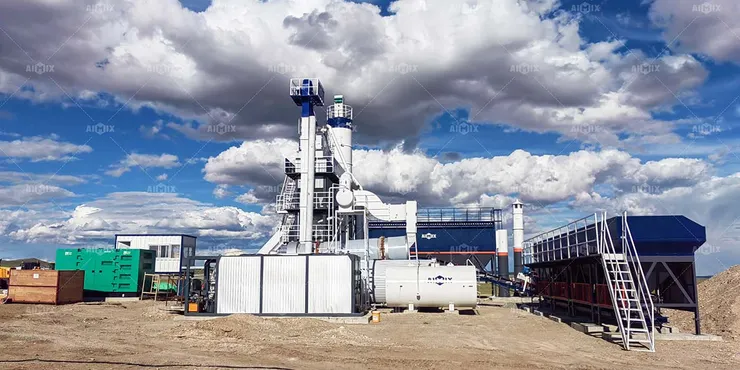
Once you define your capacity range, the next step is flexibility in configuration. This is where modern asphalt plants provide real advantages.
Instead of relying only on capacity numbers, you should focus on how flexible the plant design is.
Key Features That Improve Flexibility
First, variable frequency control allows you to adjust output based on project needs. This means you can run at 70 TPH today and 110 TPH tomorrow without efficiency loss.
Second, modular cold aggregate bins help you adapt to different material types and mix ratios. This is critical when you work across regions with different raw materials.
Third, scalable storage systems allow you to handle peak demand without changing the entire plant.
As a result, your plant becomes a “multi-project solution” rather than a “single-project machine.”
Consider Mobility And Project Switching Speed
However, capacity alone is not enough. When you manage multiple projects, mobility becomes a key factor.
Many contractors lose time and money not because of low capacity, but because of slow relocation.
Stationary Vs Mobile Plants
Stationary asphalt plants for sale work well for long-term, high-volume projects. However, they require strong foundations and longer installation time.
In contrast, mobile asphalt plants offer faster installation and relocation. This makes them ideal for contractors handling multiple short-term projects.
Therefore, if your projects frequently change locations, a mobile or semi-mobile plant can significantly improve your overall efficiency.
Real Impact On Project Profitability
For example, if relocation takes 20 days, you lose almost one month of production. However, if a mobile plant reduces this to 5–7 days, you gain extra working time and revenue.
Over a year, this difference becomes a major profit factor.
Match Capacity With Logistics And Supply Chain
Next, you must consider logistics. Even the best asphalt plant cannot perform well without stable material supply and transportation.
This is where many theoretical capacity calculations fail in real projects.
Material Supply Limitations
If your aggregate supply can only support 80 TPH, running a 120 TPH plant will not increase output. Instead, it creates bottlenecks and inefficiencies.
Similarly, bitumen supply delays can stop production entirely.
Truck And Paving Coordination
In addition, your hauling trucks and paving machines must match plant output. Otherwise:
- Trucks queue and waste fuel
- Pavers wait and slow down work
- Overall efficiency drops
Therefore, always align plant capacity with your logistics system, not just theoretical production numbers.
Evaluate Total Cost Per Ton, Not Just Equipment Price
At this point, you have a clearer idea of capacity and flexibility. However, the final decision should focus on cost efficiency.
Many buyers focus only on initial price. However, this approach often leads to higher long-term costs.
Key Cost Factors To Compare
When evaluating options, consider:
- Fuel consumption per ton
- Maintenance frequency and cost
- Labor requirements
- Downtime risk
For example, a slightly higher-capacity plant with better fuel efficiency may reduce your cost per ton significantly.
Therefore, always calculate total cost per ton across multiple projects, not just purchase price.
Plan For Future Expansion And Business Growth
Finally, you should think beyond your current projects. A flexible asphalt plant should support your business growth.
Many contractors expand from local roads to highways, then to government infrastructure projects. Your equipment should grow with you.
Smart Capacity Planning Strategy
A practical approach is to choose a plant that operates efficiently at medium capacity but can handle higher output when needed.
For example, a 100–120 TPH plant often fits this strategy. It covers most mid-size projects and can support larger jobs with proper planning.
In addition, choosing a plant with upgrade options allows you to expand without replacing the entire system.
Conclusion: Build A Flexible System, Not Just Buy A Plant
Choosing asphalt plant capacity is not just a technical decision. It is a business strategy.
You need to balance project diversity, operational efficiency, mobility, logistics, and long-term growth. When you connect all these factors, the right capacity becomes clear.
Instead of asking “What is the biggest plant I can afford?”, ask “What is the most flexible system for my projects?”
That shift in thinking will help you reduce risk, improve efficiency, and increase profitability.
Take The Next Step For Your Projects
If you are planning to invest in an asphalt plant for multiple projects, now is the right time to evaluate your real needs.
Share your project types, required output (TPH), working hours, and project locations. Based on that, you can receive a tailored solution that matches your business.
At AIMIX, we help contractors choose flexible asphalt plant solutions that work across different projects and conditions. Whether you need mobility, efficiency, or scalability, we can support your decision with practical experience.
Contact us today to get a customized recommendation and start building a more flexible and profitable operation.


