
Rubber Tyred Gantry Cranes (RTG cranes) are widely used in ports, container yards, logistics centers, and industrial storage facilities due to their mobility, flexibility, and ability to handle multiple types of cargo. Unlike fixed lifting systems, RTG cranes can adapt to different operational environments and load requirements, making them a preferred solution for modern material handling.
However, selecting the right RTG crane is not a simple decision. When cargo types vary—from containers and steel coils to precast concrete and heavy industrial equipment—the crane must be carefully matched to operational needs, yard conditions, and long-term business goals.Choosing incorrectly can lead to inefficiency, excessive maintenance costs, safety risks, or underutilized equipment. In this article, we will explain how to choose the right RTG crane for diverse cargo handling applications and what key factors should be considered during the selection process.
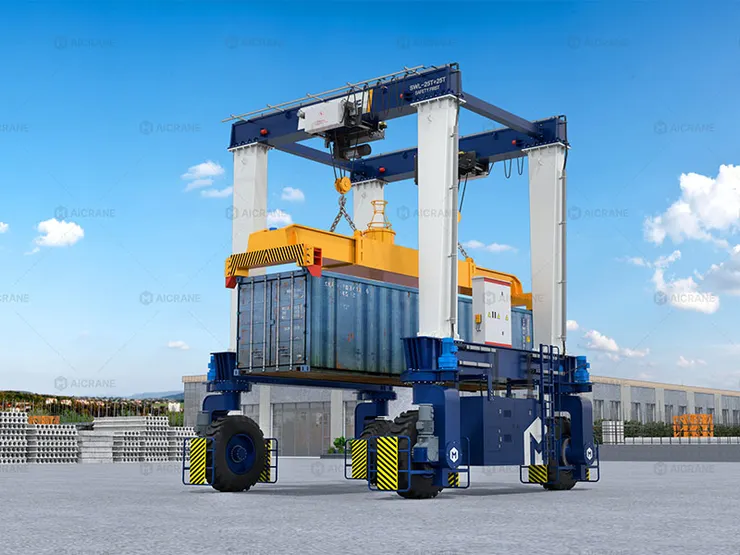
Understanding the Role of RTG Cranes in Multi-Cargo Operations
RTG cranes are designed to operate in dynamic environments where cargo types are not uniform. In a single yard, operators may need to handle:
- Standard ISO shipping containers
- Steel coils and plates
- Precast concrete beams and segments
- Machinery and oversized equipment
- Bulk or irregular industrial cargo
This diversity requires a crane system that is not only strong but also adaptable in configuration, lifting tools, and control precision.
The key advantage of RTG cranes is their modular design. By changing below-the-hook attachments and adjusting control parameters, a single RTG can perform multiple material handling roles efficiently.
Step 1: Define Your Cargo Types Clearly
The first and most important step in selecting an RTG crane is identifying the full range of cargo types that will be handled.
Container Handling
If containers are the primary cargo, you will need:
- ISO-standard spreader system
- High stacking efficiency (e.g., 1-over-5 or higher)
- Fast cycle speeds
- High throughput capability
Steel and Metal Products
For steel coils, plates, or pipes:
- Coil hooks or C-hooks
- High precision positioning
- Load balancing control
- Anti-sway systems for stability
Precast Concrete Elements
For beams, slabs, or segments:
- Lifting beams or specialized clamps
- High load stability requirements
- Slow, controlled lifting motion
Mixed Cargo Operations
If the yard handles multiple cargo types, flexibility becomes the top priority:
- Quick attachment change system
- Multi-mode control system
- Adjustable spreader or hook configurations
Understanding cargo diversity ensures that the RTG crane is not over- or under-designed.
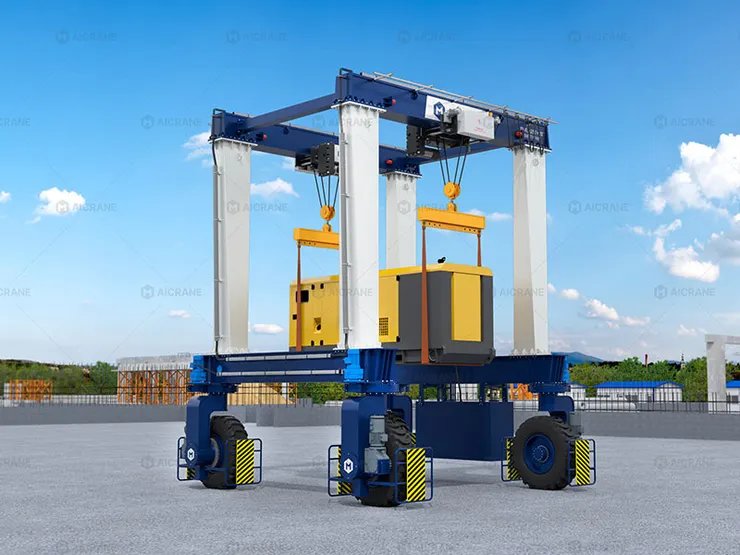
Step 2: Determine Lifting Capacity Requirements
Selecting the correct lifting capacity is critical for both safety and efficiency.
RTG cranes typically range from 30 tons to over 100 tons depending on application.
Key considerations:
- Maximum single load weight
- Average daily load weight
- Frequency of heavy lifting cycles
- Future expansion plans
Important engineering principle:
It is not enough to consider only maximum load. You must also evaluate the load spectrum.
For example:
- Frequent heavy lifting near maximum capacity requires a heavy duty gantry crane
- Occasional heavy lifts may allow more flexibility in design
Choosing the correct capacity ensures structural safety and prevents premature fatigue.
Step 3: Evaluate Yard Size and Layout
RTG cranes rely on mobility, so yard design plays a major role in selection.
Key layout factors:
- Lane width between stacks
- Turning radius requirements
- Number of stacking rows
- Travel distance within the yard
- Obstacle clearance (buildings, equipment, etc.)
Steering system selection:
RTG cranes offer multiple steering modes:
- Straight travel
- Crab steering
- 90-degree rotation
- Differential steering
If your yard has narrow lanes or complex layouts, advanced steering capability becomes essential.
Step 4: Choose the Right Lifting Height and Span
Span and lifting height directly affect storage capacity and operational efficiency.
Span considerations:
- Wider span = more stacking lanes
- Narrower span = better maneuverability
Lifting height considerations:
- Higher stacking improves yard density
- Lower stacking reduces structural stress and energy consumption
For container terminals, stacking height is often a key efficiency driver. However, for mixed cargo yards, moderate height with better flexibility may be more practical.
Step 5: Select the Proper Power System
RTG cranes can be powered in several ways, and the choice significantly impacts operating cost and environmental performance.
Diesel-powered RTG
Advantages:
- High mobility
- No external power infrastructure required
- Suitable for remote or temporary yards
Disadvantages:
- Higher fuel cost
- Higher emissions
- More maintenance on engine systems
Electric RTG (eRTG)
Advantages:
- Lower operating cost
- Zero local emissions
- High energy efficiency
Disadvantages:
- Requires power infrastructure (cable reel or busbar system)
- Limited mobility range depending on setup
Hybrid RTG
Advantages:
- Balanced fuel and energy use
- Flexible operation in variable workloads
- Reduced emissions compared to diesel
The right choice depends on infrastructure availability, environmental regulations, and operating intensity.
Step 6: Consider Control and Automation Level
Modern RTG cranes range from manual operation to fully automated systems.
Manual operation
- Operator cabin control
- Suitable for smaller yards or variable operations
Semi-automated systems
- Assisted positioning
- Anti-sway control
- Load monitoring systems
Fully automated RTG systems
- Driverless operation
- AI-based stacking optimization
- Remote control centers
For diverse cargo handling, semi-automated systems often provide the best balance between flexibility and control.
Step 7: Evaluate Safety Systems and Stability Features
Safety is a critical factor, especially when handling multiple cargo types with different weights and geometries.
Essential safety features include:
- Anti-sway control system
- Overload protection
- Wind speed monitoring
- Emergency braking system
- Collision avoidance sensors
- Real-time load monitoring
For mixed cargo environments, stability systems are especially important because load behavior varies significantly between containers, coils, and irregular equipment.
Step 8: Analyze Structural Design and Durability
The RTG crane structure must be designed for long-term durability under variable loads.
Key engineering considerations:
- Box girder strength
- Fatigue resistance
- Weld quality and reinforcement
- Material grade (high-strength steel)
Diverse cargo handling increases stress variability, so fatigue resistance becomes more important than static load capacity alone.
Step 9: Check Maintenance and Service Accessibility
Maintenance cost is a major long-term factor in RTG crane ownership.
Important considerations:
- Easy access to mechanical components
- Modular replacement design
- Availability of spare parts
- Diagnostic systems for predictive maintenance
A well-designed RTG crane should minimize downtime during repairs and inspections.
Step 10: Plan for Future Expansion
A good RTG crane investment should support future growth.
Questions to consider:
- Will cargo volume increase in the next 5–10 years?
- Will new cargo types be introduced?
- Will yard layout change or expand?
Selecting a scalable RTG system ensures long-term cost efficiency and avoids premature replacement.
Industry Applications of Multi-Cargo RTG Selection
Proper RTG selection is especially important in industries such as:
Port terminals
Handling containers, bulk cargo, and transshipment operations.
Steel distribution yards
Managing coils, plates, and structural steel.
Precast concrete factories
Handling beams, slabs, and structural components.
Logistics hubs
Managing mixed cargo flows with varying load requirements.
Each application requires a tailored configuration strategy.
Common Mistakes in RTG Crane Selection
Many buyers make mistakes that reduce efficiency and increase costs:
- Choosing capacity based only on maximum load
- Ignoring cargo diversity
- Underestimating yard layout constraints
- Selecting insufficient steering modes
- Overlooking future expansion needs
- Focusing only on initial price instead of lifecycle cost
Avoiding these mistakes is key to maximizing return on investment.
Conclusion
Choosing the right RTG crane for diverse cargo handling requires a comprehensive understanding of cargo types, lifting requirements, yard conditions, power systems, control technologies, and future expansion plans.
An RTG crane is not just a lifting machine—it is a long-term logistics asset that directly impacts operational efficiency and cost structure. When properly selected, it can significantly improve flexibility, reduce equipment dependency, and optimize material flow across multiple industries.
By carefully evaluating all technical and operational factors, businesses can ensure that their RTG crane investment delivers maximum performance, safety, and economic value over its entire service life.


