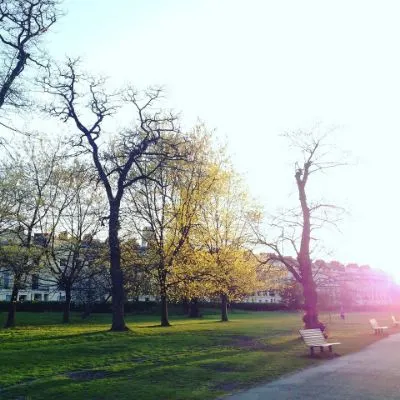
Her work began each morning in a quiet room filled with pale light, where she tuned her senses not to sound but to emotional frequencies suspended in the air.
2025.11.22
珍一直相信,每段記憶都帶著一種迴響,一種微弱卻持續存在於感知邊緣的震動。作為一名「迴響檔案師」,她訓練自己去聽這些微妙的共鳴——來自過去的選擇、尚未說出口的意念,以及那些被遺忘的自我輪廓。每天清晨,她都在一間被柔光照亮的房間開始工作。她調整的不是聽覺,而是情感頻率。人們在感到內心分岔、兩個自我重疊得無法分辨時會來找她。珍從不給出解答;相反,她傾聽。她像製圖師一樣描繪那些內在迴響,追蹤一個不斷變動的心靈版圖。她會閉上眼,深呼吸,感受那層層脈動——喜悅擦過遺憾,希望掩映著不安。
最具挑戰的一次,是一位聲稱自己再也認不出鏡中人的女子。珍感受到她周身漂浮著密集而糾纏的迴響,如交織不清的故事線。珍輕柔地工作著,將記憶從夢境中分離,把真實從恐懼中提取。隨著時間流逝,一種新的共鳴出現了——平靜、微亮、堅定。女子重新露出微笑,不再尋找單一身份,而是接受多重自我的和聲。
然而珍也知道,自己體內仍有未曾面對的迴響。某晚,當所有訪客離開後,她將雙掌貼在胸口,朝內聆聽。出現的,是兩種柔軟的情感訊號,重疊卻獨立,如兩個音符組成的脆弱和弦。她第一次允許自己成為自己的研究對象,用一樣的耐心描摹自身的輪廓。
那一刻,珍明白:迴響不需要被解決,它們只需要被承認。
Jane had always believed that every memory carried an echo, a faint vibration that lingered just beyond the edge of perception. As an Echo Archivist, she had trained herself to hear these subtle resonances—whispers of past choices, unspoken intentions, and the blurred outlines of forgotten selves. Her work began each morning in a quiet room filled with pale light, where she tuned her senses not to sound but to emotional frequencies suspended in the air.
People came to her when they felt divided inside, when two versions of themselves overlapped so closely that neither could be named. Jane never offered solutions. Instead, she listened. She mapped their inner echoes like a cartographer tracing the shifting borders of a country in flux. She would close her eyes, breathe slowly, and feel the layered pulses rising from them—joy brushing against regret, hope shadowed by uncertainty.
Her greatest challenge arrived in the form of a woman who insisted she could no longer recognize her own reflection. Jane sensed a dense tangle of echoes drifting around her, like intertwined threads of stories that refused to settle. She worked gently, untangling memories from dreams, truth from fear. Over time, a new resonance emerged—quiet, luminous, steady. The woman began to smile again, recognizing not a single identity but a harmony of coexisting selves.
But Jane knew that she, too, held echoes she had never faced. One evening, after her visitors had gone, she pressed her palms against her own chest and listened inward. What she found was unexpected: two soft emotional signatures, overlapping yet distinct, like twin notes forming a fragile chord. For the first time, she allowed herself to be her own subject, tracing her inner contours with the same care she offered others.
In that moment, Jane understood that echoes did not need to be resolved—they only needed to be acknowledged.