Years ago, a Grade 5 student approached me and whispered a request: He wanted to take down his composition on the bulletin board. He felt he needed to revise something in his content because some parts were fabricated. I realized his unspoken truth thinking: The teacher may not notice the fabrication, but my classmates certainly know.
This is the power of “reader clues”. For most students, the primary reader is teacher, but if readers were expanded to include classmates, everything changes.
Reader clues
In writing process, a writers’ awareness of “reader clues” essentially addressed a question “Who will read my work?” Flower and Hayes (1981), the renowned writing researchers, pointed out that “audience cognition” is one of important knowledge for writers as they navigate the writing environment. Clear audience awareness will prompt writers to shape their goals and produce appropriate content. Chen (2007) pointed out that “audience” guides writers to think. During the process of writing, “reader clues” will drive writers to anticipate: what do readers already know? what do readers need to know? And what do readers want to know?
How to improve the awareness of “reader clues”?
Tip #1 Write to a real person
Ask students to write a letter of gratitude to his/her friend. Explicitly tell them that the teacher will not read his/her letter, nor will help revise grammar or spelling mistakes. The focus is simply: “What do you truly want to say to your friend?”
In this activity, the teachers’ role shifts from “an editor” to “a guide”. Students need to engage themselves in a real writing task, anticipate content suitable for their friends, and strive to use correct vocabulary and sentences. Writing to a real person makes the writing activity truly meaningful.
Tip#2 Include more readers
Explicitly tell students that you will post their essays on the classroom bulletin board. This announcement clarifies that the entire class will be their readers. After posting their essays, give each student 3 sticky notes and ask them to give 3 pieces of feedback to their classmates. This simple activity creates a real interaction and fosters a positive atmosphere in class.
Everyone is involved in this class task. Students are required to read other students’ work, give comments and receive feedback from their peers. The teacher is no longer the sole reader, everyone in this class becomes an active audience member. Therefore, students’ essays need to persuade not only the teacher, but also the entire class.
Tip#3 1-minute story relay
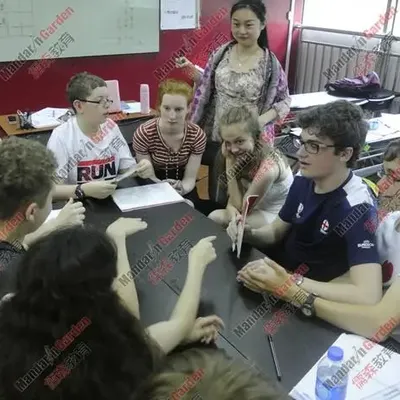
How to play: Distribute a blank sheet of paper to everyone. Set a timer for 1-minute and ask everyone to start a story. When the time is up, everyone passes the paper to the student sitting next to them. During the next 1-minute, students need to understand the previous peer’s content and add a logical continuation. Finally, the paper returns to the original author. The last minute is for the original author to write a conclusion.
In this game, live readers sit right next to writers. Rapidly understanding what peers want to say, and creating logical content is the most challenging part in this activity, but it is also the most interesting!

Gemini generated
"Reader clues" guide the writing goals. Assigning real writing tasks, facilitating students to interact with a real person, is the most effective strategy to raise the awareness of ”reader clues.” Writing is the process to communicate with the world and self. Real situation provides an authentic space that encourages students to speak the truth.