1. Introduction
In modern steelmaking, continuous casting has become the dominant technology for transforming molten steel into semi-finished products such as slabs, blooms, and billets. Within this process, the tundish plays a critical role as an intermediate vessel between the ladle and the mold. Beyond its function as a distributor of liquid steel, the tundish is also a metallurgical reactor where temperature control, inclusion flotation, and flow optimization occur. One of the most important flow-control devices installed in the tundish is the tundish stopper rod.
The tundish stopper rod is a refractory-based mechanical control system used to regulate the flow of molten steel from the tundish to the mold through the tundish nozzle. Its performance directly affects casting stability, steel cleanliness, inclusion control, nozzle clogging behavior, and surface quality of the final product. Because of these critical responsibilities, the design, material selection, and operation of tundish stopper rods are subjects of continuous development in the steel and refractory industries.
This article provides a detailed and technical explanation of what a tundish stopper rod is, how it works, its structural components, materials, operating principles, advantages, limitations, and current trends in stopper rod technology. The discussion is intended for metallurgists, refractory engineers, casting operators, and technical decision-makers in continuous casting operations.
2. What Is a Tundish Stopper Rod?
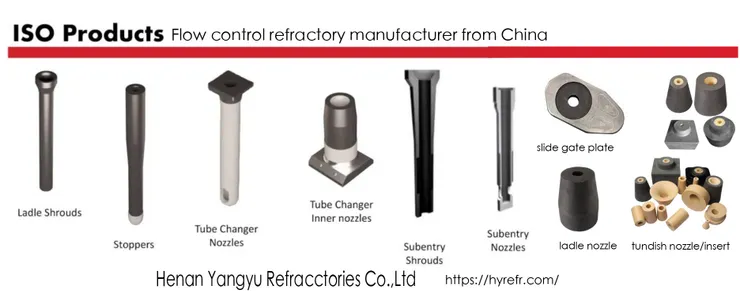
A tundish stopper rodis a vertically operated refractory rod assembly installed above the tundish nozzle. Its primary function is to control or completely shut off the flow of molten steel from the tundish into the mold during continuous casting. By moving the stopper rod up or down relative to the nozzle orifice, the opening area through which steel flows can be precisely adjusted.
In simple terms, the stopper rod acts as a valve. When the rod tip is pressed against the nozzle seating area, steel flow is stopped. When the rod is lifted, molten steel flows through the annular gap between the stopper tip and the nozzle, with the flow rate determined by the gap size and ferrostatic pressure.
Stopper rods are widely used in slab, bloom, and billet casting machines, particularly where accurate flow control, rapid response, and clean steel production are required.
3. Role of the Stopper Rod in the Continuous Casting Process
3.1 Flow Control and Casting Speed Regulation
The most fundamental role of the tundish stopper rod is to regulate steel flow rate into the mold. Casting speed must be carefully controlled to avoid defects such as:
- Surface cracks
- Mold level fluctuations
- Breakouts
- Internal segregation
By finely adjusting the stopper rod position, operators can maintain a stable mold level and consistent casting speed, even as tundish steel level decreases during casting.
3.2 Emergency Shut-Off
In abnormal situations such as mold breakouts, nozzle failure, or sudden equipment malfunction, the stopper rod provides an immediate shut-off mechanism. Lowering the stopper rod to fully seal the nozzle can stop the steel flow rapidly, minimizing safety risks and equipment damage.
3.3 Steel Cleanliness Control
The stopper rod system contributes indirectly to steel cleanliness. A stable and controlled flow reduces turbulence at the tundish nozzle and mold entry, limiting reoxidation and minimizing the entrainment of slag or non-metallic inclusions.
Additionally, advanced stopper rod designs help stabilize the flow pattern in the tundish, which promotes inclusion flotation and separation before steel enters the mold.
4. Structural Components of a Tundish Stopper Rod Assembly
A tundish stopper rod is not a single component but an integrated system consisting of refractory and mechanical elements.
4.1 Stopper Rod Body
The stopper rod body is typically a long refractory shaft extending from above the tundish cover down to the nozzle area. It must withstand high temperatures, thermal shock, and mechanical stresses during operation.
4.2 Stopper Head (Stopper Tip)
The stopper head is the critical working end of the rod. It interfaces directly with the tundish nozzle or seating block. The geometry of the stopper head—often conical, spherical, or mushroom-shaped—strongly influences flow characteristics, sealing performance, and wear behavior.
4.3 Seating Block or Nozzle Interface
The stopper rod tip seals against a seating block or the upper surface of the tundish nozzle. This interface must be precisely machined and well-aligned to prevent leakage, uneven wear, or unstable flow.
4.4 Steel Core and Reinforcement
Many modern stopper rods include a steel or composite internal core to improve mechanical strength and resistance to bending or breakage during handling and operation.
4.5 Actuation System
The stopper rod is connected to a mechanical or hydraulic actuator located above the tundish. This system allows precise vertical movement of the rod and can be manually or automatically controlled, often integrated with mold level control systems.
5. Materials Used in Tundish Stopper Rods
Material selection is one of the most critical factors determining stopper rod performance and service life.
5.1 Alumina-Based Materials
High-purity alumina (Al₂O₃) is commonly used due to its excellent refractoriness, corrosion resistance, and mechanical strength at high temperatures. Alumina-based stopper rods are widely applied in carbon steel casting.
5.2 Alumina-Carbon (Al₂O₃–C) Composites
Alumina-carbon materials combine high corrosion resistance with improved thermal shock resistance. The presence of carbon reduces wetting by molten steel and slag, which helps minimize erosion and clogging.
However, carbon-containing materials require careful oxidation protection, often through antioxidants or protective coatings.
5.3 Zirconia and Zirconia-Containing Materials
Zirconia (ZrO₂) offers exceptional resistance to erosion and thermal shock, particularly at the stopper head. Many high-end stopper rods use zirconia inserts or zirconia-rich compositions at the working tip to extend service life.
5.4 Spinel and Advanced Composites
Magnesia-alumina spinel and other engineered composites are increasingly used to balance corrosion resistance, thermal stability, and cost. These materials are particularly effective in steels with aggressive slags or high calcium treatment levels.
6. Operating Principle of the Tundish Stopper Rod
The stopper rod operates based on hydrostatic pressure and controlled mechanical movement.
When the stopper rod tip is fully seated against the nozzle, the flow path is blocked. As the rod is lifted, an annular opening forms between the rod tip and the nozzle. Molten steel flows through this opening under the ferrostatic pressure of the steel column in the tundish.
The flow rate depends on:
- Stopper rod lift height
- Nozzle geometry
- Steel temperature and viscosity
- Tundish steel level
Modern casting operations often use automatic stopper rod control systems linked to mold level sensors. These systems continuously adjust the stopper rod position to maintain a stable mold level.
7. Advantages of Tundish Stopper Rod Systems
7.1 Precise Flow Control
Compared to slide gate systems, stopper rods provide finer and more responsive flow regulation, especially at low flow rates.
7.2 Rapid Response
The vertical movement of the stopper rod allows quick adjustment, which is critical for stabilizing mold level during transient conditions.
7.3 Improved Steel Cleanliness
Reduced turbulence and stable flow conditions help limit reoxidation and inclusion entrainment.
7.4 Compact and Simple Design
Stopper rod systems are mechanically simpler than multi-plate slide gate systems, with fewer moving parts in direct contact with molten steel.
8. Common Problems and Failure Mechanisms
Despite their advantages, tundish stopper rods face several operational challenges.
8.1 Erosion and Corrosion
Continuous exposure to high-temperature molten steel and aggressive slags leads to gradual erosion of the stopper head and seating area. This erosion can cause unstable flow or leakage.
8.2 Thermal Shock Cracking
Rapid heating during start-up or sudden temperature fluctuations can cause cracking, especially in poorly designed or low-quality refractory materials.
8.3 Misalignment and Leakage
Improper alignment between the stopper rod and nozzle can result in incomplete sealing, steel leakage, or asymmetric flow.
8.4 Nozzle Clogging Interaction
Inclusion buildup or alumina deposition in the nozzle can interact with the stopper rod, causing erratic flow control or excessive wear at the rod tip.
9. Comparison with Slide Gate Systems
Both stopper rods and slide gate systems are used for tundish flow control, and the choice depends on casting conditions.
- Stopper rods offer better fine control and faster response.
- Slide gates provide robust shut-off and are often preferred for long casting sequences or high-throughput operations.
In many modern steel plants, stopper rods are favored for high-quality steel grades requiring tight mold level control and superior cleanliness.
10. Recent Developments and Future Trends
Advances in tundish stopper rod technology focus on:
- Optimized tip geometry using computational fluid dynamics (CFD)
- Improved refractory compositions with longer service life
- Anti-clogging coatings and surface treatments
- Integration with fully automated casting control systems
Future stopper rod designs are expected to further enhance steel cleanliness, reduce refractory consumption, and improve overall casting reliability.
11. Conclusion
The tundish stopper rod is a critical component in the continuous casting process, serving as the primary flow-control and shut-off device between the tundish and the mold. Its performance directly influences casting stability, product quality, safety, and operational efficiency.
Through careful design, advanced refractory materials, precise mechanical control, and proper operational practices, tundish stopper rods can deliver reliable, precise, and long-lasting performance. As steelmakers continue to demand higher cleanliness levels and more stable casting conditions, the importance of optimized tundish stopper rod systems will only increase.More information please visitHenan Yangyu Refractories Co.,Ltd