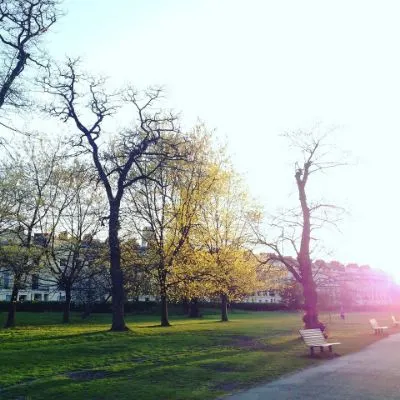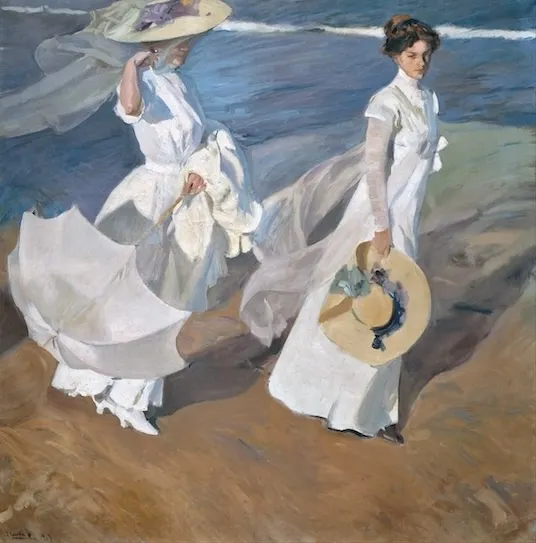
Joaquin Sorolla 畫作
The Love Song of J. Alfred Prufrock / T. S. Eliot
普魯弗洛克的情歌 / 艾略特
S’io credesse che mia risposta fosse
A persona che mai tornasse al mondo
Questa fiamma staria sensa piu scosse.
Ma perciocche giammai di questo fondo
Non torno vivo alcun, s’i’odo il vero
Sensa tema d’infamia ti rispondo.
詩首 摘自 但丁 <神曲:地獄篇>
意譯:如果我的回答是對一個將回到塵世的人而說,
那麼,這火燄將熄滅。
然而,正因無人曾離開這深淵而繼續存活
(如果我的所聞正確),
那我願意回答你,無懼於自身的聲名狼籍。
Let us go then, you and I,
我們走吧,你和我,
When the evening is spread out against the sky
當暮色緩緩漫向天空,
Like a patient etherized upon a table;
一如病患麻醉於手術台上;
Let us go, through certain half-deserted streets,
我們走吧,走經幾條半遭遺棄的大街,
The muttering retreats
不眠的夜
Of restless nights in one-night cheap hotels
喋喋不休地撤離至廉價的一夜旅店,
And sawdust restaurants with oyster-shells:
撤離至充斥牡蠣殼的餐廳,滿是塵屑:
Streets that follow like a tedious argument
街道尾隨,如一串令人生厭的辯言,
Of insidious intent
動機陰險,
To lead you to an overwhelming question . . .
引你走向一道無可抗拒的問題…
Oh, do not ask, ‘What is it?’
啊,可別問,「是什麼?」
Let us go and make our visit.
我們走吧,走進我們的訪留。
In the room the women come and go
房裡,女人來回地走,
Talking of Michelangelo.
談論起米開朗基羅。
The yellow fog that rubs its back upon the window-panes,
黃霧在窗玻璃上搓背,
The yellow smoke that rubs its muzzle on the window-panes,
黃煙在窗玻璃上磨嘴,
Licked its tongue into the corners of the evening,
伸舌舔入暮色的角落,
Lingered upon the pools that stand in drains,
在排水口的死潭上徘徊,
Let fall upon its back the soot that falls from chimneys,
從煙囪落下的煤煙,落上它的背,
Slipped by the terrace, made a sudden leap,
滑過露台,倏地跳躍,豁然明瞭
And seeing that it was a soft October night,
那是十月裡柔軟的一夜,
Curled once about the house, and fell asleep.
如此繞屋繾綣,墜入睡眠。
And indeed there will be time
果真,會有足夠的時間
For the yellow smoke that slides along the street,
讓黃煙滑過街道,
Rubbing its back up on the window-panes;
在窗玻璃上搓背;
There will be time, there will be time
會有時間,會有時間
To prepare a face to meet the faces that you meet;
去準備一張臉來面對你將面對的臉;
There will be time to murder and create,
有時間去謀殺,去創新,
And time for all the works and days of hands
有時間給雙手一切作為與光陰,
That lift and drop a question on your plate;
把問題捏起,拋下,丟入你的盤底;
Time for you and time for me,
有時間給我,有時間給你,
And time yet for a hundred indecisions,
有時間給一百個將至的舉棋不定,
And for a hundred visions and revisions,
給一百個憧憬,一百個憧憬的修訂,
Before the taking of a toast and tea.
在拿起土司,舉起茶杯之前。
In the room the women come and go
房裡,女人來回地走,
Talking of Michelangelo.
談論起米開朗基羅。
And indeed there will be time
果真,會有足夠的時間
To wonder, ‘Do I dare?’ and, ‘Do I dare?’
去思索,「我是否膽敢?」「我是否膽敢?」
Time to turn back and descend the stair,
有時間回頭,下樓,
With a bald spot in the middle of my hair —
頭髮正中央一塊禿頭 —
[They will say: ‘How his hair is growing thin!’]
(他們會說:「他的頭髮怎麼越來越稀薄!」)
My morning coat, my collar mounting firmly to the chin,
我的晨間大衣,衣領穩穩攀至下顎,
My necktie rich and modest, but asserted by a simple pin —
我的領帶「昂貴而謙虛」,簡樸的領針如此宣稱 —
[They will say: ‘But how his arms and legs are thin!’]
(他們會說:「他的四肢怎麼這麼瘦弱!」)
Do I dare
我是否膽敢,
Disturb the universe?
膽敢驚擾宇宙?
In a minute there is time
於分秒間,會有時間
For decisions and revisions which a minute will reverse.
去做決定,去做修正,那分秒會讓一切顛倒。
For I have known them all already, known them all —
因我早已洞悉一切,洞悉一切 —
Have known the evenings, mornings, afternoons,
洞悉了傍晚、午後、晨間,
I have measured out my life with coffee spoons;
我以咖啡匙測量了我的生命期限;
I know the voices dying with a dying fall
我洞悉了來自遙遠房間的音樂,
Beneath the music from a farther room.
音樂底層墜地將死的語音垂危,
So how should I presume?
我該如何斷言?
And I have known the eyes already, known them all —
我也洞悉了一切眼睛,一切眼睛 —
The eyes that fix you in a formulated phrase,
那些把你釘進公式化語言的眼睛,
And when I am formulated, sprawling on a pin,
如果我被公式化的分析,而我於釘上慌亂伸軀,
When I am pinned and wriggling on the wall,
如果我被釘住了,四肢蠕動於牆面,
Then how should I begin
我該如何,如何開始
To spit out all the butt-ends of my days and ways?
吐出歲月與作為燃盡的一切煙蒂?
And how should I presume?
我該如何斷言?
And I have known the arms already, known them all —
我也洞悉了一切手臂,一切手臂 —
Arms that are braceleted and white and bare
戴著手鐲,白晰赤裸的手臂,
[But in the lamplight, downed with light brown hair!]
(但於燈光下,佈滿了淡棕色的汗毛!)
Is it perfume from a dress
是禮服的香水味
That makes me so digress?
讓我離題甚遠?
Arms that lie along a table, or wrap about a shawl.
手臂,靜置於桌面,包覆於圍巾。
And should I then presume?
我是否該斷言,於此時?
And how should I begin?
我該如何開始?
Shall I say, I have gone at dusk through narrow streets
我是否該說,我曾於黃昏走過窄街,
And watched the smoke that rises from the pipes
望著倚窗的寂寞男子長袖襯衫的手臂,
Of lonely men in shirt-sleeves, leaning out of windows? . . .
煙斗裡升起裊裊的煙?…
I should have been a pair of ragged claws
我本應是一雙襤褸的利爪
Scuttling across the floors of silent seas.
破浪疾行於寧靜海的地面。
And the afternoon, the evening, sleeps so peacefully!
而那午後,那傍晚,如此靜謐的熟睡!
Smoothed by long fingers,
修長的手指撫平著,
Asleep . . . tired . . . or it malingers
入眠… 疲倦… 或者,正裝病告假,
Stretched on the floor, here beside you and me.
伸軀於地面,於你,於我之間。
Should I, after tea and cakes and ices,
喝完茶,吃完冰淇淋和蛋糕之後,我是否
Have the strength to force the moment to its crisis?
還有力氣把此刻推向危機?
But though I have wept and fasted, wept and prayed,
雖然我曾哭泣、禁食,哭泣、禱告,
Though I have seen my head [grown slightly bald] brought in upon a platter
雖然我曾眼見自己的頭顱 (逐漸微禿) 置於淺盤遞入,
I am no prophet — and here’s no great matter;
我不是先知 — 這兒沒有偉大的預言;
I have seen the moment of my greatness flicker,
我曾眼見自身的偉大時刻如葉顫慄,
And I have seen the eternal Footman hold my coat, and snicker,
我曾眼見永恆的守門人接過我的大衣,然後竊笑,
And in short, I was afraid.
總之,我膽怯。
And would it have been worth it, after all,
這一切是否終究值得,
After the cups, the marmalade, the tea,
於茶杯之後,於果醬與茶之後,
Among the porcelain, among some talk of you and me,
於磁器之間,於你我的閒談之間,
Would it have been worth while
是否值得
To have bitten off the matter with a smile,
帶著微笑把這些事咬掉,
To have squeezed the universe into a ball
把宇宙擠壓成一顆球,
To roll it toward some overwhelming question,
滾向某道令人招架不住的問題,
To say: ‘I am Lazarus, come from the dead,
然後說︰「我是拉撒路,於死地復活,
Come back to tell you all, I shall tell you all’ —
回來向你們所有人宣布,我將向所有人宣布」—
If one, settling a pillow by her head,
如果,這時有個女人把抱枕安置頭下,
Should say: ‘That is not what I meant at all.
然後說:「這根本就不是我的意思。
That is not it, at all.’
根本就不是。」
And would it have been worth it, after all,
這一切是否終究值得,
Would it have been worth while,
是否值得
After the sunsets and the dooryards and the sprinkled streets,
於日落、前院、雨灑的街道之後,
After the novels, after the teacups, after the skirts that trail along the floor—
於小說、茶杯、曳地的長裙之後—
And this, and so much more?—
於此之後,還有更多其他的之後?—
It is impossible to say just what I mean!
要說出我想說的,根本不可能!
But as if a magic lantern threw the nerves in patterns on a screen:
然而,一如幻燈機將歇斯底里的紋路拋上螢幕:
Would it have been worth while
是否值得,
If one, settling a pillow or throwing off a shawl,
如果有人安置了抱枕或把圍巾拋下,
And turning toward the window, should say:
轉頭面窗,然後說:
‘That is not it at all,
「根本就不是,
That is not what I meant at all.’
根本就不是我的意思。」
No! I am not Prince Hamlet, nor was meant to be;
不!我不是哈姆雷特,也不會是;
Am an attendant lord, one that will do
我是個隨從,貴族身份,
To swell a progress, start a scene or two
適合錦上添花,偶爾讓場面難堪,
Advise the prince; no doubt, an easy tool,
提供點建言,無疑是個易操作的工具,
Deferential, glad to be of use,
謙恭,樂於被人重用,
Politic, cautious, and meticulous;
狡猾,謹慎,拘泥小節;
Full of high sentence, but a bit obtuse;
言論偏激,但有點愚鈍;
At times, indeed, almost ridiculous —
有時,說真的,稱得上荒謬 —
Almost, at times, the Fool.
有時,算得上是個弄臣。
I grow old . . . I grow old . . .
我已老去… 我已老去 …
I shall wear the bottoms of my trousers rolled.
我將穿上長褲,褲管捲起。
Shall I part my hair behind? Do I dare to eat a peach?
頭髮,是否該往後梳?桃子,是否膽敢品嚐?
I shall wear white flannel trousers, and walk upon the beach.
我將穿上白色法蘭絨長褲,漫步於沙灘上。
I have heard the mermaids singing, each to each.
我聽見美人魚兩兩成雙的吟唱。
I do not think that they will sing to me.
我不認為她們會為我吟唱。
I have seen them riding seaward on the waves
我看見美人魚乘浪馳向海洋,
Combing the white hair of the waves blown back
梳理海浪白晰曳長的秀髮,
When the wind blows the water white and black.
風,揚起水面的白,水面的黑。
We have lingered in the chambers of the sea
我們在海洋的臥房裡徘徊,
By sea-girls wreathed with seaweed red and brown
海的女兒將紅褐海草的花環戴起,
Till human voices wake us, and we drown.
直到人類的話語將我們喚醒,而後,我們溺斃。
(Mary May 譯)