
In modern steel yards, container terminals, and large logistics hubs, no two operational layouts are exactly the same. Space constraints, workflow direction, storage density, and handling requirements vary widely from site to site. Because of this, standard crane configurations often fall short of delivering optimal efficiency.
This is where customization of Rubber Tyred Gantry (RTG) cranes becomes essential. Instead of adapting operations to fit a fixed machine design, operators increasingly work with manufacturers to tailor RTG cranes to their specific terminal layouts and workflow needs.Today, many leading rubber tired gantry crane manufacturers focus heavily on customization as a core part of their engineering approach, ensuring that each crane is not just a lifting device, but an integrated component of the entire logistics system.
This article explores the most important customization options available for RTG cranes and how they can significantly improve efficiency, safety, and long-term operational performance.
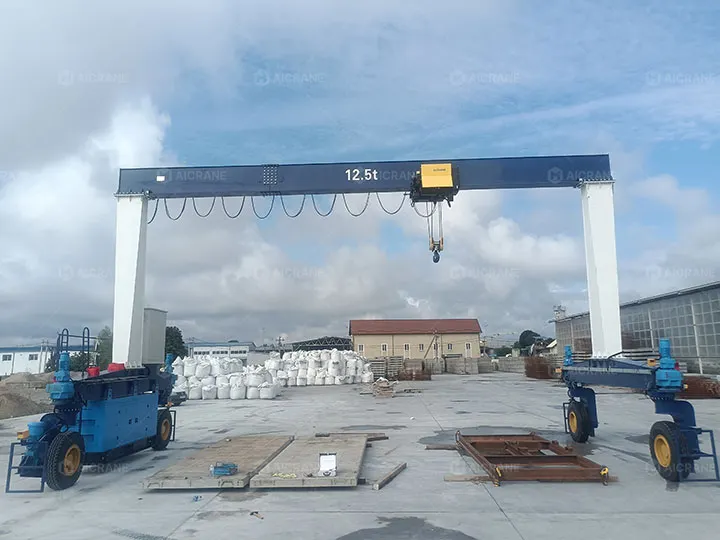
1. Why Customization Matters in RTG Crane Systems
RTG cranes are widely used in container yards, steel storage areas, intermodal terminals, and industrial logistics centers. However, each facility has unique requirements, such as:
- Different aisle widths and stacking patterns
- Varying container or steel product sizes
- Specific loading and unloading points
- Limited yard space or irregular layouts
- High-throughput vs. medium-throughput operations
Without customization, a crane may underperform, create bottlenecks, or fail to fully utilize available yard space.
Customized RTG solutions help operators:
- Maximize storage density
- Improve material flow efficiency
- Reduce cycle time per lift
- Enhance safety in complex environments
- Lower long-term operational costs
2. Span and Gantry Size Customization
One of the most critical customization factors is the span of the RTG crane.
2.1 Adjustable Span Design
The span determines how many container rows or steel stacks the crane can cover. Depending on the terminal layout, RTGs can be designed with:
- Narrow spans for compact yards
- Standard spans for conventional container stacking
- Wide spans for high-capacity logistics hubs
2.2 Optimization for Yard Layout
A properly designed span ensures that:
- No storage space is wasted
- Crane travel distance is minimized
- Interference with adjacent lanes is avoided
Leading rubber tired gantry crane manufacturers often conduct detailed site analysis before finalizing span design to ensure maximum compatibility with operational layouts.
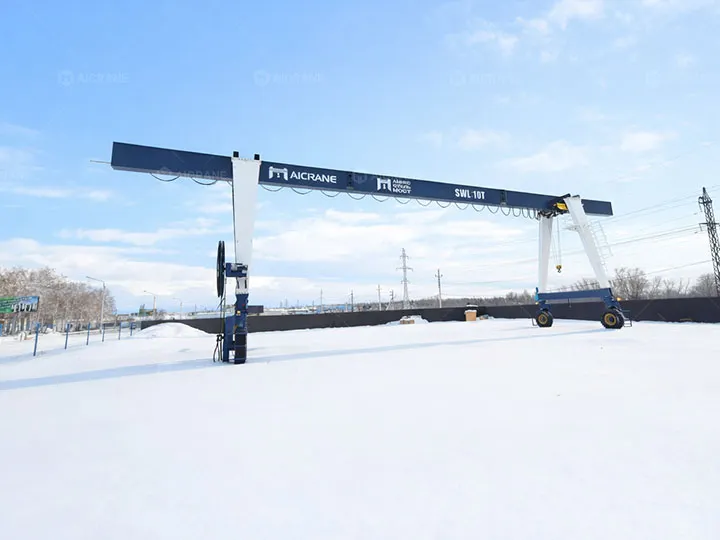
3. Lifting Capacity Customization
Different terminals handle different types of loads:
- Container terminals typically require 30–65 ton capacity RTGs
- Steel yards may require 50–100+ ton capacity for coils and slabs
- Special industrial applications may require even higher capacities
Customization allows operators to select a lifting capacity that matches both current and future operational needs.
Oversizing leads to unnecessary investment, while undersizing reduces productivity and increases safety risks. Therefore, proper capacity planning is a key aspect of RTG customization.
4. Power System Configuration
RTG cranes can be customized with different power systems depending on environmental requirements and cost considerations.
4.1 Diesel Generator Systems
Traditional RTGs use onboard diesel engines. These are suitable for terminals without fixed power infrastructure but may result in higher fuel costs.
4.2 Cable Reel Systems
Electric RTGs powered through cable reels offer:
- Lower emissions
- Reduced operating costs
- Stable power supply
4.3 Hybrid Systems
Hybrid RTGs combine diesel and electric systems to optimize fuel efficiency and reduce emissions.
4.4 Battery-Assisted RTGs
Advanced models include energy storage systems that recover braking energy and reduce peak power consumption.
Customization of power systems allows operators to balance environmental compliance, energy cost, and operational flexibility.
5. Steering and Mobility Options
Since RTGs are rubber-tyred and fully mobile, steering configuration plays a major role in operational efficiency.
5.1 Standard Steering Mode
Used for straight-line movement in simple yard layouts.
5.2 Crab Steering
Allows diagonal movement, ideal for tight spaces and complex stacking arrangements.
5.3 Omnidirectional Steering Systems
Advanced RTGs can move in multiple directions simultaneously, significantly improving maneuverability in congested yards.
Customized steering systems help match crane mobility to terminal design, reducing repositioning time and improving productivity.
6. Spreader and Lifting Device Customization
The lifting attachment is one of the most important customization areas in RTG cranes.
Different applications require different tools:
6.1 Container Spreaders
- Telescopic spreaders for standard ISO containers
- Twin-lift spreaders for handling two containers simultaneously
6.2 Steel Handling Attachments
- Coil C-hooks for steel coils
- Slab tongs for heavy plates
- Magnetic lifting beams for scrap steel
6.3 Multi-Purpose Spreaders
Some terminals require RTGs that can switch between containers and steel products, making modular spreader systems essential.
Customization ensures that a single RTG crane can adapt to multiple cargo types without performance loss.
7. Automation and Control System Integration
Modern terminals are increasingly moving toward automation and digitalization.
7.1 Semi-Automatic RTGs
These systems assist operators with:
- Load positioning
- Anti-sway control
- Route optimization
7.2 Remote-Controlled RTGs
Operators control cranes from a remote station, improving safety and reducing operator fatigue.
7.3 Fully Automated RTGs
Advanced systems can operate with minimal human intervention, using:
- GPS positioning
- RFID tracking
- Terminal operating system (TOS) integration
Customization in control systems allows RTGs to integrate seamlessly into existing terminal management infrastructure.
8. Anti-Sway and Safety System Customization
Safety is a critical concern in any RTG operation, especially when handling heavy steel loads or stacked containers.
Customized safety features may include:
- Active anti-sway systems
- Load weight monitoring sensors
- Collision avoidance systems
- Emergency stop automation
- Wind load protection systems
These features are often tailored based on environmental conditions such as coastal wind exposure or indoor/outdoor operation settings.
9. Wheel Configuration and Tire Selection
Since RTGs rely on rubber tires for movement, wheel configuration directly impacts performance.
Customization options include:
- Number of wheel sets (4, 8, or more depending on load)
- Tire material selection for different surfaces
- Load distribution optimization
- Drive system configuration (independent or synchronized motors)
Proper wheel design ensures stable operation, especially on uneven yard surfaces.
10. Structural Design Customization
RTG cranes can also be structurally customized to meet specific operational demands.
10.1 Main Beam Design
- Single girder for light-duty applications
- Double girder for heavy-duty and high-capacity operations
10.2 Lifting Height Adjustment
Depending on stacking requirements, lifting height can be customized to:
- Low stacking yards
- High-density container stacks
- Multi-layer steel storage systems
10.3 Wind Resistance Design
For outdoor terminals, structural reinforcement is essential to withstand high wind conditions.
11. Software Integration and Smart Features
Digitalization has become a key part of modern RTG customization.
Advanced features include:
- Terminal Operating System (TOS) connectivity
- Real-time cargo tracking
- Predictive maintenance alerts
- Energy consumption monitoring
These systems help improve efficiency while reducing unexpected downtime.
12. Role of Manufacturers in Custom RTG Solutions
Customization is not just about selecting features—it requires engineering expertise and system integration capability.
This is why experienced rubber tired gantry crane manufacturers play a crucial role. They typically provide:
- Site layout analysis
- Load requirement assessment
- Structural engineering design
- Simulation of crane movement and workflow
- After-sales technical support
A well-designed RTG solution is always the result of collaboration between the manufacturer and the terminal operator.
Conclusion
Customization is no longer an optional feature in RTG crane procurement—it is a necessity for modern logistics and industrial operations. Every terminal has unique spatial constraints, workflow patterns, and cargo types, which require tailored engineering solutions.
From span and lifting capacity to power systems, automation, and safety features, RTG cranes can be extensively customized to match operational needs. Working with experienced rubber tired gantry crane manufacturers like Aicrane ensures that each system is optimized not only for performance but also for long-term efficiency and cost control.
Ultimately, a customized RTG crane is not just equipment—it is a strategic asset that directly enhances productivity, safety, and profitability in terminal operations.


