Rubber Tyred Gantry (RTG) cranes are a critical asset in modern container terminals, ports, and large logistics yards. They provide flexible, high-capacity lifting of containers and heavy cargo, moving efficiently across yards without the need for fixed rails. However, one of the most important factors that can impact their safety, efficiency, and lifespan is the condition of the ground they operate on. Unlike Rail Mounted Gantry (RMG) cranes that are constrained by rail tracks, RTGs rely on tires to bear and transfer heavy loads across the yard. This makes ground flatness a crucial parameter. But how flat does the ground really need to be for an RTG crane? This article explores the technical requirements, practical considerations, and consequences of poor ground conditions.
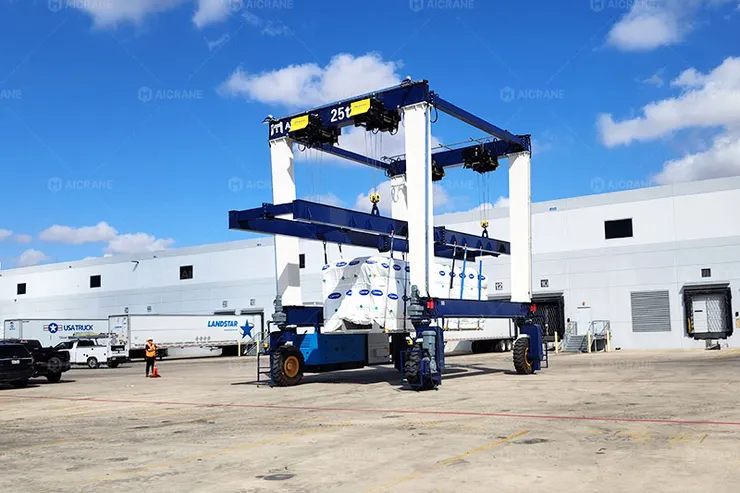
Understanding RTG Crane Ground Requirements
RTG cranes can weigh anywhere from 80 tons to over 500 tons, depending on their lifting capacity and span. When fully loaded with containers or cargo, the weight transferred to each tire can range from 5 to 15 tons or more. Uneven ground can create significant instability for such massive machinery.
Key ground parameters to consider for tyre mounted gantry crane operations include:
- Surface Levelness: The difference in elevation between points across the operational path.
- Slope: Gradients along the travel path.
- Load-Bearing Capacity: The ability of the ground to support the RTG’s static and dynamic loads without excessive settlement.
- Surface Consistency: Whether the ground is paved, concrete, asphalt, or compacted soil.
Among these, surface levelness is the primary determinant of how “flat” the ground must be.
Flatness Tolerance for RTG Cranes
Industry guidelines and practical experience suggest that RTG crane operations demand very precise ground flatness. While exact tolerances can vary depending on crane type, span, and tire configuration, general benchmarks are as follows:
- Maximum Height Variation (Levelness) per 10 meters: ≤ 10–15 mm
- Maximum Longitudinal Slope: ≤ 2%
- Maximum Transverse Slope: ≤ 1.5%
Why These Limits Matter
- Safety: Uneven ground can lead to crane tipping, especially when lifting at full capacity. A small slope can significantly shift the center of gravity when a container is lifted on one side.
- Tire Wear: RTG tires are specially designed to withstand heavy loads, but uneven ground creates uneven pressure on tires, leading to premature wear and potential tire failure.
- Structural Stress: The crane’s frame, wheels, and suspension system are engineered for relatively uniform support. Excessive unevenness causes twisting forces, which can accelerate fatigue in structural members and joints.
- Operational Efficiency: Smooth, level surfaces allow RTGs to move at optimal speed, reducing travel time between containers. Slopes or bumps force operators to slow down, increasing cycle times.
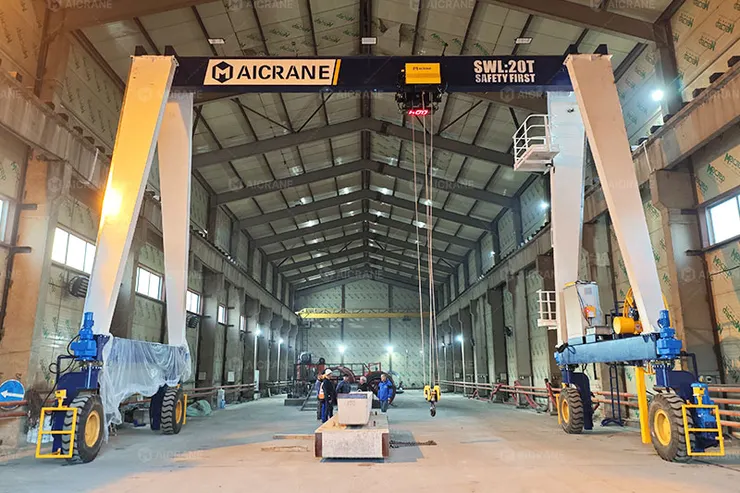
Impact of Tire Configuration on Ground Flatness
RTG cranes typically come with 4, 8, or 16 wheels, depending on the design and lifting capacity:
- 4-Wheel RTG: The simplest configuration; requires the highest ground precision because fewer contact points mean each wheel bears more load and unevenness has a bigger effect.
- 8-Wheel RTG: Slightly more forgiving; weight distribution across more tires reduces sensitivity to small surface variations.
- 16-Wheel RTG: Large cranes with long spans; the load is distributed widely, but uneven ground can still create wheel lift or uneven load sharing.
Each configuration demands a flat surface, but the larger the crane and the more wheels it has, the more complex the flatness analysis becomes because all wheels must remain in contact to avoid uneven load distribution.
Types of Ground Surfaces Suitable for RTGs
The most commonly used ground surfaces for RTG operations include:
Concrete Pavement:
Preferred for heavy-duty RTG operations.
Provides excellent levelness and load-bearing capacity.
Requires periodic maintenance to correct settlements or cracks.
Asphalt Pavement:
Suitable for lighter RTG operations.
Offers smooth operation but is more susceptible to deformation under heavy loads over time.
Compacted Soil or Gravel:
Sometimes used in temporary yards or port expansions.
Must be engineered with high compaction and proper grading.
Usually less precise, requiring frequent leveling and maintenance.
Hybrid Systems:
Some yards use concrete tracks for wheel paths and asphalt or compacted gravel elsewhere.
This helps reduce wear while allowing some flexibility in yard layout.
Measuring and Achieving Flatness
Ensuring flatness for RTG operations involves both design and ongoing maintenance:
Design Phase:
- Site Survey: Conduct precise topographic surveys using laser leveling or total station equipment.
- Grading and Compaction: Earthworks should achieve design tolerances before paving.
- Paving or Surface Installation: Concrete slabs should be poured with controlled thickness and reinforced to prevent cracking.
- Expansion Joints: Proper joint placement minimizes differential settlement and accommodates thermal expansion.
Maintenance Phase:
- Regular Leveling Checks: Using laser-guided tools or digital inclinometers, operators can monitor deviations.
- Crack Repair and Slab Replacement: Any areas with settlement must be corrected promptly.
- Surface Cleaning: Dirt, debris, and water can affect tire contact and increase the risk of slippage.
Consequences of Insufficient Flatness
Operating an RTG crane on uneven ground can lead to several issues:
- Reduced Lifting Capacity: Uneven surfaces can limit the crane’s ability to safely lift containers at maximum capacity.
- Increased Maintenance Costs: Structural stresses and tire wear accelerate maintenance needs.
- Operational Delays: Slower travel speeds and frequent stops reduce yard throughput.
- Safety Risks: The risk of tipping, collision, or dropped loads increases significantly.
- Shortened Crane Lifespan: Continuous operation on uneven ground can reduce overall operational lifespan.
Case Example: RTG Operations on Slightly Uneven Ground
Consider a typical RTG gantry crane 40 ton with an 8-wheel configuration operating on a yard where flatness varies by 25 mm per 10 meters—well above recommended tolerances. Even with experienced operators, this deviation can cause:
- Uneven weight distribution, leading to extra stress on the main beam.
- Increased tire wear on the low points and faster deterioration of suspension components.
- Operational slowdown to avoid tilting hazards.
In contrast, a yard maintained within 10–15 mm per 10 meters allows the crane to travel at optimal speed, lift containers safely at full capacity, and reduce wear on both tires and structural elements.
Special Considerations for RTG Ground Design
- Temperature Effects: Concrete expands and contracts with temperature, which can create minor surface deviations. Expansion joints are critical.
- Drainage: Poor drainage can lead to puddles, soft spots, and erosion, compromising flatness.
- Load Repetition: RTG cranes frequently lift containers in the same paths, causing rutting if the ground is not properly reinforced.
- Slope Transitions: Even small ramps or slopes must be designed with gentle gradients to avoid load shifts.
Conclusion
The flatness of the ground is arguably one of the most critical factors for the safe and efficient operation of RTG cranes. Industry standards and practical experience converge on a maximum surface deviation of 10–15 mm per 10 meters, with minimal longitudinal and transverse slopes. Proper ground preparation, precise paving, and ongoing maintenance are essential to meet these standards.
Ignoring ground flatness can lead to safety hazards, increased maintenance costs, operational inefficiencies, and a shorter lifespan for the crane. Whether designing a new container yard or maintaining an existing RTG operation, paying close attention to ground levelness ensures that RTG cranes can perform at their best, safely, and efficiently.
By adhering to proper ground flatness requirements, port operators, logistics companies, and crane owners can maximize the performance, reliability, and longevity of their RTG fleets, turning a critical infrastructure investment into a true operational advantage.