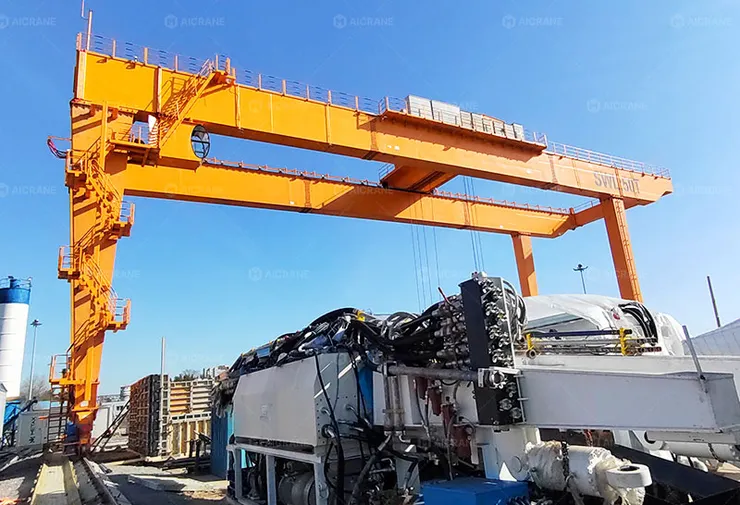
Double girder gantry cranes are widely used in heavy industrial operations, ranging from steel mills and shipyards to precast concrete yards and power plant construction sites. Their robust design allows them to handle large loads, often exceeding tens or even hundreds of tons, while providing the stability and safety required for demanding lifting operations. However, the lifting performance of these cranes is not solely determined by their rated load capacity. One of the critical, yet sometimes overlooked, factors is lifting frequency—the number of lifting cycles a crane performs within a given period. Understanding how lifting frequency impacts load performance is essential for optimizing crane operations, preventing premature wear, and ensuring workplace safety.
Understanding Lifting Frequency
Lifting frequency, sometimes referred to as duty cycle, measures how often a crane lifts and lowers loads over time. For double girder gantry cranes, lifting frequency is typically categorized according to international standards such as ISO 4301 or FEM 1.001, which classify cranes based on operational duty—from light, occasional lifts to continuous heavy-duty cycles.
For example:
- Class A5: Medium-duty operation with occasional heavy lifts and moderate frequency.
- Class A7: Heavy-duty operation with frequent lifting and high-speed cycles.
- Class A8 or higher: Continuous lifting in harsh industrial environments.
The lifting frequency affects not only the mechanical performance of the hoist and trolley but also the structural stress experienced by the crane’s main girder, end trucks, and supporting structures.
Impact on Load Performance
1. Mechanical Component Stress
High lifting frequency increases the mechanical load on the hoist motor, gearbox, ropes, and brakes. Each lift generates forces beyond the static weight of the load, due to acceleration, deceleration, and occasional load sway. When a crane lifts frequently:
- Motors work harder and generate more heat, potentially reducing efficiency.
- Gearboxes and drive systems experience more wear, leading to changes in speed regulation and load handling precision.
- Wire ropes or chains are subject to repeated bending and tension, increasing fatigue risk.
If lifting frequency is not considered in crane selection or operation planning, the crane may fail to reach its rated load performance consistently, as mechanical components struggle under continuous cycling.
2. Structural Fatigue
The main girder of a double girder gantry crane supports the hoist and trolley while spanning significant distances. Every lift imposes both vertical and horizontal forces, which accumulate over time. High-frequency lifting:
- Accelerates fatigue in welds and bolted connections.
- Can lead to permanent deformation of the girder, particularly if the load is near the crane’s maximum rated capacity.
- Increases vibrations, potentially affecting load stability and accuracy.
By contrast, cranes operating at lower frequencies generally experience less fatigue, allowing structural components to maintain performance over decades.
3. Duty Class vs. Lifting Frequency
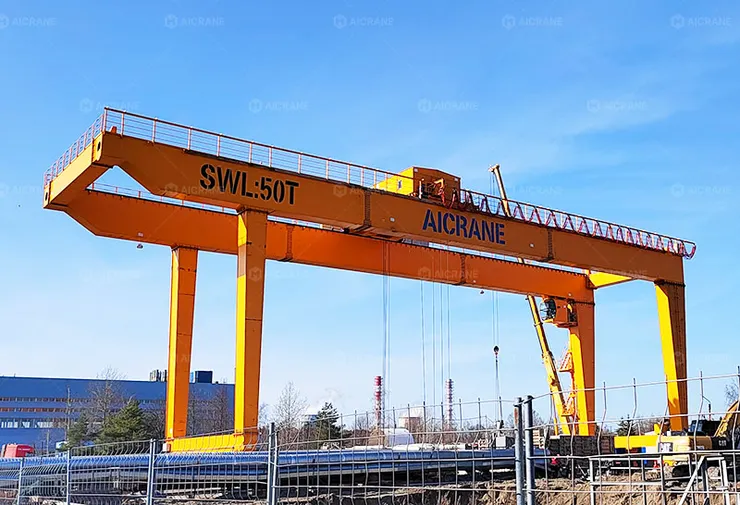
Double girder gantry cranes are designed for specific duty classes, which directly consider lifting frequency. For example, a 30 ton gantry crane rated for A5 duty class is capable of handling occasional lifts efficiently but may not sustain continuous heavy lifting without risking mechanical or structural wear.
If the lifting frequency exceeds the crane’s duty class:
- Hoist motors may overheat.
- Brakes may wear faster, leading to reduced stopping performance.
- Load sway and oscillations may increase, making precise load positioning more difficult.
Duty class and lifting frequency must always align with operational requirements to ensure the crane maintains optimal load performance throughout its service life.
4. Heat Generation and Power Consumption
Frequent lifting cycles generate heat in motors, brakes, and control systems. Excessive heat can reduce lifting capacity by limiting the motor’s output or triggering thermal protection mechanisms. For instance:
- A crane designed for intermittent lifting may automatically reduce hoist speed after repeated cycles to prevent overheating, effectively reducing its lifting performance.
- Continuous high-frequency operations require cranes equipped with high-efficiency motors, improved ventilation, and thermal sensors to maintain rated performance.
Proper monitoring and thermal management allow cranes to sustain higher lifting frequencies without compromising load handling.
5. Influence on Load Accuracy and Stability
Load performance is not just about lifting capacity; it also includes accuracy and stability during lifts. High-frequency operations can:
- Increase trolley or hoist oscillations, affecting load positioning.
- Cause rope stretching or sagging, slightly reducing effective lifting height or precision.
- Amplify dynamic forces, making heavy loads sway more during acceleration or deceleration.
Operators must adjust lifting speeds and control techniques for high-frequency lifting to maintain both safety and accuracy. Advanced cranes often include anti-sway systems and variable frequency drives to mitigate these effects.
Operational Strategies to Optimize Performance
To maintain optimal load performance in high-frequency operations, several strategies are recommended:
Duty Class Assessment
Ensure the crane’s rated duty class aligns with the expected lifting frequency. Upgrading to a higher duty class may be necessary for continuous operations.
Proper Maintenance
Frequent inspections of hoist components, brakes, ropes, and structural elements reduce the risk of performance loss. Lubrication and timely replacement of worn parts are crucial.
Controlled Lifting Speeds
Adjusting hoist speed can minimize dynamic stress. Slower acceleration and deceleration reduce load sway and mechanical strain, enhancing both safety and performance.
Thermal Management
For high-frequency cycles, ensure adequate motor cooling, ventilation, and use of heat-resistant components to maintain consistent lifting capacity.
Operator Training
Skilled operators can manage lifting sequences, avoiding unnecessary stops, starts, or load swinging, which can degrade load performance under frequent lifting.
Load Monitoring Systems
Real-time monitoring of load, lifting cycles, and motor temperature allows proactive adjustments to maintain crane efficiency and prevent overloading.
Case Study: 50-Ton Crane in a Steel Workshop
In steel production workshops, double girder gantry cranes often handle heavy coils at high frequency. A crane rated for A7 duty class can perform frequent lifts of 50 tons safely. Operators observed that exceeding the duty class—lifting at intervals shorter than recommended—led to:
- Motor overheating within 30–40 cycles.
- Minor deformation of trolley rails.
- Reduced lifting precision due to increased rope elongation.
After recalibrating lifting sequences, introducing thermal monitoring, and optimizing hoist speed, the crane could sustain continuous operations without compromising load performance. This example highlights how lifting frequency directly affects both operational efficiency and structural longevity.
Conclusion
Lifting frequency is a critical factor that directly influences the load performance of double girder gantry cranes. High-frequency lifting increases mechanical stress, accelerates structural fatigue, and may reduce both lifting accuracy and safety if not properly managed. By understanding the relationship between lifting frequency, duty class, and load dynamics, operators can optimize crane selection, adjust operational practices, and implement monitoring systems to maintain peak performance.
For industrial operations, aligning lifting frequency with crane design specifications is not optional—it is essential for safe, reliable, and efficient crane operations. Properly managed, a double girder gantry crane can deliver decades of high-performance service, even in demanding, high-frequency lifting environments.