As global ports and intermodal terminals intensify efforts to cut carbon footprints, one of the most effective strategies emerging in container yard modernization is the electrification of Rubber Tyred Gantry (RTG) cranes. Traditionally powered by diesel generator sets, RTG cranes are among the highest fuel-consuming and emission-producing equipment in yard operations. Electrifying these cranes—whether fully or through hybrid systems—has proven to significantly reduce carbon emissions, lower operating costs, and support the transition to greener logistics.
This article explores how RTG crane electrification works, why it dramatically reduces carbon emissions, and what operational and environmental benefits ports can expect after adopting this technology.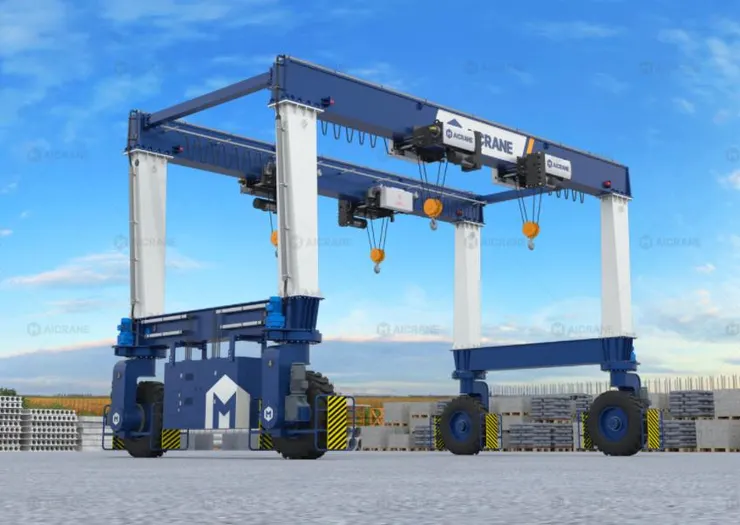
1. The Challenge: Diesel-Powered RTG Cranes and High Emissions
Conventional RTG cranes typically rely on large diesel generator sets (often 400–600 kW) to power hoisting, trolley movement, gantry travel, and auxiliary systems. Although efficient in terms of mobility and flexibility, diesel RTGs present several environmental challenges:
1.1 High Fuel Consumption
A typical diesel rubber tyred gantry crane for sale consumes 20–30 liters of fuel per hour, depending on load spectrum, trolley travel frequency, and hoisting cycles. Over the course of a year, one crane may burn more than 100,000 liters of diesel, generating substantial CO₂ emissions.
1.2 Significant Carbon Emissions
Burning one liter of diesel produces roughly 2.68 kg of CO₂. This means a single RTG crane can emit 250–300 tons of CO₂ annually. In a medium-size terminal operating 20 RTGs, annual emissions may exceed 5,000 tons of CO₂, making RTGs the largest contributor to port operational emissions aside from heavy trucks.
1.3 Air Pollutants Beyond CO₂
Diesel engines also release:
- NOx (nitrogen oxides) – contributing to smog formation
- PM2.5 and PM10 – fine particulate matter harmful to respiratory health
- SOx (sulfur oxides) – linked to acid rain
While port operators often focus on CO₂ due to climate policies, these air pollutants also drive stricter environmental regulations.
This heavy environmental load makes RTG crane electrification one of the most impactful carbon-reduction measures available.
2. How Electrification of RTG Cranes Works
RTG electrification refers to replacing or reducing diesel engine usage by powering the crane with electricity. There are three primary approaches:
2.1 Full Electrification (E-RTG)
In full electric RTG systems, the diesel generator is completely replaced by an electric power distribution line. Common methods include:
- Cable reel systems – supply power via a retractable cable
- Busbar systems – a fixed conductor rail along the crane travel path
- Conductor bar systems – provide continuous power during gantry travel
Full electrification removes nearly all direct emissions because the crane no longer relies on diesel.
2.2 Hybrid RTG Systems
Hybrid systems retain a smaller diesel engine but pair it with:
- Lithium-ion battery packs, or
- Supercapacitors
The smaller engine only runs when battery power drops below a certain level. Hybrid RTG cranes typically reduce diesel consumption by 50–70%.
2.3 Diesel-to-Electric Conversion Kits
Many existing RTGs can be retrofitted by:
- Removing the diesel generator
- Installing electric drive converters
- Adding a cable reel or busbar power supply
This offers ports a cost-effective upgrade pathway with lower investment than purchasing new cranes.
Regardless of the system chosen, electrification significantly reduces carbon emissions through improved energy efficiency and the elimination (or reduction) of diesel combustion.
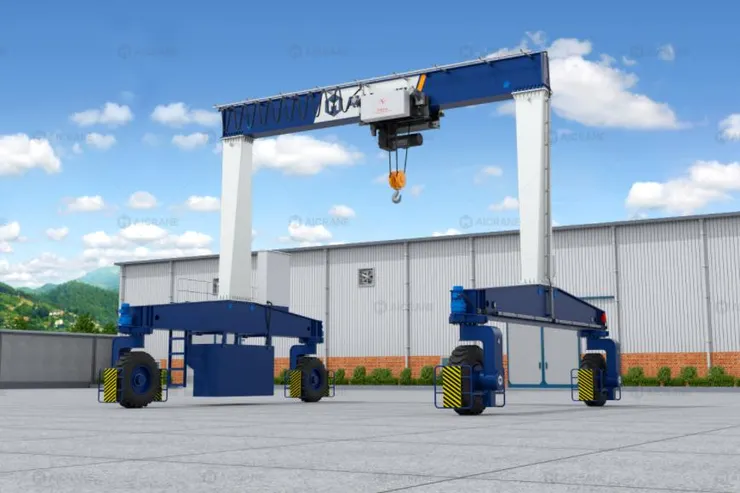
3. Why Electrification Dramatically Reduces Carbon Emissions
3.1 Direct Elimination of Diesel Fuel Burning
The largest carbon reduction benefit comes from eliminating fossil fuel combustion. Since diesel RTGs emit hundreds of tons of CO₂ annually, switching to electricity immediately removes these emissions from crane operations.
3.2 Electricity Is Fundamentally More Efficient
Electric motors convert 90–95% of electrical energy into motion. Diesel engines convert only 35–40% of fuel energy into usable power. The rest is lost as heat.
This means even if electricity is generated from fossil fuels, the energy consumption per container handling cycle is still lower.
3.3 Regenerative Power Improves Energy Utilization
Electrified RTGs can be equipped with regenerative inverters, which capture energy from:
- Lowering loads
- Braking during trolley movement
- Slowing down gantry travel
Recovered energy is fed back into the grid or stored in battery systems, reducing the net energy needed.
Diesel engines cannot recover braking energy—making electrification inherently more energy-efficient.
3.4 Supports the Use of Renewable Energy
Electric RTGs can operate using electricity from:
- Solar farms
- Wind turbines
- Hydropower
Thus, the carbon footprint continues to decrease as the port transitions to green energy. This is impossible with diesel-powered RTGs.
3.5 Reduction of Idle-Time Emissions
Diesel engines generate emissions even when idling between cycles. Electric gantry cranes, however, consume minimal energy in standby mode and generate zero emissions.
4. Quantifying Carbon Reduction: A Practical Example
Let’s consider a port operating 20 diesel RTGs.
Before electrification:
- Fuel consumption per crane: ~100,000 L/year
- CO₂ emission per liter: 2.68 kg
- Total CO₂ per crane: 268 tons/year
- Total for 20 cranes: 5,360 tons of CO₂ annually
After full electrification:
- Diesel usage: 0
- Direct CO₂ emissions: Reduced to zero
- Indirect emissions depend on grid energy but typically reduce carbon output by 60–80%
A port can effectively eliminate over 5,000 tons of CO₂ every year—a major contribution to carbon reduction targets.
5. Additional Environmental Benefits
Electrification also improves the environmental quality of port operations beyond carbon reductions.
5.1 Lower Noise Pollution
Electric drives significantly reduce noise from:
- Engine vibrations
- Auxiliary systems
- Cooling fans
Noise around E-RTGs is typically 5–10 dB lower, enhancing working conditions.
5.2 Reduction in Local Air Pollutants
Switching to electric power eliminates:
- PM2.5
- NOx
- SOx
This benefits both workers and surrounding communities.
5.3 Lower Risk of Oil Leaks and Spills
Diesel engines require:
- Lubricants
- Coolants
- Fuel storage
Electrification minimizes potential environmental contamination.
6. Operational and Economic Advantages That Support Sustainability
Carbon reduction is not the only benefit. Electrification also brings operational efficiency and cost savings.
6.1 60–70% Lower Operating Costs
Electricity is cheaper than diesel. Ports typically see:
- 50–70% reduction in energy cost per container
- Lower maintenance costs as electric systems require less servicing
6.2 Higher Equipment Availability
Electric motors and inverters have fewer moving parts than diesel engines, resulting in:
- Fewer breakdowns
- Longer component life
- Reduced maintenance downtime
6.3 Improved Yard Productivity
Electric RTGs operate with:
- Faster acceleration
- More stable speeds
- Better hoisting responsiveness
These enhancements improve cycle times and overall throughput.
7. Electrification as a Pathway to Green Port Transformation
Many ports worldwide are adopting electrified RTGs as part of broader decarbonization initiatives. Electrification supports compliance with:
- IMO decarbonization policies
- ESG reporting requirements
- National carbon reduction targets
- Local port authority environmental standards
As ports expand their reliance on renewable energy, electrified RTGs play a central role in achieving carbon-neutral operations.
Conclusion
RTG crane electrification is one of the most effective strategies for reducing carbon emissions in container yards. By eliminating diesel fuel, improving energy efficiency, enabling regenerative braking, and allowing integration with renewable power, electrified RTGs can reduce emissions by 60–100%, depending on the system.
Beyond carbon reduction, ports benefit from lower energy costs, quieter operations, fewer emissions of harmful pollutants, and improved crane performance. Electrification is not only an environmental upgrade—it is a long-term economic and operational advantage.
Ports looking to modernize operations and align with future sustainability requirements will find RTG electrification a critical step toward building greener, more efficient, and more competitive terminals.