When planning an industrial facility, one of the most critical considerations is material handling. The backbone of efficient handling in factories, warehouses, and steel mills is the EOT (Electric Overhead Traveling) crane. Choosing the right EOT crane capacity is not just about meeting your immediate lifting requirements—it is also about anticipating future expansion and ensuring long-term operational efficiency. Making the wrong choice can lead to costly retrofits, downtime, and safety risks. This article explores how to determine the appropriate EOT crane capacity with a focus on future expansion.
Understanding EOT Crane Capacity
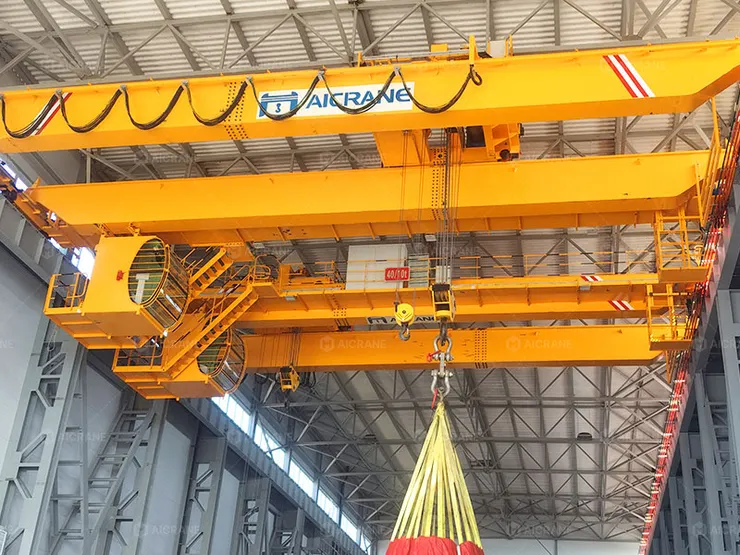
The capacity of an EOT crane for sale is the maximum load it can lift safely. It is usually specified in tons, ranging from a few tons for light-duty industrial applications to several hundred tons for heavy-duty operations in steel plants or power stations. The crane's capacity directly impacts its structural components, hoisting machinery, electrical systems, and foundation requirements.
Selecting an EOT crane involves evaluating multiple factors:
- Current lifting needs: The weight of materials or equipment you need to lift now.
- Operational frequency: How often loads are lifted, which affects wear and tear.
- Work environment: Indoor or outdoor use, temperature extremes, and exposure to corrosive substances.
- Safety margins: Ensuring the crane can handle unexpected load variations without stress.
However, a critical consideration that is often overlooked is future expansion.
Why Future Expansion Matters
Industrial operations are dynamic. Over time, production lines may expand, new machinery may be added, or larger raw materials may need handling. If your crane is designed only for current capacity, accommodating future needs may require expensive upgrades, replacement, or additional cranes. Planning for expansion ensures:
- Reduced operational disruption: A crane with a higher capacity can handle increased loads without downtime.
- Cost-effectiveness: Retrofitting or replacing a crane later is far more expensive than selecting the right capacity upfront.
- Safety assurance: A crane operating near its maximum limit increases stress on mechanical components, raising the risk of accidents.
Steps to Determine EOT Crane Capacity for Future Expansion
1. Assess Current and Projected Load Requirements
Start by calculating the weight of your heaviest loads. This includes raw materials, components, and finished products. Consider load growth over the next 5–10 years. For instance, if your current heaviest load is 15 tons but you anticipate handling 25-ton equipment in the future, your crane should be rated for at least 25 tons, ideally with an additional safety margin.
2. Factor in Safety Margins
Safety margins account for unexpected variations in load weight and dynamic forces during lifting. The standard practice is to add 10–25% extra capacity beyond the heaviest expected load. For example, if future loads are projected at 25 tons, consider a crane with 28–30 tons capacity. This ensures long-term reliability and reduces wear.
3. Consider Load Distribution and Hoist Mechanics
The type of load and its distribution affects crane selection. Point loads, uneven loads, or irregular shapes may require higher capacity or specialized lifting attachments. If future expansion involves heavier or more complex materials, consider:
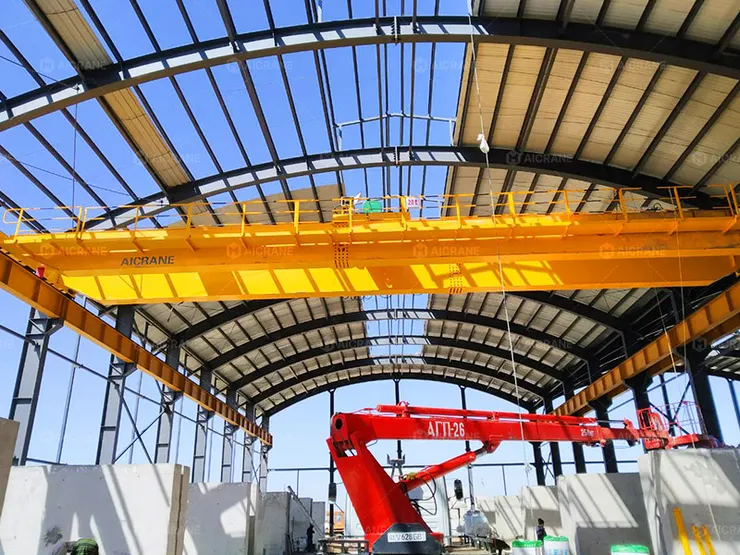
- Double girder cranes for heavy loads.
- Multiple hoists for synchronized lifting of oversized items.
- Specialized rigging to reduce stress on crane components.
4. Analyze Span and Lifting Height Requirements
The crane’s span (distance between rails) and lifting height also influence its capacity. Longer spans or higher lifts require more robust structural components and stronger hoists. When planning for future expansion, evaluate:
- Increased facility width or length: Will new production lines require a longer span?
- Higher stacking or storage requirements: Will future operations demand greater lifting height?
- Load positioning flexibility: Can the crane reach all critical areas without obstruction?
5. Evaluate Duty Classification and Operational Frequency
EOT cranes are classified according to duty cycles, which indicate the frequency and intensity of operations. The ICRI standard (Indian Crane Manufacturers Association) or FEM standard (Europe) classifies cranes from light duty (M3) to very heavy duty (M8). When planning for future expansion:
- Choose a crane duty class that can accommodate more frequent lifts.
- Anticipate heavier operational schedules as production grows.
- Avoid underestimating duty requirements, as overloading a low-duty crane accelerates wear and maintenance costs.
6. Consider Technological Upgrades and Automation
Modern EOT cranes offer automation features like PLC-based control, load monitoring, and remote operation. When choosing capacity:
- Ensure the crane can integrate with future automation systems.
- Plan for smart hoists and sensors that can adapt to heavier loads.
- Factor in energy-efficient drives to manage increased operational load without overloading electrical systems.
7. Review Facility and Structural Constraints
Even if you choose a higher-capacity crane, your building must support it:
- Structural strength: The crane runway beams and columns must withstand increased loads.
- Foundation and flooring: Heavy cranes require reinforced foundations to prevent settlement or damage.
- Overhead clearance: Ensure additional height does not conflict with ceilings, piping, or ventilation systems.
8. Seek Expert Consultation
Crane manufacturers and engineering consultants can perform a detailed analysis of current and future lifting needs. They can model load dynamics, simulate future operations, and recommend the most cost-effective capacity while considering:
- Structural limitations.
- Hoist and trolley configurations.
- Energy and maintenance considerations.
Case Study: Planning for Future Expansion
A steel processing plant currently lifts steel coils up to 20 tons. However, management anticipates increasing production, requiring handling coils of up to 35 tons in the next five years. By selecting a 40-ton double girder EOT crane instead of a 20-ton crane:
- The plant avoids downtime for crane replacement.
- Safety margins account for overloading during peak production.
- Future automation upgrades can be integrated without structural modifications.
This proactive planning saved the company significant costs and ensured operational continuity.
Balancing Cost and Capacity
While choosing a crane with higher capacity involves higher initial investment, the long-term benefits usually outweigh the upfront cost:
- Reduced risk of overloading: Higher-capacity cranes operate more efficiently within safety limits.
- Lower maintenance costs: Cranes designed for future load growth experience less stress, reducing breakdowns.
- Future-proofing operations: Avoids the cost and disruption of retrofitting or installing new cranes later.
However, avoid excessive oversizing, which increases overhead crane cost unnecessarily and may reduce operational efficiency. A careful analysis of projected growth and safety margins will help find the optimal balance.
Conclusion
Choosing the right EOT crane capacity is a strategic decision that affects not only current operations but also the future growth of your facility. By carefully analyzing current and future load requirements, factoring in safety margins, considering load distribution, span, lifting height, duty classification, and facility constraints, you can select a crane that is both safe and adaptable to expansion.
Investing in a crane that accommodates future needs may have a higher initial cost, but it ensures long-term efficiency, safety, and scalability, ultimately saving money and reducing operational disruption. Early planning, expert consultation, and forward-thinking design are the keys to achieving the right EOT crane capacity for sustainable industrial growth.