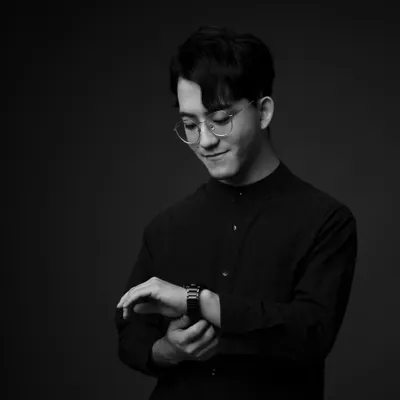
Her task was not to restore them sharply, but to listen for the unfinished lives still breathing beneath their faded surfaces.
2026.05.10
珍成為一位消逝臉孔的夜間檔案管理員,受雇於一座小城市博物館,那裡只在街道已經忘記它們自己的名字時開放。每個夜晚,她打開一間狹窄的房間,在那裡肖像沒有標籤地到來,被灰塵、雨水與不確定的記憶柔化。她的任務不是把它們銳利地修復,而是聆聽仍然在它們褪色表面之下呼吸的未完成生命。她在一盞有著微弱黎明顏色的燈下工作,戴著像舊紙一樣蒼白的手套。在她周圍,架子像疲倦的見證者一樣傾斜。有些夜晚,一幅肖像會低語一個日期;其他夜晚,只有一種顏色回答:藍色為了遲疑,桃色為了一句從未被說出的句子,綠色為了一座由某個從未擁有過它的人所記得的花園。珍把一切記錄在一本用灰色線裝訂的帳冊裡。
一個冬夜,一張幾乎溶解的臉出現在她的桌上。它的眼睛似乎越過她觀看,朝向一個已經不再存在的門口。在它旁邊懸浮著另一個存在的暗示,遙遠而不完整。珍感到那幅肖像並不是在要求被辨認。它是在要求保持複數,保留所有它可能曾是之人的溫柔。
所以她不混合任何顏料,也不銳化任何線條。相反地,她把肖像放在窗邊,讓沉睡的城市把它昏暗的反射投射到其上。街燈、窗簾與經過的雲朵一個接一個進入影像。到了早晨,那張臉沒有變得更清楚,然而它似乎比較不孤單。
珍在她的帳冊中寫道:「有些生命藉由拒絕單一輪廓而存活。」然後她在日出之前關閉博物館,帶著安靜的信念離開:記憶不是一面鏡子,而是一間讓許多陰影學會一起站立的房間。
Jane became a nocturnal archivist of vanishing faces, employed by a small city museum that opened only when the streets had forgotten their own names. Each evening, she unlocked a narrow room where portraits arrived without labels, softened by dust, rain, and uncertain memory. Her task was not to restore them sharply, but to listen for the unfinished lives still breathing beneath their faded surfaces.
She worked under a lamp the color of weak dawn, wearing gloves pale as old paper. Around her, shelves leaned like tired witnesses. Some nights, a portrait would murmur a date; other nights, only a color answered: blue for hesitation, peach for a sentence never spoken, green for a garden remembered by someone who had never owned one. Jane recorded everything in a ledger bound with gray thread.
One winter night, a nearly dissolved face appeared on her table. Its eyes seemed to look past her, toward a doorway that was no longer there. Beside it hovered the suggestion of another presence, distant and incomplete. Jane felt that the portrait was not asking to be identified. It was asking to remain plural, to keep the tenderness of all the people it might have been.
So she mixed no pigment and sharpened no line. Instead, she placed the portrait beside the window and let the sleeping city cast its dim reflections across it. Streetlights, curtains, and passing clouds entered the image one by one. By morning, the face had not become clearer, yet it seemed less alone.
Jane wrote in her ledger: “Some lives survive by refusing a single outline.” Then she closed the museum before sunrise, carrying with her the quiet belief that memory was not a mirror, but a room where many shadows learned to stand together.