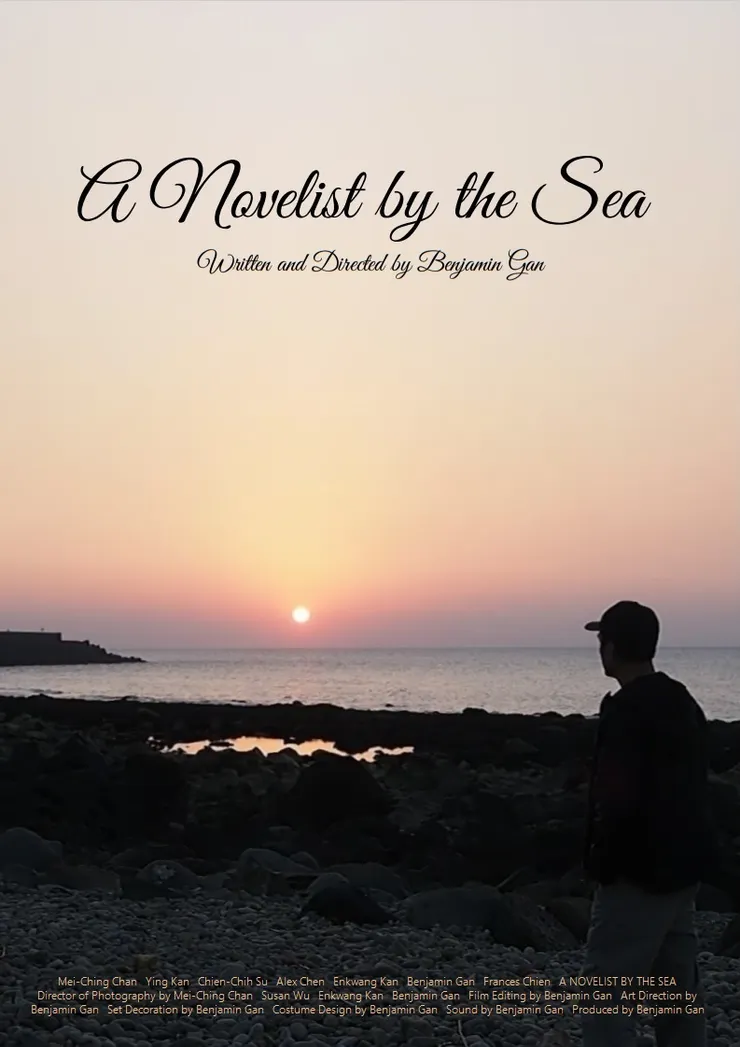
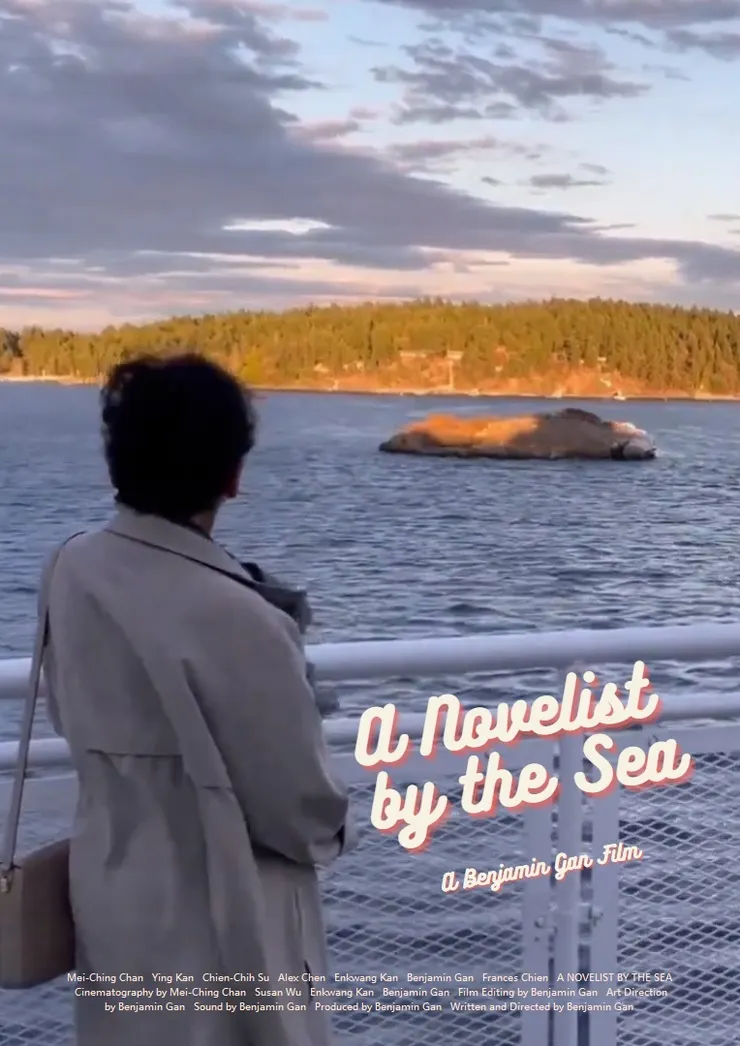
A Novelist by the Sea
Taiwan | Independent Feature | Director: Benjamin Gan
A solitary writer retreats to the coast in search of inspiration, only to find himself drifting between memory, imagination, and the act of storytelling itself. Blending realism with poetic abstraction, A Novelist by the Sea transforms the seaside into a liminal space where fiction and lived experience quietly dissolve into one another.
Through minimalist staging, extended static shots, and reflective voice-over, the film explores creativity as both desire and paralysis. Encounters with a reader unsettle the novelist’s authority, raising questions about authorship and ownership: who controls a story once it is told? As narration and image diverge, the film resists clear distinctions between reality and invention, inviting the viewer into an ambiguous realm shaped by language and perception.
Meditative and formally restrained, A Novelist by the Sea is less concerned with narrative resolution than with the conditions of writing itself. It is a contemplation on artistic solitude, the instability of meaning, and the fragile boundary between the writer and the world he creates.
“A Novelist by the Sea" is a 2023 film directed by Benjamin Gan. The movie explores themes of creation and literature through a blend of realism and fantasy. It consists of three parts, each focusing on different aspects of a writer's life and challenges.
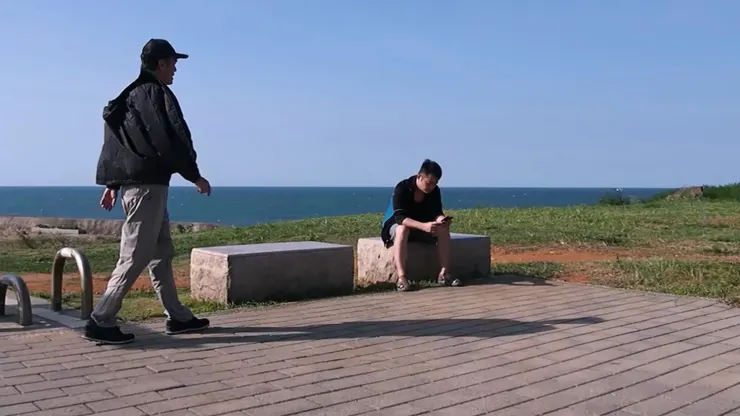
A Novelist by the Sea: A novelist meets a fan by the sea and reads his novel to the fan, but the story keeps repeating itself.
It Isn't Metafiction: A writer creates a metafictional story at the request of a reader, exploring the nature and limitations of metafiction.
Leo in the City: A writer publishes a book with a bizarre story, leading to readers getting trapped in a movie theater.
The film, which won the Best Director Award in the Florence Film Award 2024, has been praised for its poetic storytelling and use of various narrative devices like metaphor, symbol, and foreshadowing.
A Novelist by the Sea — Reviews
General Description
A Novelist by the Sea is a Taiwanese independent film directed by Benjamin Gan (甘益光). It blends realism with fantasy and employs symbolic, poetic storytelling to explore literary creation, imagination, and existential solitude.
Tone and Style
Many reviewers describe the film as highly poetic, introspective, and philosophical rather than plot-driven. It feels less like a conventional narrative and more like a meditation on art and the creative struggle.
The film makes extensive use of metafictional techniques and symbolic imagery, blurring the boundary between the story and the storyteller’s inner world.
Themes
Exploration of creativity:
Critics note that the film probes the emotional and psychological life of writers, especially the tension between inspiration and writer's block.
Nonlinear storytelling:
Its fragmented and recursive narrative structure is often praised as innovative, though some viewers find it demanding.
Visual and symbolic richness:
Reviewers frequently highlight the film’s visual atmosphere, particularly the seaside imagery, which functions as a metaphor for both inspiration and existential isolation.
Divided audience response:
Viewers drawn to slow, contemplative art cinema tend to respond positively, while those expecting traditional storytelling may find the film less accessible.
Accolades and Recognition
The film has received recognition on the international festival circuit. Director Benjamin Gan won the Best Director Award at the Florence Film Awards (2024), and the film was selected for Festival Angaelica (2025).
- “A Novelist by the Sea is a contemplative art film that prioritizes mood, metaphor, and internal reflection over conventional plot development.”
- “The film’s poetic imagery and meta-narrative structure invite reflection on creativity, reality, and the act of storytelling itself.”
- “Although its slow pacing and experimental form may divide audiences, its symbolic depth rewards patient viewers.”
- “Gan’s direction reveals a distinctly literary sensibility, transforming the seaside setting into a metaphor for artistic uncertainty.”
Conflict in A Novelist by the Sea
Rather than emerging from dramatic confrontation, conflict in A Novelist by the Sea arises through questions of voice, authorship, and perception: who speaks, who controls the story, and who becomes lost within it. These tensions surface through specific scenes and narrative strategies.
1️⃣ Creative and Existential Conflict
(Writer vs. self / meaning vs. emptiness)
Where it appears:
- Arrival at the sea:
The novelist travels to the coast in search of inspiration. Instead of narrative action, the film offers stillness and voice-over narration. → Conflict: “I came to write, but nothing comes.” The sea becomes a mirror of his inner blankness. - Extended static shots with narration:
The voice reflects on fiction, memory, and absence while little happens onscreen. → Tension arises between the desire to create meaning and the emptiness of lived experience.
Character arc:
The conflict is never resolved. The novelist moves from wanting to write a story to realizing that he is inside a story he cannot control. This unresolved condition itself constitutes the conflict.
2️⃣ Author vs. Reader
(Who owns the story?)
Where it appears:
- Encounters with the reader:
A reader engages the novelist in discussion about his work. At first, the writer appears authoritative. Gradually, the reader questions, reinterprets, and almost rewrites the story through their own perspective.
→ The conflict becomes:
Writer: “I created this.” Reader: “I complete it.”
Effect:
The novelist loses narrative authority. The reader’s presence reveals that once a story is released, it no longer belongs solely to its author. This creates a metafictional conflict between storyteller and story.
3️⃣ Fiction vs. Reality
(Are we watching life or literature?)
Where it appears:
- Disjunction between narration and image:
The voice describes one reality while the visuals suggest another. The film refuses to clarify what is real, imagined, or written. - Characters as concepts:
The novelist, the reader, and the seaside environment behave less like psychological characters and more like symbolic figures or roles.
Conflict:
The film opposes lived experience to narrated experience. Viewers are left uncertain: is the novelist living, or merely writing about living? This ambiguity generates sustained tension.
4️⃣ Social and Emotional Conflict
(Isolation vs. connection)
Where it appears:
- City versus seaside:
The city appears mentally crowded and fragmented; the sea is quiet but emotionally vacant. - Failed connections:
The novelist never truly connects with people, place, or himself. Even dialogue feels more like an inner voice than genuine interaction.
Narrative pattern:
Instead of conflict → confrontation → resolution, the film follows: conflict → reflection → deeper uncertainty. This structure aligns with modernist and art-cinema traditions.
🎯 What Is the Main Conflict?
Not:
- man vs. man
- man vs. society
- man vs. nature
But:
- writer vs. meaning
- author vs. reader
- story vs. reality
Conflict in A Novelist by the Sea is dramatized through voice, structure, and perspective rather than plot.