In the high-stakes environment of modern steel manufacturing, the shop floor is often the center of attention. We marvel at the fiery glow of the electric arc furnace and the precision of the continuous caster. However, the true heartbeat of a profitable steel operation often lies just outside the mill walls: in the logistics and material handling yard.
As mills scale up production to meet global demand, the "bottleneck" has shifted from melting capacity to storage and throughput efficiency. Specifically, the management of slabs (the heavy, rectangular blocks of semi-finished steel) and coils (the finished, rolled product) presents a massive logistical puzzle. Enter the Industrial Rubber Tired Gantry (RTG) crane - a versatile, heavy-duty solution that is revolutionizing how steel plants move, stack, and ship their heavy metal.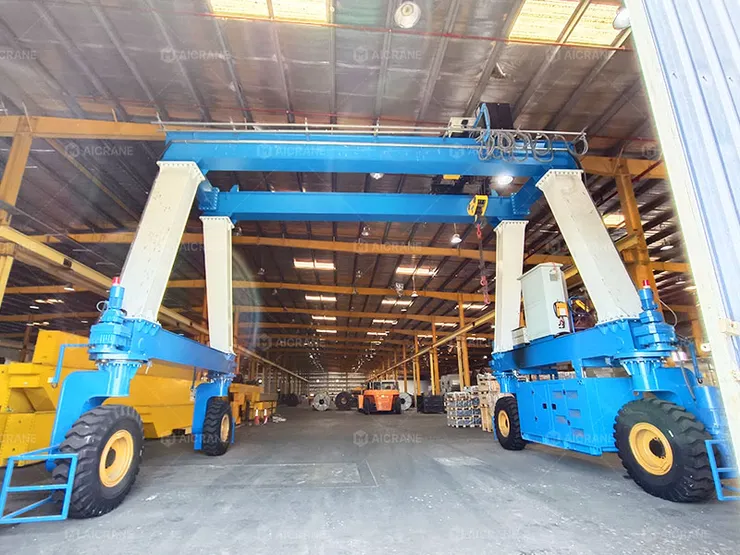
The Weight of the Challenge: Slabs and Coils
Before diving into the technology, it is essential to understand the sheer physical demands of steel logistics.
- Steel Slabs: These can weigh anywhere from 20 to 50 tons each. They are often moved while still hot, requiring equipment that can withstand radiant heat.
- Steel Coils: While more compact, coils are incredibly dense and susceptible to "flat spots" or edge damage if handled incorrectly. A single coil can weigh 30 tons, and a typical warehouse might hold thousands of them.
Traditional methods, such as heavy-duty forklifts or reach stackers, often struggle with these loads. They require wide "drive aisles," they have limited stacking heights, and their high center of gravity poses safety risks in tight spaces.
What is an Industrial RTG?
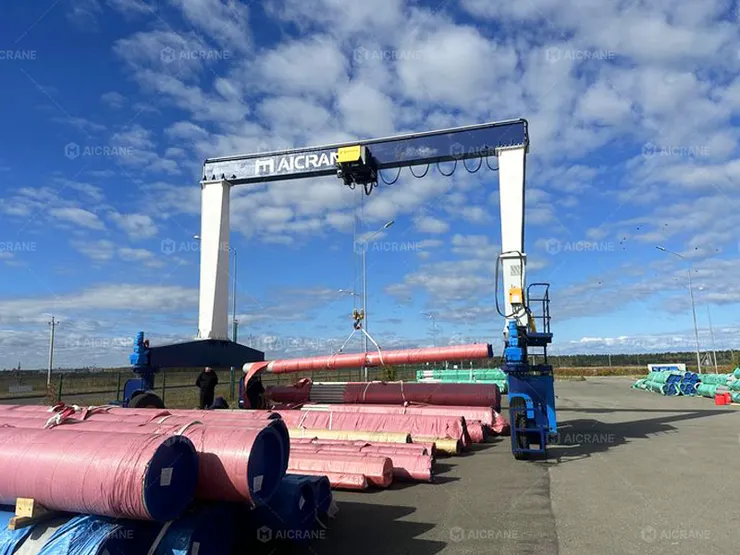
An Industrial RTG is a mobile gantry crane mounted on large, rubber tires rather than fixed rails. Unlike its cousins found in shipping ports, the industrial version is customized for the rugged, often uneven terrain of a steel plant.
These machines straddle the load, lifting vertically. This simple mechanical advantage allows for a much smaller footprint and significantly higher stacking density compared to cantilevered lifting equipment like forklifts.
1. Maximizing Space: The Density Advantage
In many older steel mills, land is a finite resource. Expanding the footprint of a storage yard is often impossible due to surrounding infrastructure.
Verticality over Horizontality
The primary advantage of an RTG is its ability to stack slabs and coils higher and closer together. Because the RTG straddles the stacks, it does not need wide turning radiuses or "V-shaped" approaches.
- Forklifts require aisles wide enough to turn their entire body.
- RTGs move in straight lines along narrow paths, allowing for "block stacking."
By switching to an RTG-based system, many mills report a 30% to 50% increase in storage capacity within the same square footage.
2. Safety and Precision in Heavy Lifting
In a steel yard, safety isn't just a metric; it’s a necessity. Moving 40-ton slabs with a forklift involves a high degree of "swing" and potential for tipping.
The Stability of Four Points
An RTG lifts from four points of contact with the ground, providing a stable, rectangular base. This eliminates the risk of tipping associated with counterbalanced trucks. Furthermore, modern RTGs are equipped with:
- Anti-Sway Technology: Electronic sensors and software that prevent the load from swinging during travel, allowing for faster speeds without compromising safety.
- Laser Positioning: Precision systems that allow operators to place a slab within millimeters of its target, reducing the risk of accidental contact with other stacks.
- 360-Degree Visibility: Unlike forklift operators who often have their view blocked by the mast and the load, RTG operators sit in a cab high above the ground, providing an unobstructed view of the entire work zone.
3. Versatility: From Slabs to Coils
Steel plants are dynamic. One day the priority might be clearing the slab yard to keep the caster running; the next, it might be loading out finished coils for a major automotive client.
Industrial RTGs are the "Swiss Army Knives" of the yard because of their interchangeable attachments:
- Slab Tongs: Mechanical or hydraulic tongs designed to grip the edges of heavy slabs, often capable of handling multiple slabs at once (piggybacking).
- Magnets: Electric or permanent-electro magnets that can lift slabs or scrap without needing manual rigging.
- C-Hooks and Coil Grabs: Specialized attachments that safely cradle the inner diameter of a coil, preventing the "telescoping" or edge damage that occurs with improper handling.
4. Operational Efficiency and Throughput
Time is money in steel. If a truck is sitting in the yard for two hours waiting to be loaded, that’s a failure in logistics.
The "Search and Rescue" Problem
In disorganized yards, operators often spend 40% of their time moving "dead" inventory just to get to the slab they actually need. Modern RTGs integrate with Warehouse Management Systems (WMS) and GPS Slotting.
When the RTG moves a slab, the system automatically updates its X, Y, Z coordinates. When it’s time to load that slab onto a railcar or truck, the operator is guided directly to the pile. Because the RTG can "span" multiple rows, it can cherry-pick items with far fewer "re-shuffles" than a forklift would require.
5. Maintenance and Total Cost of Ownership (TCO)
While the initial investment in an RTG is higher than a forklift, the Total Cost of Ownership over a 10-year period is often significantly lower.
- Tire Wear: Forklifts "scrub" their tires during tight turns under heavy loads, leading to frequent replacements. RTGs move primarily in straight lines, drastically extending tire life.
- Drivetrain Stress: Lifting 40 tons on a cantilever puts immense strain on a forklift’s transmission and hydraulics. An RTG uses a balanced hoist system, which is mechanically more efficient and less prone to catastrophic failure.
- Electrification: Many modern RTGs are moving away from pure diesel to E-RTGs (Electric RTGs) or hybrids. By plugging into the grid or using a battery-assist, mills can slash fuel costs and carbon emissions—a key goal for the "Green Steel" movement.
6. The Human Element: Ergonomics and Training
Working in a steel yard is a grueling job. Heat, dust, and vibration take a toll on operators. RTGs offer a vastly improved working environment:
- Climate-Controlled Cabs: High-end filtration systems keep the air clean, even in dusty environments.
- Ergonomic Controls: Joystick-based operation reduces repetitive strain injuries.
- Remote Operation: The latest generation of RTGs can be operated from an office-based "cockpit." One operator can monitor multiple cranes, stepping in only when manual intervention is needed. This removes the human from the "line of fire" and the harsh outdoor elements entirely.
Conclusion: The Future of the Steel Yard
The steel industry is undergoing a digital and mechanical transformation. As we move toward Industry 4.0, the logistics yard can no longer be a place of "guesswork and heavy lifting." It must be a precision-managed environment.
Optimizing slab and coil handling with Industrial RTGs is more than just a machinery upgrade; it is a strategic shift. It allows mill managers to reclaim space, protect their high-value products, and—most importantly—ensure that every employee goes home safe at the end of the shift.
If your mill is struggling with yard congestion, damaged coils, or slow load-out times, it might be time to look up. The solution isn't just more space—it’s more efficient lifting. The Industrial RTG is the bridge between the production line and the customer, ensuring that the strength of the steel is matched by the strength of the logistics behind it.