For a long time, Australia’s investing culture was surprisingly conservative. Most retail investors stayed inside the same ecosystem for years: Commonwealth Bank, NAB Trade, CommSec, SelfWealth, maybe Interactive Brokers if they became more advanced. The average Australian investor bought bank stocks, mining companies, a few ETFs, held them for years, and rarely checked the market outside earnings season. Trading platforms were treated like utility tools. Nobody loved them. People simply tolerated them.
MOOMOO
Then moomoo arrived.
What makes moomoo interesting is not that it offers cheaper trading or a cleaner interface. Almost every new broker claims that now. What makes moomoo different is that it quietly imported an entirely different investing culture into Australia — one heavily influenced by US retail trading behavior, Chinese fintech design philosophy, and social-media-style engagement mechanics. That combination changed how younger investors interact with markets.
Most traditional Australian brokers still feel like online banking portals with stock buttons attached. moomoo feels more like a financial operating system designed to keep investors constantly connected to the market. That distinction matters far more than people realize.

Moomoo AU welcome bonus
Get Moomoo Australia Free Stock Now
When most people search “moomoo Australia review,” they usually ask the same questions:
- Is moomoo safe in Australia?
- Is moomoo good for US stocks?
- Does moomoo charge hidden fees?
- Is moomoo better than Stake or SelfWealth?
- Can Australians buy ETFs on moomoo?
- Is moomoo legit or just another hype app?
Those are reasonable questions, but after spending time analyzing the platform and watching how Australian retail traders actually use it, I think the bigger conversation is this:
moomoo is not just competing with brokers. It is competing for investor attention.
And in modern investing, attention is everything.
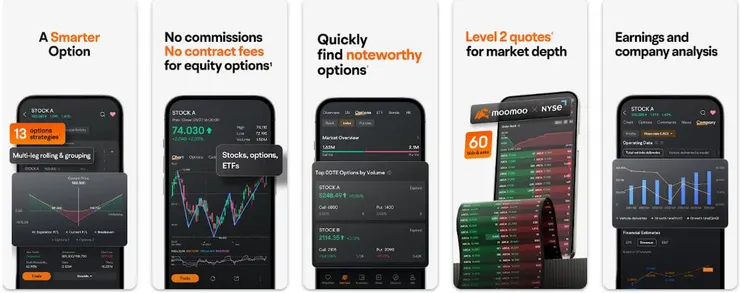
The first thing most people notice about moomoo is the interface. It feels fast, modern, information-heavy, and highly stimulating. Real-time price movement, earnings calendars, analyst ratings, options chains, heat maps, AI-related stock rankings, unusual volume alerts, institutional activity tracking, retail sentiment indicators — everything is constantly moving.

Moomoo au free stock
Traditional brokers present investing as an occasional activity. moomoo presents markets as a living stream of opportunities.
That design is incredibly effective for user engagement. In fact, I would argue moomoo understands modern retail psychology better than many Australian financial institutions do. Younger investors no longer want static dashboards. They want movement, signals, rankings, notifications, community discussions, and instant access to market narratives.
And moomoo delivers that exceptionally well.
But this is also where the platform becomes dangerous for certain types of investors.
Because moomoo makes the market feel exciting all the time.
That may sound positive at first, but investing and excitement rarely mix well over long periods. One of the biggest mistakes retail investors make is confusing activity with performance. Platforms like moomoo can unintentionally encourage overtrading simply because the environment constantly pushes information toward you.
I’ve seen beginner investors open moomoo accounts intending to buy ETFs and hold for ten years. Three weeks later they are trading leveraged Tesla products at 1 AM while reading message boards about AI semiconductor momentum plays.
That transformation happens faster than people think.
To be clear, this is not a criticism unique to moomoo. Robinhood changed US investor behavior in a similar way years ago. But moomoo refined the formula with even denser information systems and stronger market immersion.
For experienced traders, this can actually be useful.
For inexperienced investors, it can become psychologically exhausting.
Now let’s talk about what Australians actually care about most: access to US stocks.
This is where moomoo becomes genuinely competitive.
Australia’s domestic market is relatively concentrated. Banks, mining companies, energy firms, and a handful of healthcare names dominate the ASX. Younger Australian investors increasingly realize that many of the world’s highest-growth companies are listed in the United States, not Australia.
That’s why interest in:
- NVIDIA
- Microsoft
- Amazon
- Meta
- Tesla
- AMD
- Palantir
- Broadcom
has exploded among Australian retail investors.
moomoo positioned itself perfectly for this shift. The app heavily emphasizes US market coverage, extended-hours trading, AI sector visibility, and Nasdaq-focused market activity. Compared to many traditional Australian brokers, the US investing experience feels significantly more modern.
This matters because investing behavior globally is becoming more US-centric. Australian investors are no longer satisfied with local dividend portfolios alone. They want exposure to AI, cloud infrastructure, semiconductors, cybersecurity, robotics, and global technology platforms.
moomoo understands that trend better than many legacy Australian brokers.
Another major strength is ETF accessibility.
A surprising number of Australians are now building portfolios around:
- VOO
- QQQ
- SCHD
- VTI
- IVV
- NDQ
- global AI ETFs
- high-dividend ETFs
rather than selecting individual Australian stocks.
For long-term investors, this shift is extremely important. Australia traditionally had a very property-heavy wealth culture, with equities often treated as secondary assets. But younger investors increasingly view global ETFs as core wealth-building vehicles.
moomoo benefits directly from that trend because the platform simplifies access to international investing.
However, fees deserve serious discussion.
One of the biggest misconceptions among retail investors is assuming “zero commission” means “free trading.” That is rarely true anywhere in the brokerage industry.
With moomoo Australia, investors still need to pay attention to:
- FX conversion spreads
- regulatory fees
- platform costs
- bid-ask spreads
- margin financing rates
- options contract fees
Especially for active traders, small friction costs accumulate quickly over time.
Ironically, many investors who obsess over saving $5 commissions end up losing thousands through impulsive trading behavior encouraged by high-engagement platforms.
That’s why I think the best moomoo users are not necessarily day traders.
The platform is actually strongest for:
- globally focused investors
- ETF builders
- tech-focused growth investors
- active market researchers
- intermediate traders transitioning beyond basic brokers
Where moomoo struggles slightly is with investor maturity filtering.
The platform gives beginners access to advanced market tools very quickly. Options analytics, leveraged ETFs, overnight trading, sector rotation signals, institutional flow tracking — these are powerful tools, but they also increase behavioral risk.
Most beginner investors underestimate how emotionally difficult active trading becomes during volatility.
During strong bull markets, apps like moomoo feel brilliant. During corrections, they can amplify anxiety dramatically because users remain hyperconnected to every market movement.
That psychological aspect rarely gets discussed in broker reviews, but it matters enormously.
Now let’s address safety and regulation, since this is one of the most searched topics regarding moomoo Australia.
moomoo operates under regulated structures in Australia, and from a compliance standpoint it is not some random offshore app. However, investors should still understand an important principle:
Broker safety is never just about regulation.
It’s also about:
- platform stability
- liquidity management
- operational resilience
- user risk management
- market exposure behavior
Many retail investors mistakenly assume a regulated broker automatically protects them from bad outcomes. In reality, the biggest risk is often not broker failure — it is investor behavior itself.
And this brings me to what I believe is the most important truth about moomoo.
moomoo is an extremely powerful investing tool, but it is also an attention machine.
If you already have discipline, a portfolio strategy, and emotional control, the platform can be excellent. The data density, research tools, and US market accessibility are genuinely impressive.
But if you constantly chase momentum, react emotionally to headlines, or feel addicted to checking market movement every hour, moomoo can unintentionally magnify those tendencies.
That’s why I think the platform reflects a larger shift happening in global investing.
Modern brokers are no longer just transaction providers. They are behavioral environments.
And the design of those environments influences investor outcomes more than most people realize.
“I signed up for moomoo Australia around the middle of the AI stock boom because everyone on Reddit kept talking about Nvidia and US tech stocks. At first I honestly thought it was just another flashy trading app, but after using it for a few months, I kind of understood why younger investors like it so much. The app makes the market feel alive all the time. Earnings, news, overnight movement, sector rankings — everything updates constantly. The good part is you always feel informed. The bad part is you end up checking your portfolio ten times a day without realizing it.”
“I used CommSec for years before switching to moomoo, and the biggest difference wasn’t even the fees. It was the overall experience. CommSec always felt slow and outdated whenever I traded US stocks. moomoo feels built specifically for people following Nasdaq and AI companies. I mainly buy ETFs like VOO and QQQ, but I’ll admit the app sometimes tempts me into making random trades just because the market activity is right in front of me all day.”
“The thing I actually like most about moomoo is the amount of information available inside the app. You don’t need to jump between five different websites anymore. I can check earnings dates, analyst targets, institutional holdings, options activity, and news all in one place. For someone investing in US tech stocks from Australia, that convenience is honestly hard to go back from. My only criticism is that the platform can become mentally exhausting during volatile weeks because there’s almost too much information.”
“I opened a moomoo account mainly for the free stock promotion, but I ended up staying because the app is genuinely much better than I expected. The interface is smooth, the charts are fast, and the ETF search system is easy to use. But after about six months, I realized the biggest challenge wasn’t the broker — it was controlling myself. The app makes trading feel easy and fun, which sounds good until you notice you’re trading way more often than before.”
“For Australian investors who mainly care about US stocks, I honestly think moomoo is one of the strongest platforms right now. I follow Nvidia, Microsoft, Tesla, AMD, and semiconductor stocks daily, and the amount of market detail inside the app is impressive for a retail broker. At the same time, I wouldn’t recommend it to someone who gets emotional easily. During market selloffs, having constant notifications and price alerts can seriously mess with your head if you’re not disciplined.”
So, is moomoo Australia worth using in 2026?
For many investors, yes.
Especially if you:
- want strong US market access
- invest in global ETFs
- follow AI and technology sectors
- prefer mobile-first investing
- want more advanced market data
- feel limited by traditional Australian brokers
moomoo offers one of the most modern retail investing experiences currently available in Australia.
But long-term success still depends on something no app can provide:
Because eventually every investor discovers the same reality:
The hardest part of investing is not finding information anymore.
It is managing yourself while drowning in it.
#moomooAustralia #moomooReview #AustralianInvesting #USStocks #ETFInvesting #Nasdaq #AIStocks #StockMarket #InvestingApps #MoomooBroker