採訪、整理、翻譯:吳佩珍
編輯:謝佳錦
Q:《帕拉贊諾夫,你昨晚夢見什麼》是您的第一部導演作品。過去您多半是以攝影師的身分參與電影製作,這次決定親自執導並聚焦家庭這樣私人的主題,最大的挑戰是什麼?從後方的掌鏡者轉向導演身分,又對您的創作思維產生了什麼樣的影響?
法拉茲.費沙拉基(以下簡稱費沙拉基):最大的挑戰無疑是在剪輯過程中觀看並傾聽自身。拍一部關於家人的電影看似容易:有現成的角色、不用付片酬,而且他們隨時都在身邊。但作為電影工作者,很快就會發現自己陷入尷尬境地,得在「拍出一部好電影」與「公平對待家人」之間做出選擇。
理想是能找到平衡,但那需要時間。在剪輯室裡你會不斷自問:家人的故事是否值得被觀看?而這個困惑可能會把你帶偏,讓你開始像一位國家地理頻道的拍攝者,用觀察野外稀有動物般的手法去呈現家人。情感的深度介入,反而會讓你看不清自己在剪輯室裡已經變成了什麼樣的「怪物」。要如何在保持尊重的同時,又相信:即便是最平凡的事物,只要呈現方式得當,都可以值得述說、值得觀看,這始終是一道難題。
在這個過程中,多年的攝影師經驗給了我很大的幫助。在與素材纏鬥一段時間後,我開始聚焦在共處時那些簡單而美好的時刻:父親說的一個笑話、母親踩在沙發上往外張望的身影、房間裡兩張空著的椅子,或是窗外的雪景。我以對待攝影的方式來對待剪輯,最終也就找到了這部電影的基調。
(圖/《帕拉贊諾夫,你昨晚夢見什麼》電影劇照;台灣國際紀錄片影展提供)
Q:阿巴斯・基亞羅斯塔米(Abbas Kiarostami)過去的教學與創作精神似乎對您影響深遠,連您的父親都在鏡頭前以此打趣。可以請您分享阿巴斯對這部作品有著什麼樣的創作意義嗎?身為影迷,看完也會好奇:為什麼家人會叫你帕拉贊諾夫(Parajanov)?
費沙拉基:1990年代,伊朗的地方電視台發生了一件(以今日眼光來看)頗為罕見的事。每週黃金時段,有一個節目會固定播映世界名片。你可能正坐著吃晚飯,隨手打開電視,突然就發現自己在看帕拉贊諾夫的《蘇拉姆城堡的傳說》(1985),或柏格曼的《野草莓》(1957)。
帕拉贊諾夫的電影並不容易親近,他的名字在許多人心中漸漸成了某種晦澀電影的象徵。當我開始學習電影、拍起那些除了自己外似乎沒有人看得懂的短片,我的一位叔叔便開始叫我「帕拉贊諾夫」。這恐怕並非出於讚美,而是一種說法,意思是我拍的電影也沒有人看得懂。
就是透過那個電視節目,我很早就學會了讓自己沉浸於電影之中。第一部讓我感到真正神奇的阿巴斯電影是《何處是我朋友的家?》(1987)。我無法在虛構與現實之間劃出一條清晰的界線,而這種日常生活與魔幻交融的世界,使得阿巴斯的世界對我而言如此珍貴。
在伊朗這樣一個不斷面對政治與社會危機的語境下,他的電影感覺像是一份謙遜的希望獻禮,也是一種磨礪感知、保持清醒、觀察辨認平凡事物中之美麗與複雜性的練習。對我而言,這是電影最核心的責任(是的,我相信電影有其責任),而且現在比任何時候都更是如此。
Q:從過去的訪談〈A Small Miracle〉了解到:在拍攝這部作品之前,您原本計畫製作一部讓家人參與其中的重演電影(restaged film),該計畫只有一顆鏡頭保留在現在這部作品中。能與我們分享這顆鏡頭,以及選擇保留它的理由嗎?為何您在導演筆記中,認為那個場景「反而是最持續地『真實』的之一」?
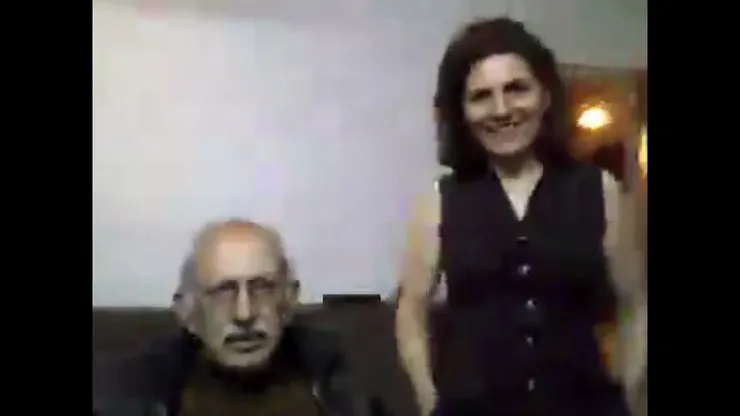
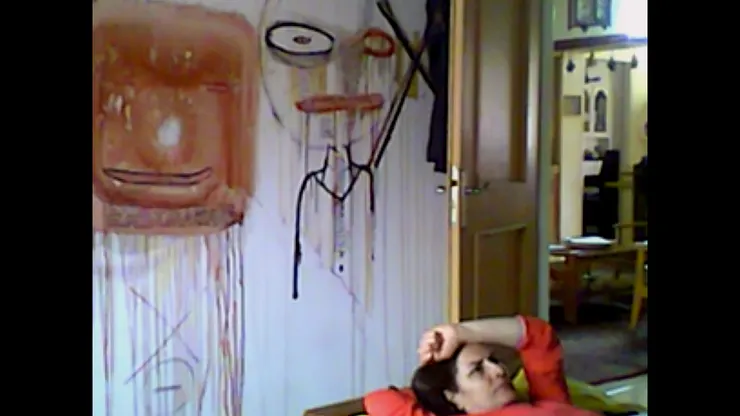
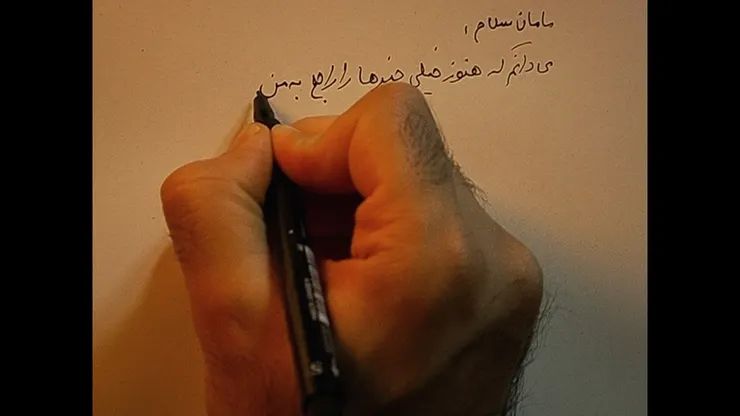
費沙拉基:有一個鏡頭是我的父母來柏林造訪我的公寓,這是那部未完成的重演電影中的素材。當時用的是一台普通的高畫質攝影機。我曾剪過一個大量使用這類高畫質素材的版本,但我感到這些清晰的影像讓整部片變得太具體、太「真實」了。我不想失去網路攝影機素材所具有的那種如夢似幻的質感。
透過那些像素,我的父母變得更像是「父母」這個概念的普遍形象,而非這兩個特定的個體。因此我決定不使用高畫質素材。然而,只保留其中一個鏡頭,卻產生了出乎意料的效果:在觀看了一個小時的像素化影像之後,這段清晰的畫面感覺像是一場夢,彷彿是夢中之夢。以網路攝影機拍攝的片段中,無法同處一個實體空間的感覺是如此強烈,以至於在突然看到角色們清晰地同框出現時,我們反而不太相信這是真的。某種意義上,觀眾更信任那些像素化的網路攝影機素材,而非清晰的畫面;而我自己本來就傾向於比起清晰的影像,更信任模糊的影像。但如果我們談論的是紀錄片中所謂的「真實」,那個特定的鏡頭與電影其餘部分相比,確實更具備與現實相關聯的典型特質。
(圖/《帕拉贊諾夫,你昨晚夢見什麼》電影劇照;台灣國際紀錄片影展提供)
Q:您在導演筆記提到:剪輯過程中,每天都能剪出一個不同版本的家庭,甚至懷疑自己能否還能相信攝影機。現在電影已經在世界各地放映,不同文化背景的觀眾對您建構出的家產生共鳴或詮釋時,是否改變了您當初在剪輯室裡對真實的困惑?
費沙拉基:正如我在導演筆記中提到的,我的初衷並非要拍一部關於費沙拉基家庭的電影,而是要拍一部關於「一個」家庭的電影。因此,我並非以呈現自己家庭的「現實」為首要關切;攝影機允許我扭曲那個現實,甚至建構一個新的現實。我對「相信攝影機」的猶疑正是從這裡產生的。但與此同時,我又深深信任攝影機,同意阿巴斯所說的「攝影機不說謊」。我相信攝影機揭示的是現實的核心、是事物的本質,是它們內在的「形式」或理念,而非它們特定的外在表象。
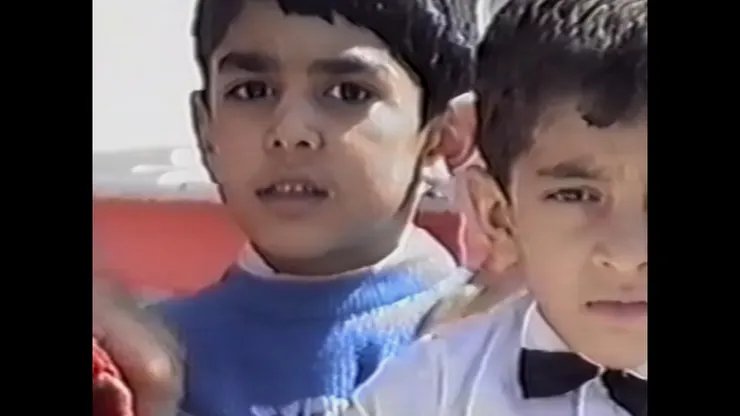
我記得在一個小放映廳的映後,超過十個人告訴我:他們的父親和我父親一模一樣。後來我想,五十個人當中有十個人擁有完全相同類型的父親,這幾乎是不可能的事。我認為這之所以發生,是因為電影中的父親代表了一種「父性」的概念,超越了他作為個體的現實。
Q:您的電影記錄了與家人的遠距通訊,而近期伊朗的情勢動盪,不知道您的家人目前是否還在伊朗?他們的近況還好嗎?
費沙拉基:他們還在伊斯法罕。
在我居住的德國,人們談及以色列/美國對伊朗的戰爭,焦點都放在油價上,或者擔心暑假的旅費會漲多少。幾乎沒有人在談那些真正身處其中的人正承受著什麼、感受與經驗著什麼。
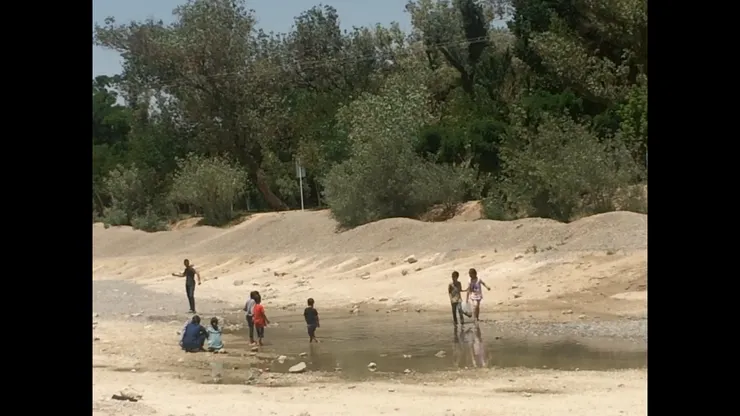
那些夢想著一個沒有爆炸聲的夜晚、只為了能安睡一覺的人。那些懷念雲還只是雲、不是煙霧,雷聲還只是雷聲、不會被誤認為爆炸的日子的人。那些牽掛著家人與朋友、卻又不敢穿越整座城市去探望的人。那些連上不了全球網際網路的人,還有那些沒辦法去上學、上幼兒園、甚至不能去操場玩的孩子——沒有人提起他們。
我想,我的父母現在大概也是這樣的感受,就像每一個生活在戰爭裡的人一樣。有時我能透過一個伊朗通訊軟體與他們進行視訊通話,但我已經對自己許下承諾,不再錄製這些對話。這已經不再是可以拍成電影的素材了。
(圖/《帕拉贊諾夫,你昨晚夢見什麼》電影劇照;台灣國際紀錄片影展提供)
Between Blur and Clarity, Here and Elsewhere
An Interview with Faraz Fesharaki, Director of What Did You Dream Last Night, Parajanov?
Interview, editing and translation by Wu Pei-Chen
Q:What Did You Dream Last Night, Parajanov? is your first directorial work. In the past, you were mostly involved in film production as a cinematographer. This time, you chose to direct the film yourself and focus on a private subject like family. What was the biggest challenge? And how did the shift from being behind the camera to taking on the role of director influence your creative thinking?
Fesharaki:The biggest challenge was definitely watching and listening to myself throughout the editing. Making a film about your family might seem easy; you already have your characters, you don’t have to pay them, and they’re always around. But as a filmmaker, you quickly find yourself in an uncomfortable position, often having to choose between making a good film and being fair to your family.
Ideally, you find a balance, but it takes time. In the editing room, you keep asking whether your family stories are worth watching, and this can mislead you to portray your family members as if you were a National Geographic filmmaker observing rare animals in the wild.
Your emotions are deeply involved, which can prevent you from seeing what a ‘monster’ you may have become in the editing room. It’s a constant challenge to stay respectful while trusting that even the simplest things can be worth telling or worth watching depending on how you present them.
In this process, my experience as a cinematographer helped me a lot. After struggling with the material, I started focusing on simple, beautiful moments of us being together: a joke my father told, my mother standing on a sofa and looking out, two chairs left alone in a room, or the snow outside the window. I approached editing the way I approach cinematography, and that ultimately led me to the final tone of the film.
Q:Abbas Kiarostami’s teaching and creative spirit seem to have had a profound influence on you—even your father jokes about it on camera. Could you share what he has meant to you creatively in this work? Also, as a cinephile, I’m curious: why do your family members call you Parajanov?
Fesharaki:In the 1990s, something quite unusual (from today’s perspective) was happening on Iranian local TV. There was a famous programme once a week during prime time that showed remarkable films. You could be having dinner, turn on the TV, and suddenly find yourself watching Parajanov’s The Legend of the Suram Fortress (1985) or Bergman’s Wild Strawberries (1957).
Parajanov’s films were not easy to connect with, and for many people his name became a symbol of inaccessible cinema. When I started studying film and making short films that no one, apart from myself, seemed to understand, one of my uncles began calling me ‘Parajanov’. I’m afraid it was not meant as a compliment, but rather as a way of saying that I also make films nobody understands.
Through that TV programme, I learned early on to let myself be mesmerised by cinema. The first Kiarostami film that felt truly magical to me was Where Is My Friend’s House? (1987). I couldn’t draw a clear line between fiction and reality, and this blend of everyday life and magic made his world so precious to me.
In the context of Iran, where we constantly face political and social crises, his films felt like a modest offering of hope, and an exercise in sharpening perception to stay awake, observe, and recognise both the beauty and complexity in the simplest things. For me, this is the main responsibility of cinema (yes, I believe films have responsibilities), now more than ever.
(圖/《帕拉贊諾夫,你昨晚夢見什麼》電影劇照;台灣國際紀錄片影展提供)
Q:From your earlier interview ‘A Small Miracle’, we learned that before making this film, you had originally planned to create a ‘restaged film’ involving your family members. Only one shot from that project remains in this film. Could you share with us that particular shot, and why you chose to keep it? Also, in your director’s note, you mention that this scene was ‘among the most consistently “real” ones.’ Why do you see it that way?
Fesharaki:There is a shot where my parents come to visit my apartment in Berlin; this is part of the footage from that unfinished staged film. It was shot on an ordinary HD camera. I had a version where I used many of these HD shots in the film, but I felt that these clean images made it too concrete and too ‘real’. I didn’t want to lose the dreamlike quality of the webcam material.
I think that through those pixels, my parents become more like a general image of ‘parents’ rather than these specific individuals. So I decided not to use the HD footage. However, including just one of these shots had a surprising effect. After watching an hour of pixelated images, this sharp footage feels almost like a dream as if it were a dream within a dream.
The impossibility of being physically in the same space is so strong in the part with webcam images that when we suddenly see the characters together in a sharp image, we somehow don’t fully believe it. In a way, the audience trusts the pixelated webcam material more than the sharp footage and I myself tend to trust blurry images more than sharp ones anyway.
But if we talk about what is considered ‘real’ in a documentary, that particular shot has, compared to the rest of the film, more of the qualities typically associated with reality.
Q:In your director’s note, you mention that during the editing process, you were able to cut together a different version of your family every day, and even found yourself questioning whether you could still ‘trust the camera’. Now that the film has been screened around the world, when you see audiences from different cultural backgrounds resonate with or interpret the family you constructed, has this changed your earlier uncertainty about reality in the editing room?
Fesharaki:As I mentioned in the director’s note, I didn’t intend to make a film about the Fesharaki family, but rather a film about a family. So I was not primarily concerned with presenting the ‘reality’ of my own family, and the camera allowed me to distort that reality or even construct a new one. That is where my doubts about ‘trusting the camera’ come from. At the same time, I deeply trust the camera, and I agree with Kiarostami that ‘the camera doesn’t lie’. I believe that the camera reveals the core of reality, the essential nature of things, their underlying ‘form’ or idea, as opposed to their particular appearances.
I remember that after a screening in a small cinema, more than ten people told me that their father was exactly like mine. Later, I thought it was highly unlikely that out of fifty people in the room, ten would have exactly the same type of father. I think this happened because the father in the film represents an idea of ‘fatherhood’ that goes beyond his individual reality.
(圖/《帕拉贊諾夫,你昨晚夢見什麼》電影劇照;台灣國際紀錄片影展提供)
Q:Your film documents long-distance communication with your family, and in light of the recent unrest in Iran, may I ask whether your family is still living in Iran? How are they doing at the moment?
Fesharaki:They are still in Isfahan.
In Germany, where I live, most conversations about the Israel/America war against Iran focus on oil prices and how expensive summer holidays might become. I rarely hear anyone talk about the people who are actually going through it, what they feel, what they experience.
People who dream of a night without explosions so they can sleep through it. People who miss the days when clouds were just clouds, not smoke, and thunder was not mistaken for explosions. People who worry about their families and friends but are afraid to cross the city to visit them. People without access to the global internet, and children who cannot go to school, kindergarten, or even playgrounds; no one talks about them.
I assume this is also how my parents feel, like anyone living through war. Sometimes I manage to have video calls with them through an Iranian messaging app, but I have promised myself not to record these conversations anymore. This is no longer material for a film.
第十五屆台灣國際紀錄片影展
2026 Taiwan International Documentary Festival
.時間|05/01(五)~5/10(日)
.地點|國家電影及視聽文化中心、台北獅子林新光影城、光點華山電影館、臺灣當代文化實驗場C-LAB
.票價|單場票 120 元,套票6張420元(OPENTIX販售)
.《帕拉贊諾夫,你昨晚夢見什麼》影片介紹及場次請點此
.更多詳情請見官方網站