訪問:洪翊芳
整理、翻譯、編輯:謝佳錦
Q:本屆TIDF放映您的兩部作品《綠的海平線》(2006)與《軍教男兒——台灣軍士教導團的故事》(2010),彼此內容相連,像是一趟探索旅程的不同產出。先聊聊這趟探索怎麼開始,跟更早的作品《尋找1946消失的日本飛機》(2003)是否有關?
郭亮吟(以下簡稱郭):《尋找1946消失的日本飛機》是一部家族史紀錄片,記錄我阿公二戰後去宜蘭標買報廢的日本飛機,將外殼拆下熔製成鋁鍋的故事。
這部片的製片團隊正職為社區營造,在一次關於資源回收的訪問調查中,他們走訪多家廢五金回收廠,遇見知道「飛機鍋」的里長周鍊燈先生。他說自己在日治時期,曾是高雄岡山「海軍第61航空廠」維修飛機的海軍工員,更提到當年有一群孩子被送到日本製造戰鬥機,這是我第一次聽聞「台灣少年工」。
某次行經東京,一位在美國認識的日本友人得知我正在「找飛機」,便帶我去靖國神社的遊就館,觀賞一架展示中的零式戰鬥機。那時館內書店櫃檯,剛好擺著野口毅先生的著作《台湾少年工と第二の故郷:高座海軍工厰に結ばれた絆は今も》(台灣少年工與第二故鄉:高座海軍工廠結下的羈絆至今),我便把此書帶回美國,那時我心想,書中這群人,或許就是周鍊燈先生口中的那群台灣少年工。
藤田修平是我在美國南加州大學的同學,曾因協助台灣電影製作而訪台。由於他一直想再回到溫暖的台灣,便主動詢問是否有能幫上忙的地方;當時我便請他協助判讀日治時期的老報紙與史料。
藤田學成返日後的首份工作,恰巧位在神奈川縣大和市,即昔日高座海軍工廠舊址一帶,我當時也回到台灣工作,我們便利用公餘時間,依循野口毅與本身曾為台灣少年工的陳碧奎先生的著作,分頭聯絡台、日兩地的相關人士,逐步完成《綠的海平線》。
2006年,《綠的海平線》完成全台巡迴放映期間,片中受訪者陳其鴻先生邀請我參加他在宜蘭參與的另一個團體,這是我首度深入了解「台灣軍士教導團」。 此時我驚覺曾在《尋找1946消失的日本飛機》訪問過的李英茂先生,竟也是該團成員。
同時我才意識到,當年8000多名赴日製造飛機的台灣少年,戰後返台時,約有2000人正值兵役年齡,有的是志願參加,有的是抽籤入伍,加入了孫立人將軍成立的「台灣軍士教導團」。
當時我剛結束《綠的海平線》,手頭仍有其他商業案子,加上《軍教男兒》的當事者皆已高齡,我曾猶豫是否要製作,因為這無疑將超過我經濟、體力的負擔。但陳其鴻先生告訴我,長輩們因長年合作而信任我,「這一群人都老了,只有你能幫我們跟時間賽跑」。於是我當時兼任多職,利用公餘時間密集採訪,最終在2010年完成,並於台北、宜蘭舉行公開放映。
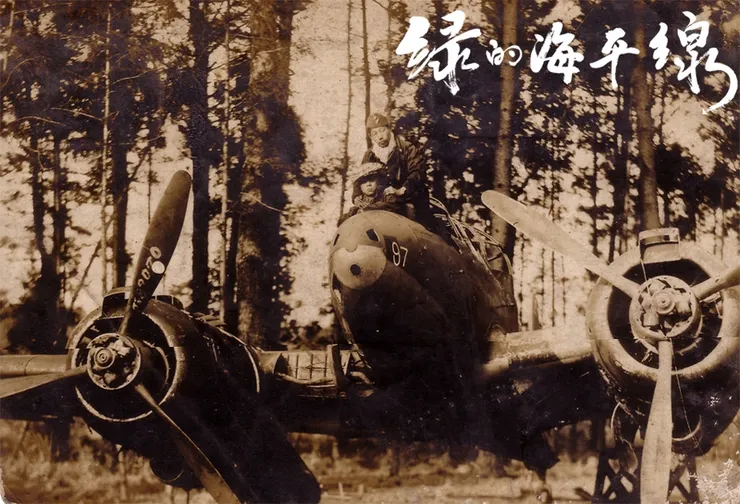
(圖/《綠的海平線》電影劇照;邱欣金先生提供)
Q:在社群網絡尚未發達的年代,如何進行歷史田野調查,並尋找受訪者?有沒有出乎意料的驚喜發現?或者始終遍尋不著的遺憾?
郭:2000年前後,我們僅能憑藉書本、報紙、大會會刊與團體名冊,透過寫信、撥打電話或發傳真的方式聯絡當事人。解嚴後成立的「台日高座大會」或是「台灣軍士教導團聯誼會」等組織,便是我們接觸受訪者的重要管道。
華語帶有中國口音的林文瑞先生,是我們訪問中最特別的一位。他台、日語極為流利,有參加過團體活動,也多習慣獨自行動。正因為他願意受訪,我們才有機會了解那段戰後留日、隨後轉赴中國的台灣少年工們。
2003年台灣部落格盛行,我們在網海中發現有些部落客分享其父是台灣少年工或軍教團成員的經驗,這對於從20世紀末便開始製作影片的我們而言,是過去未曾有過的「新」體驗。
在拍攝《綠的海平線》與《軍教男兒》時,我得知有幾位戰後返台的長輩,曾經歷過二二八與白色恐怖,即便經過多次聯絡溝通,我仍能感受到他們對於在鏡頭前訴說那段往事的深刻恐懼。
去年(2025),我在台灣國家人權博物館的YouTube頻道上,看見陳進財先生的口述訪談。我記得點開影片的那一刻起,陳先生的聲音一出來,直到訪談結束,我的眼淚都沒有停過。曾為台灣少年工的陳先生,直到85歲生日當天,才終於向家人訴說他自己在白色恐怖時期的受難經驗。
威權的陰影,極權的壓迫與人們心中的恐懼,究竟何時能真正散去?檔案影片的佚失,是我心中另一個遺憾。我曾在國家電影資料館(今國家電影及視聽文化中心)的檔案目錄裡找到關於「軍士教導團」的新聞影片,但申請調閱時才得知,底片已經嚴重酸化而毀損,已無法復原。
Q:受訪者皆使用不同的語言(台語、客語、日語、華語等)進行口述訪談,而旁白卻選擇以「台語」進行敘述,這背後的考量為何?
郭:《綠的海平線》與《軍教男兒》這兩部影片,原本設定以受訪者最親近的母語擔任旁白,《綠的海平線》有台、客語兩種版本,《軍教男兒》更希望能有阿美族語版。正因為是獨立製片,不受限於商業體制或是公家單位,才讓我能實現這個想法。
我曾提供《綠的海平線》的台、客語版本給影展,或許,為何最終僅選擇台語版放映,這問題也可由影展單位來回答。《軍教男兒》在經費與時間的限制下,僅先完成了台語版,其他語言版本則成了未盡的遺憾。若有機會,仍希望完成,並希望能有手語版。
我成長於戒嚴的時代,校園內裡禁止說母語,常見身邊師生鄙視講台語的人,在這樣的氛圍下,我一到學校後便選擇安靜。對於教條八股的師長訓話、演講比賽、電視新聞及宣導影片,我從小就感到排斥。這些聲音象徵著威權,而且都是使用華語。相較之下,台語雖是我的母語,存在生活之中,但卻長期遭受壓抑、無法公開使用,影視作品中更難聽見自然生動的台語呈現。即便後來我從事電視節目製作,情況依然未見改變 (或許現今亦然?),無論是官方委製或是一般電視節目,基本上仍需配製華語旁白,才能順利交片並播出。
我大學時,正逢客家文化「還我母語運動」興起。畢業後,我有幸跟隨彭啟原導演製作客家電視節目,看著他堅持以客語進行田野調查、採訪,讓受訪者在鏡頭前講自然的客語,這在我心裡種下一顆種子。在當年的種種限制下,彭導演不斷衝撞體制,致力於將自然、不刻板的客語融入影片旁白,他對語言的堅持,深深影響了後來的我。彭啟原導演也是促成《綠的海平線》客語版的重要支持者,他在觀看本片之際,從父親留下的老照片裡,驚覺父親當年竟也是「台灣少年工」的一員。
《軍教男兒》的旁白「恆春兮」,他的聲音表演風格獨特,我們在客語、阿美族語的聲音表演者中,仍繼續尋找跟他有同樣特質的人,歡迎大家推薦給我。
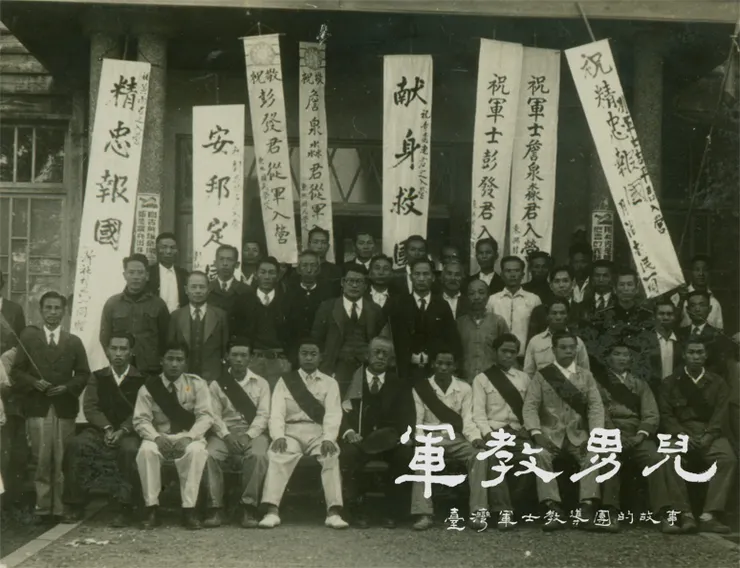
(圖/《軍教男兒——台灣軍士教導團的故事》電影劇照;詹泉淼先生提供)
Q:回首《綠的海平線》與《軍教男兒》創作的時空,您當時認為這兩部作品對台灣社會的意義是什麼?轉眼20年過去,在台灣主體意識更為普及的今天,分別回看這兩部作品,又有何新的看法?期待今日的年輕觀眾會有什麼想法?
郭:2006年《綠的海平線》完成後,我們在全台舉辦了巡迴放映。當時在沒有巡迴放映補助的情況下,除了台北仁愛圓環的誠品敦南店場次之外,其餘皆為免費入場。每一場放映會,前面幾排都坐滿台灣少年工的前輩,後排則擠滿20、30歲的年輕人。 當時,王昭華小姐與古少麒小姐每場都陪伴著我,將座談間的問答即時轉譯成台語與客語。
20年後回看這幾場巡迴放映會,那或許是台灣歷史紀錄片中,罕見而珍貴的世代交流。看著台灣少年工前輩們,在公開場域裡,有尊嚴且自在地以母語對年輕觀眾訴說自己的生命經驗,是那些放映會中別具意義的一件事。當這些走過兩個時代的台灣人相繼凋零後,現今的放映會,恐怕很難再見到那樣互動的跨世代交流。
那些當年20、30歲的年輕人,有的至今仍與我保持聯繫,他們不只在部落格上留下影片觀後感,其中不少人之後投身台灣史紀錄片、台灣史研究,或是台語文運動,在各自不同的領域中發揮著更大的影響力。
我始終記得吳春郎先生曾與我分享一件事:他的孫子在屏東的小學禮堂裡,和全校同學一起觀看《綠的海平線》,回去跟他說在大銀幕上看到自己的阿公感到很驕傲。
可惜的是,在《軍教男兒》完成後,我未能再次舉辦同樣規模的巡迴放映,在我心中留下極大的遺憾。
《綠的海平線》與《軍教男兒》這兩部紀錄片的當事者,皆是跨越了兩個時代的人。然而,他們的子孫不諳日語,難以解讀長輩留下來的日文檔案。曾有兩位觀眾寫信給我,在父親過世後,他們是透過觀看紀錄片,才終於了解那些寫著「空C廠」、「高座」的文件到底代表什麼,才終於對父親那輩人經歷的年代,有了跨越時空的理解。
20年前的放映會,我每次開場都會拋出一個問題:「為何戰後都過了60年,這部紀錄片才在2006年問世?」
為何拍攝台灣史紀錄片如此困難?
為何這兩部影片不是電視台或國家單位拍攝,而是由一位獨立影像工作者來完成?
為何觀看《綠的海平線》、《軍教男兒》這兩部影片這麼困難?
為何我們連理解「台灣人」的歷史,都這麼難?
為何現在年輕人已經聽不懂自己的「母語」?那還能稱做「母語」嗎?
王昭華小姐曾撰文寫到影片「厄聽厄看」,這些「難」、這些「厄」跟台灣的歷史、台灣人的命運,究竟有什麼關係?那些走過兩個時代的台灣人,逐漸凋零,年輕世代無緣在現場見到當事者,只能透過影片去理解。
20年前,20、30歲的世代,那一代的年輕人泰半失去使用母語的能力。20年後,20、30歲的這一代,我不知道還有多少人可以聽得懂「母語」?將來,我們恐怕再也沒有機會,聽到那些跨過兩個時代的人,用道地的母語(台語、客語、阿美族語等)去表達他們戰前、戰後的經歷。也許在不久的將來,台灣年輕人完全聽不懂這部影片裡的語言,這是很悲傷的事,但我更希望能夠留下這樣「厄聽厄看」的影片,作為母語的時空膠囊,傳遞給未來的世代。
Q:您的創作持續處理多種語言、複雜國族情境下的身分認同。作為一名近年定居日本的台灣導演,好奇這對於您的個人身分認同有帶來影響嗎?對於「台灣人」這個詞彙有沒有因此產生不同的理解?
郭:這題好難,國籍身分認同,對我來說似乎是時時刻刻都要面對的課題。甚至連簽收台灣國際紀錄片影展的收據,不論金額大小,也必須被問到的問題(笑)。
2003年左右,在日本的台灣人,其「外國人登錄證」上的國籍欄都還是填寫「中國」,22年後的2025年,台灣人在戶籍登錄時,在「國籍/地域」那欄才終於能寫成「台灣」。在不同國家走動時,每次進出海關,填寫表格,都怕會不會沒有「台灣」這個選項。這可能是台灣電影人參加國際影展都會有的經驗,當看見影展手冊上的影片介紹被寫成「Taiwan」或是「台湾」時,內心都會非常激動。
在日本,我的名字,有三四種寫法/讀法,有時漢字,有時英文,有時片假名,每個都是我,每個都不一樣。無時無刻,我都必須面對「我是誰?」這個問題。
台灣國際紀錄片影展的專題標題是「意識流變:戰爭與台灣兵」,而英文標題是「War Memories, Shifting Identities」。中文標題裡使用了「流變」,英文對應的則是「Shifting」,我自己覺得「Shifting」這個選字很有趣。
就我個人而言, 「國籍」(Nationality)會發生變動(Shift),但國/族/土地的認同(Identity) ,卻可能隨著時空變化而不停流轉變化。若由我自己來詮釋認同(Identity),可能會選擇用「Revolving」 (流轉)這個字。
我一直記得《軍教男兒》裡,從中國來到台灣的馮憾山先生,以前他總是想家,覺得「物離鄉貴,人離鄉賤」、「少不離鄉是賤人,老不離鄉是貴人」,如今不回中國「家鄉」落腳,定居台灣多年的他選擇「日久他鄉是故鄉」,把台灣這裡當作自己的家,那就當成了自己的貴人。
這讓我想起在日本經歷311大地震時的深刻體驗。災後不久,很多外國人紛紛離開日本。而當時的我,也正準備離開東京,前往神戶與台灣參加《軍教男兒》的放映會,當時我覺得甚至有可能無法再回來。
但同時,我內心裡卻有一種「已經無法說走就走,輕易抽身離開」的牽絆,這是一種截然不同的心境轉變,若非遇上這場大地震,我可能根本沒有察覺到,自己對這塊土地的情感已經發生變化。
再度回到東京後,我考取了「防災士」執照(該考試不限國籍,以日語應試),並投入在地的防災活動。我希望自己能夠對落腳的這塊土地有所回饋,同時報答那些曾為我付出與努力過的人們。
每年的東京國際影展,我都會看完所有的台灣電影,去年(2025),我看了廖克發導演的劇情片《人生海海》。這部片講在馬來西亞、台灣,不同世代華人移民的故事。看著片中每一個角色,我都會聯想到自己。特別是陳雪甄飾演的「水雲」一角,那一段她與孩子的睡前對話,當孩子問媽媽「我到底是什麼人呢?」、「我們的根在哪裡?」
我覺得「水雲」當時的回答,非常接近我現在的心情。
‘Only You Can Help Us Race Against Time’
An Interview with Kuo Liang-yin, Director of Shonenko and Suspended Duty
Interview by Hung Yi-Fang
Editing and translation by Hsieh Chia-chin
Q:This year, TIDF is screening two of your films, Shonenko (2006) and Suspended Duty: Taiwan Military Training Regiment (2010). The two works are closely connected, almost like different outcomes of the same investigative journey. Could you begin by telling us how this journey started? Was it related to your earlier film Searching for the Zero Fighters (2003)?
KUO:Searching for the Zero Fighters is a family-history documentary. It recounts how, after the Second World War, my grandfather travelled to Yilan to bid on decommissioned Japanese aircraft, dismantled their aluminium shells, and melted them down to make cooking utensils.
The film’s production team worked primarily in community empowerment. During a survey on recycling and resource recovery, they visited several scrap-metal recycling yards and met Mr. Chou Lian-deng, a village chief who knew about these so-called ‘airplane utensils. During the Japanese colonial period, he had worked as a naval technician repairing aircraft at the Navy’s 61st Air Arsenal in Gangshan, Kaohsiung. He also mentioned that a group of young boys had once been sent to Japan to manufacture fighter aircraft. This was the first time I heard about the 'Taiwanese Child Labourers' (Shonenko).
Once, while passing through Tokyo, a Japanese friend I had met in the United States learned that I was 'searching for the planes’. She took me to the Yūshūkan Museum at the Yasukuni Shrine, where a Zero fighter aircraft was on display. At the museum bookshop counter, I happened to see a book by Takeshi Noguchi titled Taiwanese Child Labourers and Their Second Homeland: The Enduring Bonds Formed at the Kōza Naval Air Arsenal. I bought the book and brought it back to the United States. I wondered whether the people described in the book might be the same Taiwanese child labourers that Mr. Chou had mentioned.
Shuhei Fujita was my classmate at the University of Southern California. He had once visited Taiwan to assist with Taiwanese film productions. Since he hoped to return to the warm Taiwan he remembered, he asked whether there was anything he could help with. I asked him to assist in interpreting historical newspapers and documents from the Japanese colonial period.
After returning to Japan, Fujita’s first job happened to be in Yamato City, Kanagawa Prefecture, near the former site of the Kōza Naval Air Arsenal. Around the same time, I had returned to Taiwan to work. In our spare time, following the writings of Noguchi and Chen Bi-kui—who himself had been one of the Taiwanese child labourers—we began contacting relevant people in both Taiwan and Japan. This work eventually led to Shonenko.
During the nationwide screening tour of Shonenko in 2006, one of the film’s interviewees, Mr. Chen Chi-hung, invited me to attend a gathering of another group he was involved with in Yilan. This was my first in-depth introduction to the 'Taiwan Military Training Regiment'. At that moment I suddenly realized that Mr. Li Ying-mao—whom I had interviewed in Searching for the Zero Fighters—was also a member of this group.
Only then did I realise that among the more than 8,000 Taiwanese youths who had gone to Japan to manufacture aircraft, about 2,000 were of military age when they returned to Taiwan after the war. Some volunteered, while others were drafted by lottery into the 'Taiwan Military Training Regiment', established by General Sun Li-jen.
At the time I had just finished Shonenko and was still working on other commercial projects. The people involved in the story of Suspended Duty were already elderly, and I hesitated to make the film, as it would clearly exceed my financial and physical capacity. But Mr. Chen Chi-hung told me that the elders trusted me because we had worked together for many years. 'These people are all getting old,' he said. 'Only you can help us race against time.'
So I took on several jobs simultaneously and conducted interviews intensively in my spare time. Eventually the film was completed in 2010 and publicly screened in Taipei and Yilan.
Q:Before social media became widespread, how did you conduct historical fieldwork and locate interviewees? Were there any unexpected discoveries, or regrets about things you searched for but never managed to find?
KUO:Around the year 2000, we could rely only on books, newspapers, conference bulletins and membership lists. We contacted people by writing letters, making telephone calls or sending faxes.
Organisations established after the lifting of martial law, such as the Taiwan–Japan Kōza Association and the Taiwan Military Training Regiment Association, became important channels through which we reached interviewees.
One particularly memorable interviewee was Mr Lin Wen-rui, whose Mandarin carried a Chinese accent. He spoke Taiwanese and Japanese with remarkable fluency. Although he sometimes took part in group activities, he generally preferred to move independently. Because he agreed to be interviewed, we were able to learn about those Taiwanese child labourers who remained in Japan after the war and later moved to China.
Around 2003, blogging became popular in Taiwan. While searching online, we came across blog posts written by people whose fathers had been Taiwanese child labourers or members of the Military Training Regiment. For us, having begun making films in the late twentieth century, this was an entirely new experience.
While making Shonenko and Suspended Duty, I also learned that several of the elders who had returned to Taiwan after the war had experienced the February 28 Incident and the period of the White Terror. Even after repeated attempts to contact and reassure them, I could still sense their deep fear of speaking about those events in front of a camera.
Last year (2025), I saw an oral history interview with Mr Chen Jin-tsai on the YouTube channel of the National Human Rights Museum in Taiwan. From the moment I clicked on the video and heard his voice until the interview ended, I could not stop crying. Mr Chen, who had been one of the Taiwanese child labourers, did not tell his family about his experiences during the White Terror until his eighty-fifth birthday.
When will the shadows of authoritarian rule, the oppression of totalitarianism, and the fear lodged in people’s hearts finally fade away?
The loss of archival footage remains another regret for me. I once found newsreel footage about the Military Training Regiment listed in the catalogue of the Chinese Taipei Film Archive (now the Taiwan Film and Audiovisual Institute). However, when I applied to access it, I learned that the film stock had deteriorated severely through acidification and was beyond restoration.
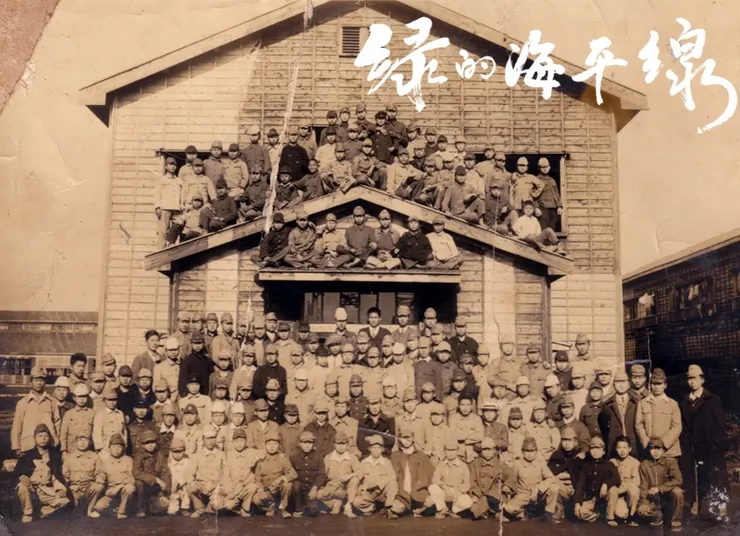
(圖/《綠的海平線》電影劇照;吳慶松先生提供)
Q:Your interviewees speak different languages, including Taiwanese, Hakka, Japanese and Mandarin, yet the narration is in Taiwanese. What was the thinking behind this choice?
KUO:For both Shonenko and Suspended Duty, the original idea was for the narration to be spoken in the interviewees’ closest mother tongue. Shonenko exists in both Taiwanese and Hakka versions, and ideally Suspended Duty would also have an Amis-language version. Because these were independent productions, not constrained by commercial systems or government institutions, I was able to pursue this idea.
I submitted both the Taiwanese and Hakka versions of Shonenko to film festivals. Why only the Taiwanese version was ultimately screened may be a question better answered by the festivals themselves.
Due to limitations of time and budget, only the Taiwanese version of Suspended Duty was completed. The other language versions remain unfinished regrets. If the opportunity arises, I still hope to complete them. Ideally there would also be a sign-language version.
I grew up during the martial law era, when speaking one’s mother tongue was forbidden in schools. Teachers and students often looked down on those who spoke Taiwanese. In that atmosphere, I chose to remain silent once I arrived at school.
From a young age I felt resistant to the rigid lectures of teachers, speech contests, television news and propaganda films. These voices symbolised authority and were always delivered in Mandarin. Taiwanese, by contrast, was my mother tongue and part of everyday life. Yet it had long been suppressed and could not be used publicly. In film and television it was even harder to hear Taiwanese spoken in a natural and lively way.
Even after I began working in television production, the situation did not really change. Perhaps it has not changed even today. Whether for government commissions or ordinary television programmes, Mandarin narration was generally required before a programme could be delivered and broadcast.
When I was at university, the Hakka 'Return Our Mother Tongue' movement was gaining momentum. After graduating, I had the good fortune to work with director Peng Chi-yuan on Hakka television programmes. He insisted on conducting fieldwork and interviews in Hakka, allowing interviewees to speak naturally on camera. That experience planted a seed in my mind.
Despite many restrictions at the time, Peng continually challenged the system and sought to incorporate natural Hakka into video narration. His commitment to language deeply influenced me.
Peng Chi-yuan was also an important supporter of the Hakka version of Shonenko. While watching the film, he discovered in his father’s old photographs that his father had also been one of the Taiwanese child labourers.
The narrator of Suspended Duty, Hêng-chhun--e, has a distinctive vocal style. We are still searching for voice performers in Hakka and Amis who possess similar qualities, and recommendations are welcome.
Q:Looking back at the time when Shonenko and Suspended Duty were made, what did you think these two works meant for Taiwanese society? Now that twenty years have passed and a stronger sense of Taiwanese identity has emerged, how do you view them today? What do you hope young audiences might think when they watch them now?
KUO:After Shonenko was completed in 2006, we organised a nationwide screening tour across Taiwan. At the time there was no funding for such tours, so apart from one screening at the Eslite Dunnan bookstore near Taipei’s Ren’ai Roundabout, all the others were free of charge. At each screening, the first few rows were filled with former Taiwanese child labourers, while the back rows were crowded with young people in their twenties and thirties. At the time, Ms Wang Chao-hua and Ms Ku Shao-chi accompanied me at every screening, translating the post-screening discussions into Taiwanese and Hakka.
Looking back twenty years later, those screenings now seem like rare and precious moments of intergenerational exchange in Taiwanese historical documentaries. Watching the former child labourers speak openly and with dignity in their mother tongues to young audiences was one of the most meaningful aspects of those events. As these people who lived through two historical eras gradually pass away, it is difficult to imagine that such encounters between generations could happen again.
Some of those young viewers in their twenties and thirties have stayed in touch with me to this day. Many not only wrote blog posts about the film after watching it, but later became involved in documentaries on Taiwanese history, historical research, or the Taiwanese language movement. In their respective fields, many have gone on to exert a greater influence.
I still remember something Mr Wu Chun-lang once told me. His grandson watched Shonenko together with his classmates in the assembly hall of a primary school in Pingtung. When he returned home, he told his grandfather how proud he felt to see him on the big screen.
Unfortunately, after Suspended Duty was completed, I was unable to organise another screening tour of the same scale. This remains one of my greatest regrets.
The people whose stories appear in Shonenko and Suspended Duty all lived through two different eras. Yet many of their descendants do not know Japanese and cannot read the documents their elders left behind. I once received letters from two viewers who wrote to me after their fathers had passed away. It was only after watching the films that they finally understood what documents marked 'Air Arsenal C' or 'Kōza' referred to, and only then gained a sense of the historical period their fathers had lived through.
At the screenings twenty years ago, I always began by asking the audience a question: Why did it take sixty years after the war for this documentary to appear in 2006?
Why is it so difficult to make documentaries about Taiwanese history?
Why were these films not made by television stations or national institutions, but by an independent filmmaker?
Why is it so difficult even to watch films like Shonenko and Suspended Duty?
Why is it so difficult for us to understand the history of 'Taiwanese people'?
Why can many young people today no longer understand their own mother tongue? Can it still be called a mother tongue?
Ms Wang Chao-hua once described the films as 'difficult to hear and difficult to watch'. What do these difficulties, these obstacles, have to do with Taiwan’s history and with the fate of its people?
Those who lived through two eras are gradually passing away, and younger generations can no longer meet them in person. The only way to understand their experiences is through film.
Twenty years ago, many people in their twenties and thirties had already lost the ability to use their mother tongue. Twenty years later, I do not know how many people of that age today can still understand it.
In the future, we may no longer have the chance to hear those who lived through two historical eras describe their wartime and post-war experiences in their own languages, whether Taiwanese, Hakka or Amis. Perhaps in the near future young people in Taiwan will not even understand the language spoken in these films. That would be a deeply sad thing. Yet I still hope to leave behind films that are 'difficult to hear and difficult to watch', as a kind of time capsule of our mother tongues, passed on to future generations.
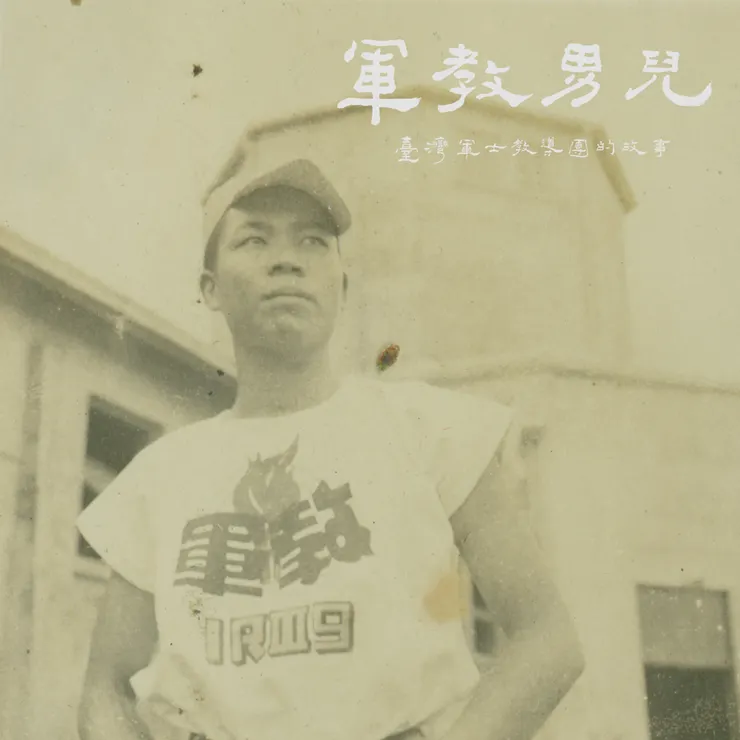
(圖/《軍教男兒——台灣軍士教導團的故事》電影劇照;何松柏先生提供)
Q:Your work consistently engages with questions of identity shaped by multiple languages and complex national contexts. As a Taiwanese filmmaker who has settled in Japan in recent years, has this experience affected your own sense of identity? Has it changed how you understand the term 'Taiwanese'?
KUO:That is a difficult question. Questions of nationality and identity seem to confront me constantly. Even something as simple as signing a receipt from TIDF involves the same issue, regardless of the amount involved. (laughs)
Around 2003, Taiwanese people living in Japan still had 'China' listed as their nationality on their Alien Registration Cards. Twenty-two years later, in 2025, Taiwanese residents could finally write 'Taiwan' in the 'nationality/region' field when registering their residence.
Whenever I travel between countries, I worry that 'Taiwan' might not appear as an option on immigration forms.
This is probably a familiar experience for Taiwanese filmmakers attending international festivals. Whenever we see a film catalogue listing the country of origin as 'Taiwan' or '台湾', it is deeply moving.
In Japan, my name has three or four different forms and pronunciations. Sometimes it is written in Chinese characters, sometimes in English, sometimes in katakana. Each version is me, yet each is slightly different.
At every moment I am confronted with the question: who am I?
At TIDF, the programme’s Chinese title was ‘Consciousness in Flux: War and Taiwanese Soldiers’, a direct translation, while the English title was ‘War Memories, Shifting Identities’.
The Chinese title uses the word 'flux', while the English uses 'shifting'. I find that choice of wording quite interesting.
For me, nationality would shift. Identity, however, which is tied to people, land and belonging, may continue to change and transform over time. If I were to describe identity in my own terms, I might choose the word 'revolving'.
I often recall Mr Feng Han-shan in Suspended Duty, who had come to Taiwan from China. In the past he longed for his hometown. He used to say, 'When things leave home they become precious; when people leave home they become insignificant', and 'If a young man never leaves home he is worthless, but if an old man never leaves home he is respectable'. Now, having lived in Taiwan for many years and choosing not to settle in China, he says instead that 'with time, a foreign land becomes home'. Taiwan has become his home, and therefore his place of belonging.
This reminds me of my experience during the Great East Japan Earthquake. Soon after the disaster, many foreigners left the country. At that time I was also preparing to leave Tokyo for Kobe and Taiwan to attend screenings of Suspended Duty. I even felt it might be impossible to return.
Yet at the same time I sensed a different feeling within myself. I could no longer simply leave without hesitation. Something held me there. Without the experience of that earthquake, I might never have realised that my emotional connection to this place had already changed.
After returning to Tokyo, I obtained certification as a disaster prevention specialist. The examination was conducted in Japanese and open to applicants of any nationality. I then began participating in local disaster preparedness activities. I hoped to contribute to the place where I was living, and in some way repay those who had supported me.
Every year at the Tokyo International Film Festival I make a point of watching all the Taiwanese films in the programme. Last year, in 2025, I watched director Lau Kek-huat’s feature film The Waves Will Carry Us. The film tells the story of Chinese migrants across different generations in Malaysia and Taiwan. Watching each character, I could not help seeing reflections of myself. In particular, there is a scene in which the character Shui-yun, played by Vera Chen, talks with her children before bedtime. The children ask, 'Who exactly am I?' and 'Where are our roots?'
Her answer felt very close to how I feel today.
第十五屆台灣國際紀錄片影展
2026 Taiwan International Documentary Festival
.時間|05/01(五)~5/10(日)
.地點|國家電影及視聽文化中心、台北獅子林新光影城、光點華山電影館、臺灣當代文化實驗場C-LAB
.票價|單場票 120 元,套票6張420元(OPENTIX販售)
.更多詳情請見官方網站