今天甄芸要翻譯的是一篇取自高雄市立凱旋醫院成人精神科主任,陳偉任醫師的部落格文章。這篇文章之所以值得翻譯,是因為它深刻揭示了大腦如何運作,並提供了實用的方法來提升學習效率。作為一名譯者,我一直相信語言的力量不只是溝通,更是知識的橋樑。這篇文章結合了科學與實踐,將複雜的腦科學原理轉化為每個人都能理解並應用的策略,對我而言,不僅是學習上的啟發,也激勵我希望把這份智慧帶給更多人。透過翻譯,我能讓更多讀者理解大腦的奧秘,並掌握改善學習效率的科學方法,這種讓知識「跨越語言界限」的感動,是我最想分享的。
Today, Zhen-Yun is translating a blog post by Dr. Wei-Ren Chen, Director of the Adult Psychiatry Department at Kaohsiung Municipal Kaohsiung Tri-Service General Hospital. I chose to translate this article because it offers deep insights into how the brain works while providing practical strategies to improve learning efficiency. As a translator, I believe that language is more than a means of communication—it is a bridge for sharing knowledge. This article turns complex neuroscience principles into actionable strategies that anyone can understand and apply. For me, translating it is not just an intellectual inspiration but also an opportunity to bring this wisdom to a wider audience. Through this work, I hope to help readers explore the mysteries of the brain and discover science-backed ways to learn more effectively. The ability to let knowledge “cross language boundaries” is the experience I most want to share.
以下是作者介紹:
陳偉任 醫師
- 凱旋醫院成人精神科 主任
- 國立高雄師範大學諮商心理與復健諮商研究所 助理教授
- 中華團體心理治療學會 理事
- 台灣阿德勒心理學會 理事
- 阿德勒生涯教練/親師諮詢師/親子生活教練 講師暨督導
- 國立高雄師範大學諮商心理與復健諮商研究所 博士
___________________________________________________________________
📚 原文出處:
陳偉任 (2025)。 從原文到譯文:解密大腦如何幫助我們更有效地學習。 陳偉任醫師心晴小站https://chenweijen.blogspot.com/2024/11/blog-post_12.html。
✍️ 譯者:許甄芸(Calista Hsu)
⚖️ 版權聲明:本譯文僅作為學習與非商業用途。原文著作權歸原作者所有,翻譯已取得授權 / 或標註「僅為教育用途翻譯」。
🔍 譯者註:部分語句為了語意流暢略有改寫,非逐字直譯。
___________________________________________________________________
How Neuroscience Can Boost Learning Efficiency: How Does the Brain Help Us Remember Everything?
In this era of information explosion, learning new knowledge has become an essential part of many people's lives. Whether you're a student, a professional, or a lifelong learner, we all strive to find ways to learn more effectively. But did you know that the brain's learning and memory mechanisms hide fascinating scientific principles? By understanding and applying them, you can truly learn smarter, not harder. Today, we'll uncover the secrets behind how your brain learns — and share a few simple yet powerful strategies to help you effortlessly enhance your learning performance.
1. The form of memory --- from short-term memory to long-term memory
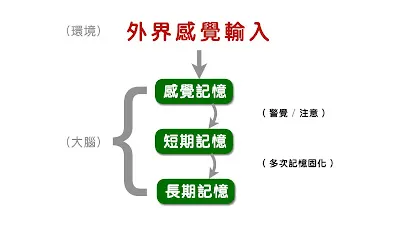
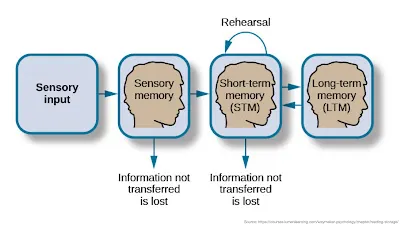
To understand how to boost learning efficiency, we need to know how brain deals with information at first. The brain goes through the following stages when we are learning new things:
- Sensory Memory: This is memory's first stage. The information comes from our sensory, such as visual and auditory. Sensory memory usually sustains very short time, only one to two second. If brain doesn't do further processing, the information will vanish quickly.
- Short-term Memory: It seems that after sensory input is filtered, it enters short-term memory — the information we can hold and use for a brief period. The capacity of short-term memory is limited; it can store about 5 to 9 units of information and usually lasts no longer than 30 seconds.
- Long-term Memory: When short-term memories are reinforced — for example, through repetition or by connecting them with existing knowledge — the information is transferred into long-term memory. Long-term memory is relatively stable and enduring, capable of lasting for years or even a lifetime.
2. The Brain’s Learning Mechanism: The Importance of Synaptic Plasticity and Repetition
Learning new information involves a process known as synaptic plasticity. Simply put, whenever we learn something new, neurons in our brain form new connections or strengthen existing ones. The stronger these connections become, the more deeply we remember the information.
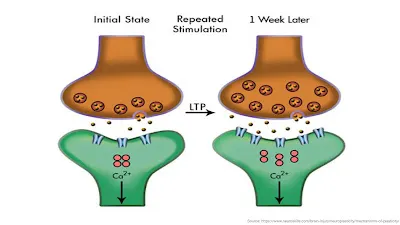
However, a single exposure to new knowledge is rarely enough to create lasting memories. This is because the brain needs time for consolidation — the process of converting short-term memories into long-term ones. That's why repetition is essential for effective learning. When repetition happens at well-timed intervals, the results are even more powerful.
3. Practical Strategies to Enhance Learning Efficiency
Now that we understand how memories are formed in the brain, let's explore several science-based learning techniques that can help you retain information more effectively.
Technique 1: Spaced Repetition
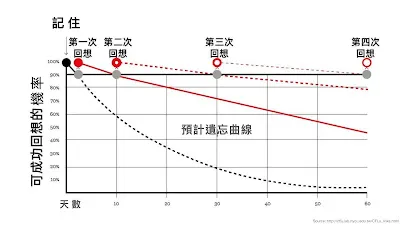
Spaced repetition is a learning strategy based on Ebbinghaus' Forgetting Curve. Research shows that after learning new information, our memory of it fades quickly if we don't review it. However, by revisiting the material at carefully spaced intervals, we can reactivate and strengthen those memories, making them last much longer.
How to Practice:
· Review the material 1 hour after your first learning session.
· Then review it again after 1 day, 1 week, and 1 month.
Technique 2: The Pomodoro Technique
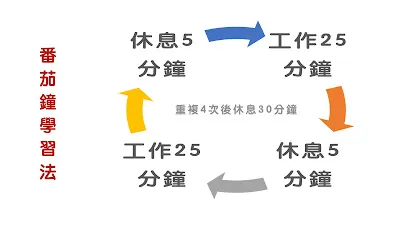
The Pomodoro Technique is a time management strategy that leverages the brain's natural focus cycles to boost learning efficiency. Research suggests that our brains can typically maintain focus for only 25 to 30 minutes before concentration begins to decline. The Pomodoro Technique takes advantage of this by dividing study time into short, focused intervals separated by breaks.
How to Practice:
1. Set a 25-minute timer and focus entirely on your study task.
2. When the timer goes off, take a 5-minute break.
3. After completing four cycles, take a longer break of 15–30 minutes.
4. This method helps you stay focused while preventing mental fatigue
Technique 3: Active Recall
Research shows that active recall is far more effective for memory retention than passive rereading. When we actively retrieve information from memory, the brain reactivates the relevant neural connections, which strengthens memory pathways and improves long-term retention.
How to Practice:
- Instead of simply rereading your notes, test yourself on what you've learned.
- Try teaching the material to someone else — this helps you identify the areas you haven’t fully understood yet.
4. Other Brain-Based Tips to Boost Learning Efficiency
In addition to the techniques above, the following strategies can also help you learn more effectively:
- Get enough sleep: Sleep plays a vital role in memory consolidation. Studies show that during deep sleep, the brain reorganizes and transfers newly learned information into long-term memory.
- Exercise and nutrition: Moderate physical activity promotes the release of Brain-Derived Neurotrophic Factor (BDNF), which supports neuroplasticity. A diet rich in Omega-3 fatty acids, antioxidants, and probiotics also has a positive impact on brain health.
- Mindfulness meditation: Practicing mindfulness can improve concentration, reduce stress, and enhance activity in the prefrontal cortex — a region closely linked to learning and memory.
Conclusion
The mechanisms behind how the brain learns and remembers are both complex and fascinating. Yet, by understanding these scientific principles, we can apply practical strategies to significantly improve how we learn. Through spaced repetition, the Pomodoro Technique, and active recall, you can retain knowledge more easily, learn faster, and achieve greater results.
So next time you're studying for an exam or learning a new skill, try putting these neuroscience-based techniques into practice — and let your brain work with you, not against you!
Workshop Invitation
Before we wrap up, I'd like to share an exciting opportunity from the Teacher Chang Foundation, Kaohsiung Center, which will be hosting a workshop titled “When Psychology Meets Neuroscience” on January 11–12 and February 22–23.(Workshop link: https://shorturl.at/DaANy)

The introductory workshop will explore the fascinating intersection between neuroscience and psychology, uncovering how our brains perceive and interpret the world around us. The advanced workshop will go further, introducing the principles of neuropsychological counseling and its practical applications in areas such as healthy living, stress management, overcoming procrastination, effective parenting, and mental health care.
Whether you are a clinical practitioner (e.g., physician, nurse, psychologist, social worker, occupational therapist), a student or educator in related fields (medicine, psychology, education, counseling, social work), or simply someone interested in how to better harness the power of your brain — you are warmly invited to join this inspiring workshop.
___________________________________________________________________
思考問題 | Reflection Questions
- 請想想看,當你知道記憶、專注力、情緒都與神經連結有關時,你會如何重新安排自己的學習方式?
- 當我們追求快速吸收知識時,大腦是否也需要「休息」與「消化」的時間?在你的學習經驗中,什麼時候是「學得慢但記得久」的時刻?
延伸閱讀 | Further Reading