採訪、翻譯:趙正媛
編輯:謝佳錦
Q:是什麼促使你去研究2010年紅衫軍示威?怎麼找到參與本片拍攝的人?
阿諾查.蘇維查康彭(以下簡稱蘇維查康彭):這個想法來自我的製片Paul Mori,他想到可以為圍繞2010年紅衫軍大屠殺的法律訴訟拍一部電影。他曾經協助泰國歷史學者Puangthong Pawakapan編輯一本有關泰國國內安全法制侵犯人權的書,所以他對這個事件做了一些研究。在得知泰國菁英階層如何成功掩蓋屠殺的真相之後,他受到了很大的衝擊。儘管軍方是在數千名目擊者面前,甚至在國際媒體報導最為熱烈的時候,殺害了手無寸鐵的平民,但如今泰國的主流社會大多遺忘了這場屠殺。2010年時,我就住在事件所在的地區,在這裡發生過的事情深深影響著我。我當時很想用電影來探討這起事件,卻不知該如何切入。
直到2022年,當我正在為美國沃克藝術中心的委託案,創作並執導一個表演作品,計畫過程中,我認識了一位名叫Phayaw Akkahad的女士,她的女兒曾是醫療志工,在軍隊鎮壓中被殺害。從此之後,Phayaw全心投入在為罹難者伸張正義的運動之中。她帶給我很大的啟發,不只在於這部電影,在生活方面也是如此,多虧有她的大力協助,這個計畫才得以發展下去。片中其他參與者,則是來自較為傳統的研究路徑,在作家、編輯和運動者Ida Aroonwong的密切協助下,我和我的團隊成功找到許多在事件中失去親人的家屬。當中一部分人出現在《敘事練習》,其他人則會參與我的下一部劇情片作品《Fiction》。
(圖/《敘事練習》電影劇照;台灣國際紀錄片影展提供)
Q:除了本片參與者和工作坊主持人,我們的注意力也經常分散到現場的攝影師、照相人員,或其他工作人員身上。可否談談在片中凸顯劇組存在的原因?
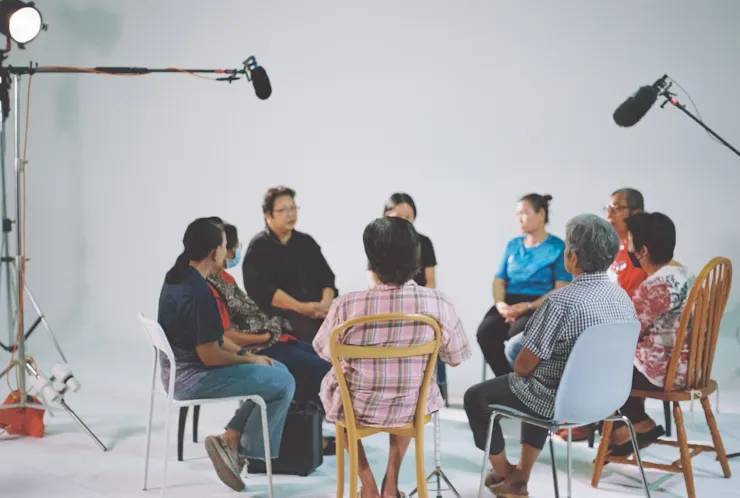
蘇維查康彭:經過慎重的考慮,我決定不隱藏劇組的存在,因為我真正想記錄的是工作坊本身的過程。我們拍的人不是專業演員,而且我們擁有的資源相當有限——只有兩台攝影機——所以,用傳統方式拍攝工作坊並不現實。透過凸顯攝影師和工作人員的存在,我們消除了環境控制的幻覺,參與者不用為了鏡頭表演,也不會因此感到拘束,他們可以自由活動、說話和互動,毋須為了拍攝而不斷調整自己。同時,這種方式也讓他們逐漸習慣在鏡頭前活動。這點之所以重要,是因為《敘事練習》可以看成是下一部長片《Fiction》的前置作業,屆時他們會更頻繁出現在鏡頭前。展示劇組的存在,自然而然成為工作方法的一部分——讓我在既有限制下,保留我需要的創作彈性。這背後沒有更深層的象徵意義,只是最務實的工作方式而已。
Q:某種程度上,石橋英子的配樂奠定了本片的調性。想請你談談合作的過程。
蘇維查康彭:我很高興聽到你這麼說,英子和我其實住在日本山區同一個鄉下小鎮。我和製片去拜訪他們時,她和她的伴侶Jim O’Rourke已經在那裡生活好幾年了。後來我們也愛上那個地區,當時我們在日本有一些計畫,就決定在那裡租房子,那裡是很適合養小孩、親近大自然的好地方。我們很早就邀請英子加入《Fiction》的製作,她深度參與了這個計畫,投入和合作程度與一般的作曲家—導演的關係截然不同。在計劃很早期的階段,她就為了參觀屠殺的現場而飛到曼谷。幾個月之後,她也和我們一起走訪罹難者家屬的住處。拍攝《敘事練習》期間,她一直待在片場,並且進行現場錄音,雖然她知道一些泰語,但她聽不懂錄音檔裡的聲音。然而,她將她感受到的,人們說話方式的某些特質,用她創作的音樂予以回應。我不想替她回答這個問題,但她曾向我們解釋說,她在即興演奏時,會受到錄製下來的多層人聲的影響。
事實上,她傳給我們的第一版配樂也包含了人聲,我們原本想直接用這個版本,但在剪輯時發現太混亂了,因為同時出現音樂裡的人聲,和製作過程中的對話,所以她又製作了一個純演奏的版本。我們沒有指定音樂的長度,但她傳給我們的原版錄音時長,和我們當天剛完成的剪輯版本,幾乎完全一樣。她不可能知道這一點,這真的是非常奇怪的巧合。當然,不只限於她在這個計畫中的表現,我們對她做的每個作品都印象深刻。
Q:雖然片名是「Narrative」,但參與者的敘述有時中斷,有時又受到音效干擾,就像片中律師所言:「一切都被一隻看不見的手阻止了。」你是如何決定要採用哪些聲音,以及哪些內容受到揭露?
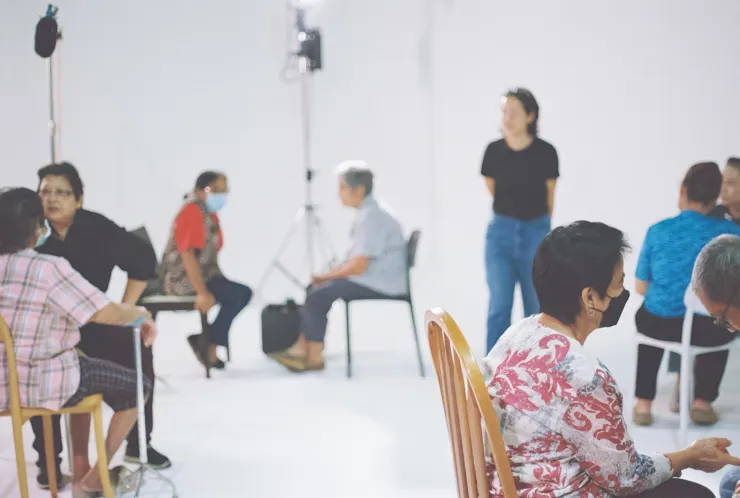
蘇維查康彭:這個決定首先是在拍攝中發生,然後在後來的剪輯過程確立下來的。由於我們只有兩台攝影機,而當時有四組對話同時進行,這意味著我們不可能百分之百捕捉到所有發生的事情。在拍攝現場,我站在攝影指導Parinee Buthrasri身邊,向她提議該把鏡頭朝向哪一組對話。整個過程都是出於直覺,我事先並不知道參與者會如何回應問題,所以我只是在現場聆聽,然後逐漸移往那些引起我興趣的話題。第二次決定要聚焦在哪些對話,則是在剪輯過程中。我沒有給我們的剪輯師Tulapop Saenjaroen太多指示,同時,就涵括的內容範圍而言,他也沒有太多素材可用。所以他也憑直覺利用現有素材,建構出一個敘事。我記得我們開了兩三次會,我提出了一些修改意見,但這些改動大多只是無傷大雅的細微調整。
在我們對這部電影還沒有具體想法時,製片就想出「Narrative」這個片名,現在回頭來看,我覺得這個片名十分貼切。在我看來,這部電影是兩種敘事的「碰撞」。第一種敘事是一群人,他們每個人都有自己的故事和說法,第二種則是人們共同經歷大屠殺的敘事。正因為有第二種敘事,才能將所有這些個人聚集在一起,但為了理解第二種敘事,就必須探索第一種敘事是如何產生的。
A Collision of Individual Memories and the Shared Narrative of Massacre——
An Interview with Anocha Suwichakornpong, Director of Narrative
Interview and translation by Chao Cheng-Yuan
Q:What motivated you to look into the subject of 2010 red shirt protests? How did you find the participants in this film?
Suwichakornpong:The idea to develop a film around the legal struggle of the 2010 Red Shirt massacre came from my producer, Paul Mori. He had conducted some research into the massacre in the context of assisting Thai historian Puangthong Pawakapan with the editing of a book on human rights abuses within Thailand’s internal security apparatus. He was struck by how successful Thailand’s elite had effectively whitewashed the massacre. Despite the military murdering unarmed civilians in front of thousands of witnesses and at the height of an international media frenzy—the massacre is largely forgotten by mainstream Thai society today. In 2010, I lived in the area where the massacre occurred and was very disturbed by what happened. I felt I wanted to deal with it in a film, but didn’t know how to approach the topic.
In 2022, I was commissioned to write and direct a performance for the Walker Art Center, and during the development of that project I met with a woman named Phayaw Akkahad. Her daughter was a volunteer medic who was murdered by the military during the crackdown. Phayaw has since become an activist working tirelessly to bring justice to the victims of the massacre. She is hugely inspirational to me, not only with this film but also in life. She was instrumental to developing this project. The rest of the participants in the film came from more traditional research into the massacre. With the close help of a writer/editor and activist, Ida Aroonwong, my team and I managed to track down many people who lost their family members. Some of these people appear in Narrative, and others will appear in our upcoming feature film, Fiction.
(圖/《敘事練習》電影劇照;台灣國際紀錄片影展提供)
Q:In addition to the participants and workshop leader, our attention is often distracted by the camera operator, photographer or other staff on the scene. Can you talk about the decision to foreground the presence of the film crew during the workshop?
Suwichakornpong:I made a very deliberate decision not to hide the film crew, because the workshop itself was the process I was interested in capturing. We weren’t working with professional actors, and we also had very limited resources—just two cameras—so covering the workshop in a conventional way wasn’t realistic. By foregrounding the presence of the camera operators and crew, we removed the illusion of a controlled environment. The participants didn’t have to perform for the camera or feel constrained by it. They could move, speak, and engage with each other more freely, without constantly adjusting themselves to fit into a frame. At the same time, it allowed them to gradually become comfortable being around cameras. That was important, because Narrative functions as a kind of preparation for the feature film, Fiction in which they will be in front of the camera a lot more. Making the crew visible simply became part of the working method—it gave me the flexibility we needed within my constraints. There was no deeper symbolic intent behind the choice; it was the most practical way to work.
Q:In a sense, the music composed by Eiko Ishibashi sets the mood in film. What was the collaboration process like?
Suwichakornpong:I am glad to hear that you feel it sets the mood in the film. Eiko and I actually live in the same rural town in the mountains in Japan. Eiko and her partner Jim O’Rourke had been living there for a few years when Paul and I came to visit them. We also fell in love with the area and were working on some projects in Japan, so we decided to rent a house out there. It is a really special place to raise children and connect with nature. We brought Eiko into the development of Fiction very early on. She has been intimately involved in the project, her level of commitment and collaboration is different from the standard composer-director relationship. Very early on in the development, she flew to Bangkok just to visit the sites where the massacre took place. She then returned a few months later to accompany us to visit the houses of relatives of the victims. She was on set during the filming of Narrative and made her own field recordings during that time. While she knows some Thai words, she doesn't understand the voices in the recordings she made. However, there was something about the way that the people spoke that she responded to in the music she composed. I don’t want to answer this on her behalf, but she explained to us that she was responding to the layers of the voices she recorded when improvising with the instrumentation.
Actually, the first version of the music that she sent us included the voices in the recording. We wanted to use it like this, but in the edit it was too confusing because there were all of these voices, both from the music and the dialogues from production, so she created a version with just her instrumentation. We didn’t specify a duration for the music, but the original recording that she sent to us happened to be almost exact same length as the edit that we had just completed that day. There was no way for her to know this, it was a very strange coincidence. Needless to say, we are very impressed by her work not only for this project but everything she does.
Q:The film is titled ‘Narrative’, but the participants’ tellings are sometimes cut off or interrupted by the sound effect just like what the lawyer said, ‘Everything is being halted by an invisible hand.’ How did you decide what voice could be listened and what content could be revealed?
Suwichakornpong:The decision about what voice would be listened to and therefore what content could be revealed occurred first during shooting and then later during editing. As we only had two cameras, and there were four pairs of conversations happening simultaneously, it meant that we could never capture 100% of what was happening. On set, I was standing near DP Parinee Buthrasri and offering her suggestions on which conversation to move the camera toward. This process was intuitive, I didn’t know in advance how the participants would respond to the questions, so I just listened to them on set and moved toward conversations that sparked my interest. The second time we decided to focus on specific conversations occurred during editing. I didn’t give much instructions to our editor, Tulapop Saenjaroen, but at the same time he also didn’t have much footage to work with in terms of coverage. So he intuitively constructed a narrative out of the material that he was given. I think we had two or three meetings where I offered some input on the edit, but the changes were more or less minor adjustments to his original assemblage.
The title Narrative came from Paul before we even had a concrete idea for the film, but in retrospect I think it works well. The way I see this film is a collision of two narratives. The first is a group of individuals who each have their own narrative. The second is the shared narrative, that of the massacre. It is this second narrative that brings all of these individuals into the same room, but the first understanding of narrative is what needs to be explored in order to make sense of the second.
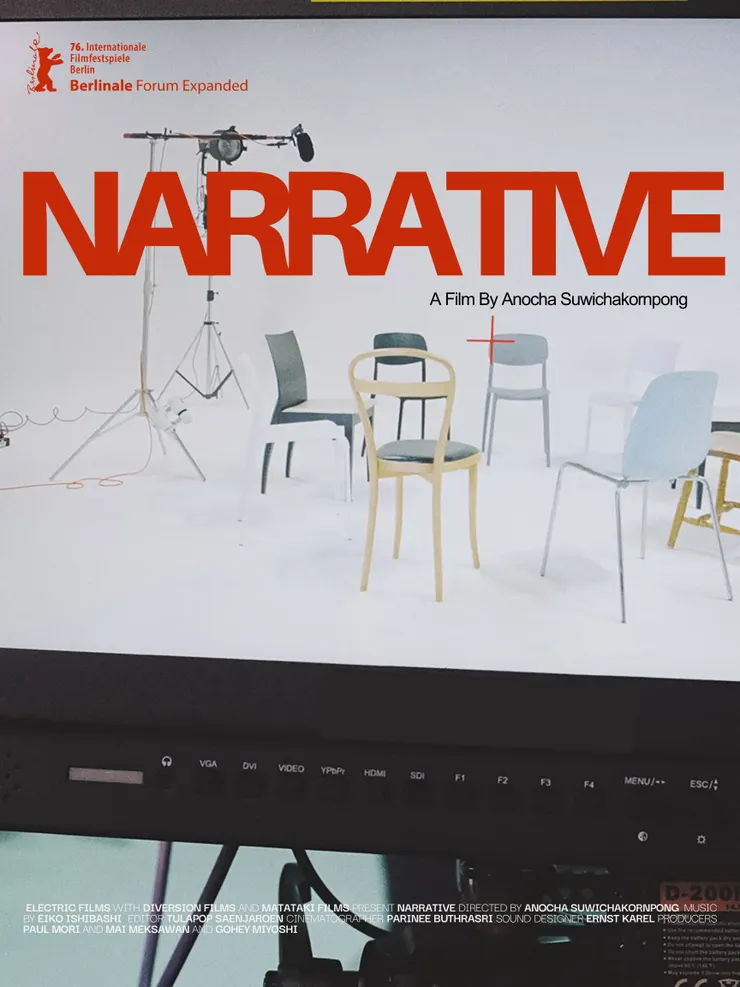
(圖/《敘事練習》電影海報;台灣國際紀錄片影展提供)
第十五屆台灣國際紀錄片影展
2026 Taiwan International Documentary Festival
.時間|05/01(五)~5/10(日)
.地點|國家電影及視聽文化中心、台北獅子林新光影城、光點華山電影館、臺灣當代文化實驗場C-LAB
.票價|單場票 120 元,套票6張420元(OPENTIX販售)
.更多詳情請見官方網站